
Russian oil shipments to India averaged about 310,000 barrels a day in the four weeks to 4 October 2026, the lowest level since March 2022, according to tanker-tracking data cited by Bloomberg and OilPrice.com. Russia’s share of India’s crude imports fell to about 35 percent in September from as high as 56 percent in July, per reports. The decline is the latest turn in a long-running dispute with Washington, which has pressed New Delhi for years to buy less Russian crude. India bought heavily after Western countries shunned Russian supplies in 2022, and its refiners profited from steep discounts on Russian grades.
The immediate trigger was American legislation. President Donald Trump signed the Lindsey O. Graham Sanctioning Russia and Iran Act of 2026, which reports say authorises the president to impose tariffs of up to 100 percent on imports from countries that are large buyers of Russian oil and natural gas. Indian refiners including Indian Oil, Bharat Petroleum, Hindustan Petroleum and Reliance Industries were reported to be more cautious after the law was enacted. The US has argued that Russian oil revenue funds the war in Ukraine, and the earlier 25 percent penalty tariff on India was justified on the same grounds.
Commercial factors have also mattered. OilPrice.com reported that Russian Urals crude has become almost as expensive as certain Middle Eastern grades, removing much of the discount that attracted Indian buyers. Gulf supplies have meanwhile recovered as flows through the Strait of Hormuz improved, and Chinese buyers are competing harder for Russian cargoes. Reports differ on the exact size of the remaining Russian price advantage, so it is clear only that the cushion has narrowed. India has not formally told refiners to cut Russian purchases; the government says commercial decisions are taken by companies on price, quality and supply security.
India’s stated position has been consistent. Ministers have said the country buys oil from wherever it gets the best deal for its consumers, so affordability and supply security come first. They have also argued that European countries kept buying Russian energy for years after the invasion of Ukraine. Indian officials have not described the current fall as a concession to Washington, and the reports attribute it to a mix of sanctions risk and pricing. India has not formally banned Russian purchases and has not said it will stop buying Russian crude altogether, so the long-term direction remains open.
The test for India is whether it can protect energy security while keeping the trade relationship with the United States stable. Cheaper Russian crude gave refiners a margin cushion, which is now thinner, while a 100 percent tariff on exports to the United States would be far costlier than the saving. Replacing Russian barrels with Gulf and other supplies raises questions of freight, availability and price if Middle East flows are disrupted again. Delhi has so far avoided a public confrontation, balancing its ties with Moscow against its largest export market, and it is likely to keep doing so.
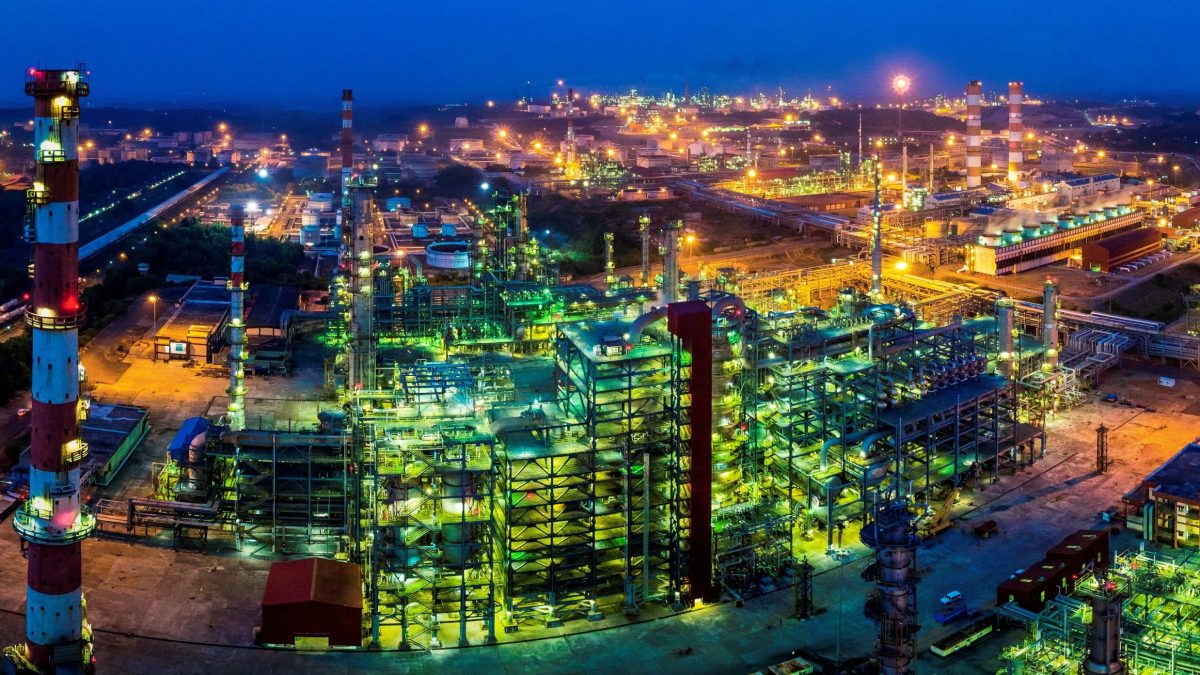
Featured image: The MRPL oil refinery in Mangalore, Karnataka (file photo; India’s refiners buy crude from Russia and the Gulf). Photo by DRajkhowa, licensed under CC BY-SA 4.0, via Wikimedia Commons.


Leave a Reply