
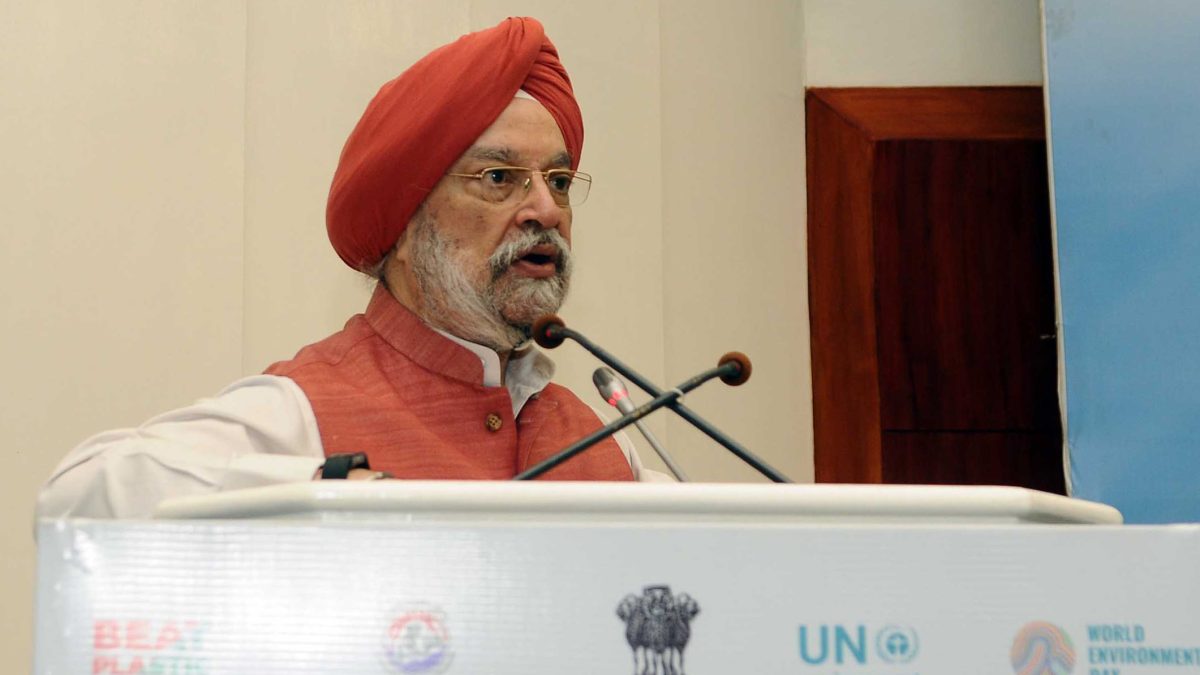
The Union Minister of Petroleum and Natural Gas, Hardeep Singh Puri, launched a ten-year scheme on 1 October 2026 to expand India’s production of compressed biogas, a fuel made from farm, animal and municipal waste. The scheme, called GOBARdhan, has an outlay of ₹23,731 crore.
The scheme at a glance
- Type: central sector scheme, funded entirely by the Union government
- Period: 2026-27 to 2035-36
- Outlay: ₹23,731 crore
- Aim: to raise domestic compressed biogas production nearly tenfold, to about 5 million standard cubic metres a day
A handbook for the scheme and a Unified GOBARdhan Portal were released at the launch. The portal is a single online window for applications and for tracking their progress.
What the government expects
According to the ministry, the scheme is expected to:
- save more than ₹40,000 crore in foreign exchange
- add over ₹75,000 crore to gross domestic product
- create more than 1.5 lakh jobs
- replace 10 million tonnes of fossil fuel
- cut carbon dioxide emissions by more than 40 million tonnes
What compressed biogas is
When cattle dung, crop residue, sugar-mill waste or wet municipal waste decomposes in a sealed tank without air, it gives off biogas. Purified and compressed, the gas is chemically much the same as the compressed natural gas used in vehicles and kitchens, and can be fed into the same pipelines and filling stations. The material left behind can be used as organic manure.
Why it matters
- Imports: India imports about half the natural gas it uses.
- Stubble burning: Paddy straw, burnt in the fields of Punjab and Haryana each autumn and a cause of north India’s winter smog, is a raw material for these plants.
- Farm incomes: Farmers can sell residue and dung that now have little value.
The record so far
An earlier programme, SATAT, launched in 2018, set a target of 5,000 plants but achieved only a small fraction of that. Developers cited the cost and difficulty of collecting crop residue, uncertain sales of the gas and manure, and trouble raising loans. The new scheme’s subsidies and assured support are meant to address those problems; reports say part of the aid is reserved for smaller developers.
This report draws on the Ministry of Petroleum and Natural Gas announcement as carried by Millennium Post and PSU Connect.


Leave a Reply