
Delhi Police personnel deployed at protests in the capital have begun wearing body cameras, days after three women journalists alleged that they were harassed and manhandled by police during a protest at Jantar Mantar on 2 October 2026.
The allegations
The journalists were covering the protest against the Chief Election Commissioner, at which more than 700 people were detained. Several reporters said police personnel behaved inappropriately with them, and one of the complainants alleged that an officer sexually assaulted her, according to The Hans India and the Daily Jagran.
The police response
- Inquiry: The New Delhi district police said they had received a number of complaints and had transferred them to the Crime Branch for what they called a fair and impartial inquiry. At the time of the reports, no first information report had been registered.
- Cameras: Frontline personnel on protest duty have been issued body-worn cameras.
- Advisory: Police have also asked journalists covering protests to carry identification.
The allegations have not been tested in an inquiry or a court, and no officer has been named publicly.
The court case
A public interest petition has been filed in the Delhi High Court asking for body-worn cameras to be made mandatory for Delhi Police and Rapid Action Force personnel deployed at protests and for crowd control, India TV reported. The petition argues that recordings would protect both the public and the police by settling disputes about what happened.
Why it matters
Body cameras are widely used by police forces abroad and by some forces in India, mainly traffic police. Their value depends on the rules around them: whether officers must keep them switched on, who holds the footage, how long it is kept and whether complainants can obtain it. None of those rules has yet been made public for the Delhi deployment.
The first large test is likely to come on 10 October, when student and political groups plan to return to Jantar Mantar.
This report draws on The Hans India, the Daily Jagran, India TV and ABC News.
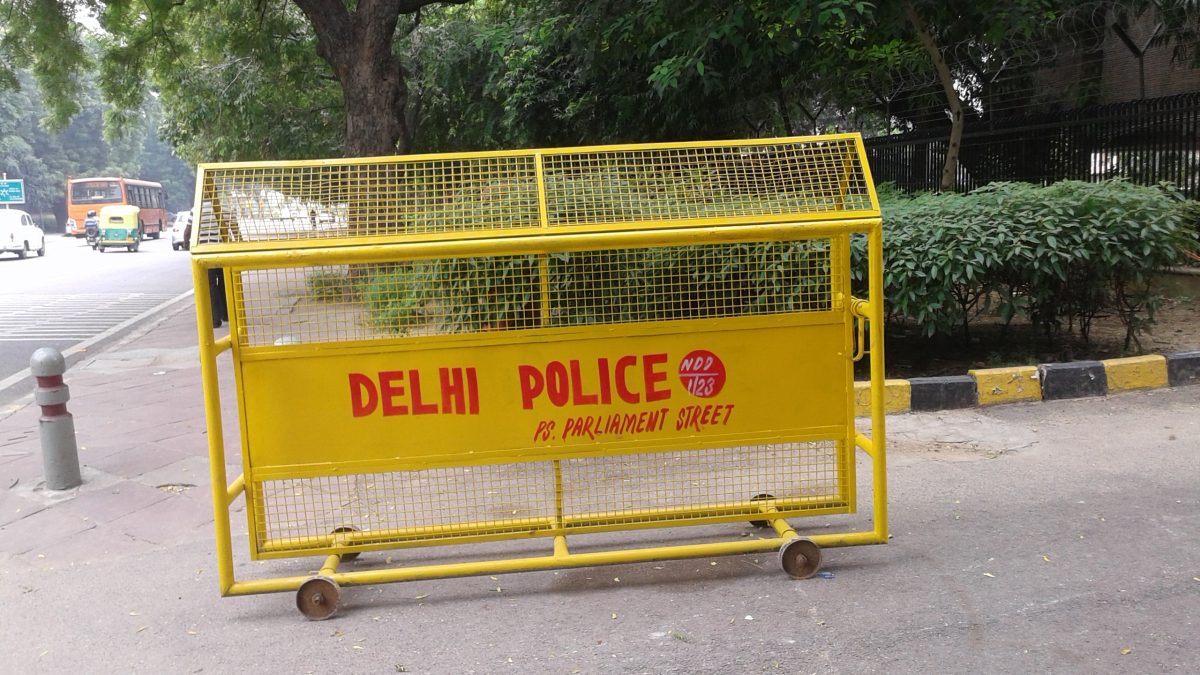
Image: A Delhi Police barricade in New Delhi (file photo). Photo by Sidheeq, licensed under CC BY-SA 3.0, via Wikimedia Commons.

Leave a Reply