


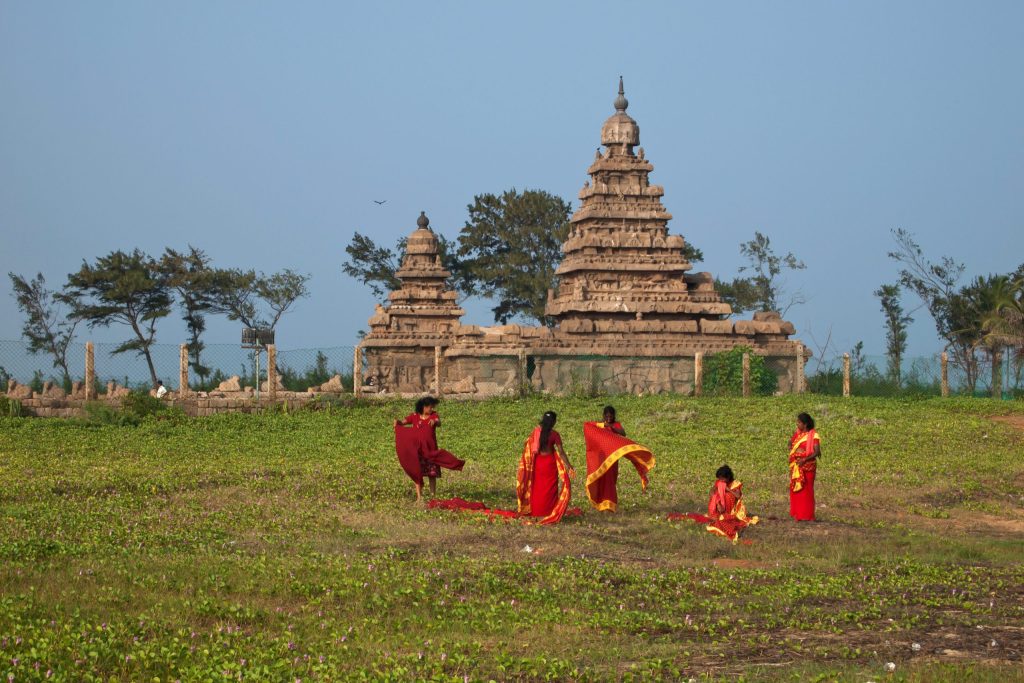

Mahabalipuram, also called Mamallapuram, is a small town on the Bay of Bengal, about 60 kilometres south of Chennai. In the seventh and eighth centuries it was a port of the Pallava kings, who covered its granite outcrops with temples and sculpture. UNESCO inscribed the Group of Monuments at Mahabalipuram as a World Heritage Site in 1984.
At a glance
- Location: Chengalpattu district, Tamil Nadu
- Inscribed: 1984
- Type: Cultural
- Period: seventh and eighth centuries CE
- Built by: the Pallava dynasty
History
The town takes its name from Mamalla, “the great wrestler”, a title of the Pallava king Narasimhavarman I, who reigned in the mid-seventh century and under whom much of the work was done. He was the king who captured the Chalukya capital and ended the reign of Pulakeshin II. His successors, especially Rajasimha, added the structural temples.
What to see
- The Five Rathas: five shrines, each cut from a single boulder in the form of a different kind of temple, with a life-size elephant, lion and bull beside them. They are named after the Pandava brothers and Draupadi, though they have nothing to do with the epic.
- Arjuna’s Penance: an open-air relief about 27 metres long and 9 metres high, carved across two boulders, crowded with gods, animals and ascetics. It is also read as the Descent of the Ganga.
- The Shore Temple: built of cut stone on the edge of the sea in the early eighth century, with two towers
- Cave temples: pillared halls with panels such as the goddess Durga fighting the buffalo demon
- Krishna’s Butter Ball: a huge natural boulder balanced on a slope
Why it is a World Heritage Site
The monuments record the beginnings of the southern, or Dravida, style of temple architecture, and their sculpture influenced the art of South-East Asia, with which the port traded.
Visiting
Mahabalipuram is reached by the East Coast Road from Chennai. The tsunami of December 2004 briefly uncovered further carved rocks and the remains of structures on the shore, reviving the old legend of temples lost to the sea.
Image: The Shore Temple at Mahabalipuram, Tamil Nadu. Photo by Vyacheslav Argenberg, licensed under CC BY 4.0, via Wikimedia Commons.