



The Sun Temple at Konark, on the coast of Odisha, was built in the thirteenth century as a colossal stone chariot for Surya, the sun god. Though its main tower has fallen, what remains is among the finest achievements of Indian temple art. UNESCO inscribed it as a World Heritage Site in 1984.
At a glance
- Location: Konark, Puri district, Odisha
- Inscribed: 1984
- Type: Cultural
- Built: about 1250
- Built by: Narasimhadeva I of the Eastern Ganga dynasty
The design
The temple was conceived as the chariot in which the sun crosses the sky.
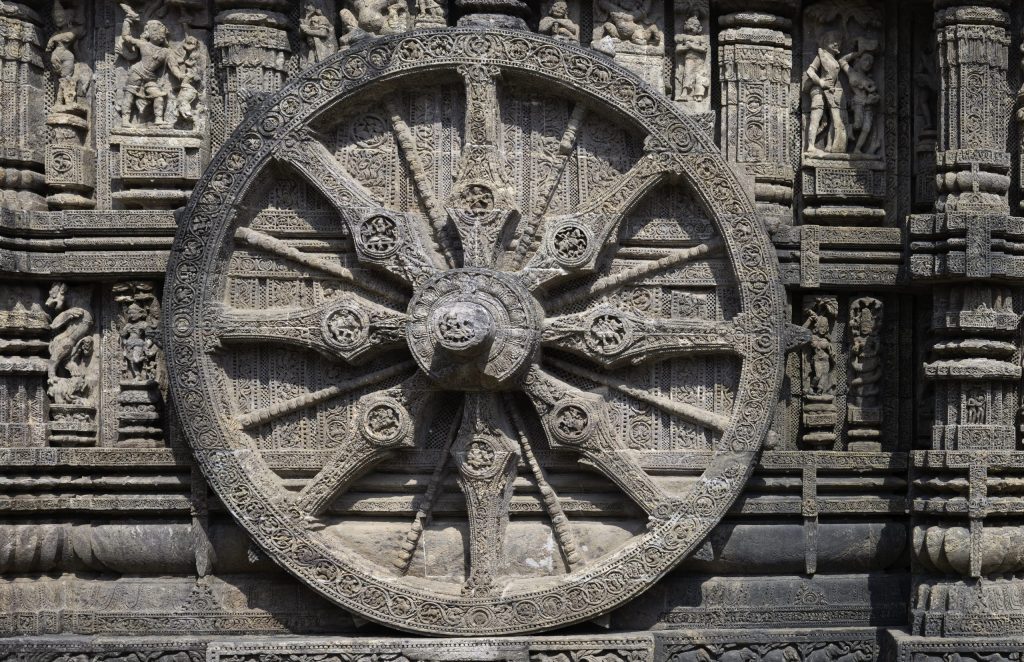
- Wheels: twenty-four, each about three metres across and carved with intricate patterns. Their spokes work as sundials, and guides at the site tell the time from the shadows.
- Horses: seven, pulling the chariot towards the east, so that the first rays of the sun fell on the entrance
- Sculpture: the walls are covered from base to roof with carving: gods, musicians, dancers, animals, scenes of court life and war, and many erotic figures
History
The great tower over the sanctuary, thought to have been more than 60 metres high, collapsed at some time before the nineteenth century; the cause is debated. The surviving building is the assembly hall in front of it, about 30 metres high. In 1903 the British filled it with sand and sealed it to prevent its collapse.
European sailors, who used the dark temple as a landmark, called it the Black Pagoda.
Why it is a World Heritage Site
UNESCO recognises Konark as an outstanding testimony to the worship of the sun god and as the high point of the Kalinga style of temple architecture.
In daily life
One of the wheels appears on the Indian ten-rupee note, and the temple is the setting of a classical dance festival held each December.
Visiting
Konark is about 35 kilometres from Puri and 65 from Bhubaneswar. A museum of the Archaeological Survey nearby holds sculptures recovered from the ruins. The region’s earlier history includes the Kalinga War of Ashoka.
Image: One of the 24 carved stone wheels of the Sun Temple at Konark, Odisha. Photo by Joydeep, licensed under CC BY-SA 4.0, via Wikimedia Commons.