



In the spring and summer of 1859, thousands of peasants in Bengal refused to grow indigo for European planters. The Indigo Revolt, or Nil Bidroha, began in Nadia district and spread across Bengal for more than a year. It is remembered as one of the most remarkable peasant movements of nineteenth-century India, and it won a lasting change from the government.
Quick Facts
| Years | 1859–60 |
| Place | Nadia and other districts of Bengal |
| Leaders | Digambar Biswas and Bishnucharan Biswas, with village headmen |
| Cause | Forced cultivation of indigo on low prices and debt |
| Outcome | Indigo Commission (1860); reforms; decline of indigo planting in Bengal |
The System
Indigo cultivation in Bengal dates from 1777, when a Frenchman, Louis Bonnaud, set up the first plantation near Hooghly. By 1830 there were more than a thousand indigo factories in Bengal, and the dye was in high demand in Europe. Planters advanced loans known as dadon at high interest, and a peasant who took one could be in debt for life, with the debt passing to his sons. The price paid for the crop was only a small fraction of the market price, put by one account at about 2.5 per cent. The peasant was made to plant indigo on his best land in place of food crops.
Government rules favoured the planters. A law of 1833 gave them wide powers over the peasants, and the zamindars, who gained from indigo rents, generally sided with them. Beatings, confinement and the destruction of property were used against those who refused.
The Revolt
In 1859 a government notice was understood to say that cultivators could not be forced to sow indigo against their will, and peasants took it as permission to refuse. Led in Nadia by two local zamindars, Digambar Biswas and Bishnucharan Biswas, and by village headmen, they stopped sowing, resisted the planters’ agents and sometimes attacked factories. The movement spread to Jessore, Pabna and other districts. Former employees of the factories, such as gomashtas, also helped to organise the villages.
The Role of the Press
Support came from Bengal’s educated middle class. The newspaper Hindoo Patriot, edited by Harish Chandra Mukherjee, reported the planters’ abuses. Dinabandhu Mitra’s play Nil Darpan, published in 1860, dramatised the peasants’ suffering, and an English translation was printed by the Reverend James Long. Long was prosecuted for libel at the instance of the planters and sentenced to a month’s imprisonment and a fine, which made the case a national scandal.
The Indigo Commission
The government set up the Indigo Commission in 1860. Its report found that the system was unjust, and the authorities accepted that cultivators could not be compelled to grow indigo. Without the compulsion, planting became unprofitable and indigo cultivation in Bengal declined. The synthetic dyes developed later in Europe finished the trade.
Why It Matters
The revolt showed that peasants could act together, and it gave the educated class a cause that joined them to the villages. It came only two years after the Revolt of 1857, and its legacy runs through Bengal’s later movements. Gandhi’s first great campaign in India, the Champaran Satyagraha of 1917, was also against the compulsory cultivation of indigo; see Gandhi’s biography.
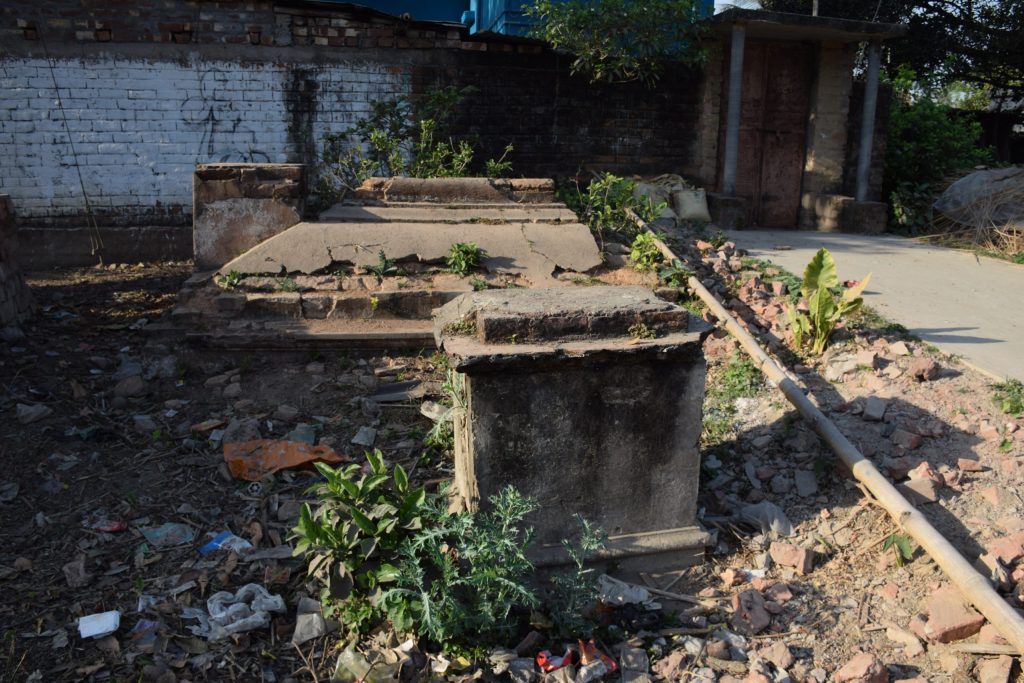
Featured image: Graves of two indigo planters at Shikarpur in Nadia district, West Bengal, where the 1859 revolt began (file photo). Photo by Amitabha Gupta, licensed under CC BY 4.0, via Wikimedia Commons.