



The Revolt of 1857 was the largest armed challenge the British faced in India in the nineteenth century. It began as a mutiny of Indian soldiers of the East India Company’s army and grew into a wider uprising across north and central India. It was put down within about two years, but it brought the Company’s rule to an end.
Why it happened
- The cartridges: The spark was the new Enfield rifle, whose cartridges were rumoured to be greased with cow and pig fat and had to be bitten open, offending both Hindu and Muslim soldiers.
- Annexations: Under the Doctrine of Lapse, the Company had taken over states such as Jhansi, Satara and Nagpur when rulers died without a natural heir. Awadh was annexed in 1856 on the charge of misgovernment.
- Land and taxes: Heavy revenue demands had ruined many landholders and peasants.
- Fear for religion and custom: Missionary activity and social legislation fed suspicion that the British meant to interfere with faith.
- Grievances in the army: Indian sepoys were paid less than British soldiers, could not rise to high rank, and resented orders to serve overseas.
How it unfolded
- 29 March 1857: Mangal Pandey attacked British officers at Barrackpore near Calcutta, and was hanged.
- 10 May 1857: Sepoys at Meerut mutinied, killed their officers and marched to Delhi.
- 11 May 1857: They proclaimed the aged Mughal emperor, Bahadur Shah Zafar, as their leader.
- September 1857: The British retook Delhi after a siege.
- 1858: Lucknow, Jhansi and Gwalior fell one after another.
The leaders
- Delhi: Bahadur Shah Zafar, with Bakht Khan commanding the troops
- Kanpur: Nana Sahib and Tantia Tope
- Lucknow: Begum Hazrat Mahal
- Jhansi: Rani Lakshmibai, who died fighting near Gwalior in June 1858
- Bihar: Kunwar Singh of Jagdishpur, then about eighty
Why it failed
The revolt had no single command and no common plan. It did not spread to the south or to most of Bengal and Punjab. Several Indian rulers, and the Sikh and Gurkha regiments, sided with the British, who also had better weapons, the telegraph and control of the sea.
What changed afterwards
- End of Company rule: The Government of India Act of 1858 transferred power from the East India Company to the British Crown.
- Queen’s Proclamation: On 1 November 1858, Queen Victoria promised to respect the rights of Indian princes and not to interfere in religion.
- The last Mughal: Bahadur Shah Zafar was tried and exiled to Rangoon, where he died in 1862.
- The army: It was reorganised, with a higher proportion of British soldiers.
How it is remembered
British writers long called it the Sepoy Mutiny. Indian nationalists, beginning with V. D. Savarkar in 1909, described it as the first war of independence. Historians still debate how far it was a national movement, but there is no dispute that it changed the way India was ruled.
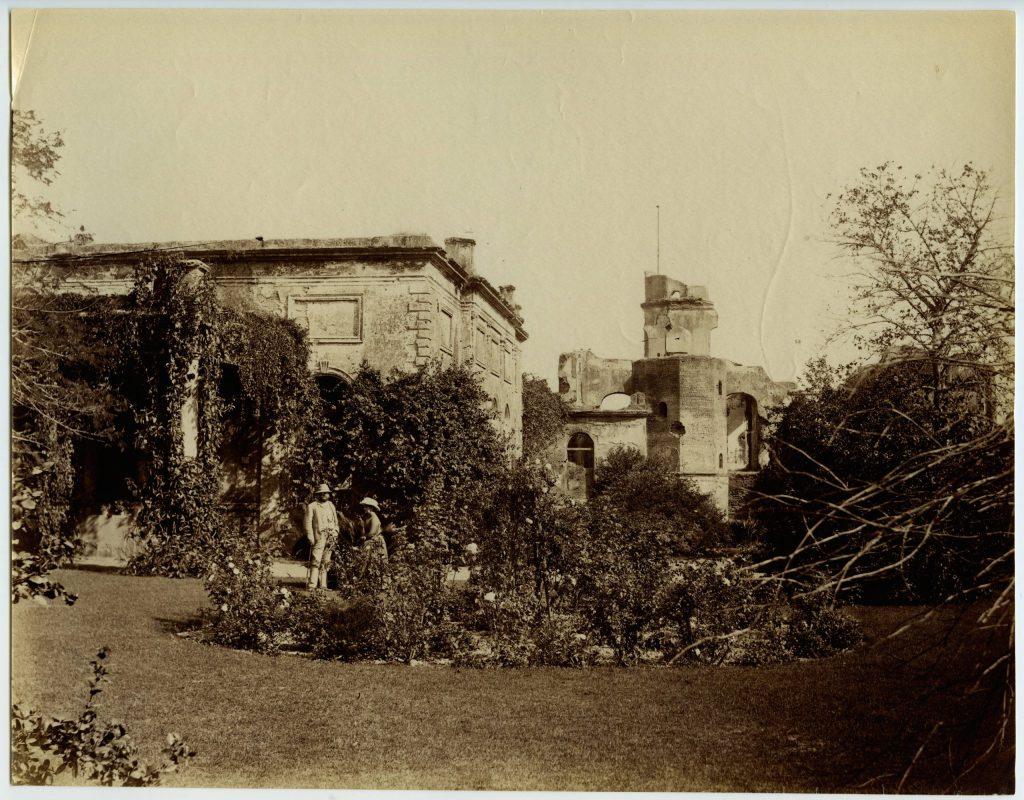
Image: The ruins of the Residency at Lucknow, besieged for months during the revolt, in an old photograph. Photo by an unknown photographer, in the public domain, via Wikimedia Commons.