



The Rajput kingdoms of Rajasthan defended themselves from fortresses built on hills, in forests, in the desert and behind rivers. Six of the greatest were inscribed together by UNESCO in 2013 as the Hill Forts of Rajasthan.
At a glance
- Location: Rajasthan
- Inscribed: 2013
- Type: Cultural
- Period: eighth to eighteenth centuries
- Number of forts: six
The six forts
- Chittorgarh: the largest, on a plateau five kilometres long, and the old capital of Mewar. It was besieged and taken three times, in 1303, 1535 and 1568, and on each occasion the women are said to have chosen death by fire, the rite called jauhar, while the men rode out to die. The fifteenth-century Vijay Stambha, a tower of victory, stands inside.
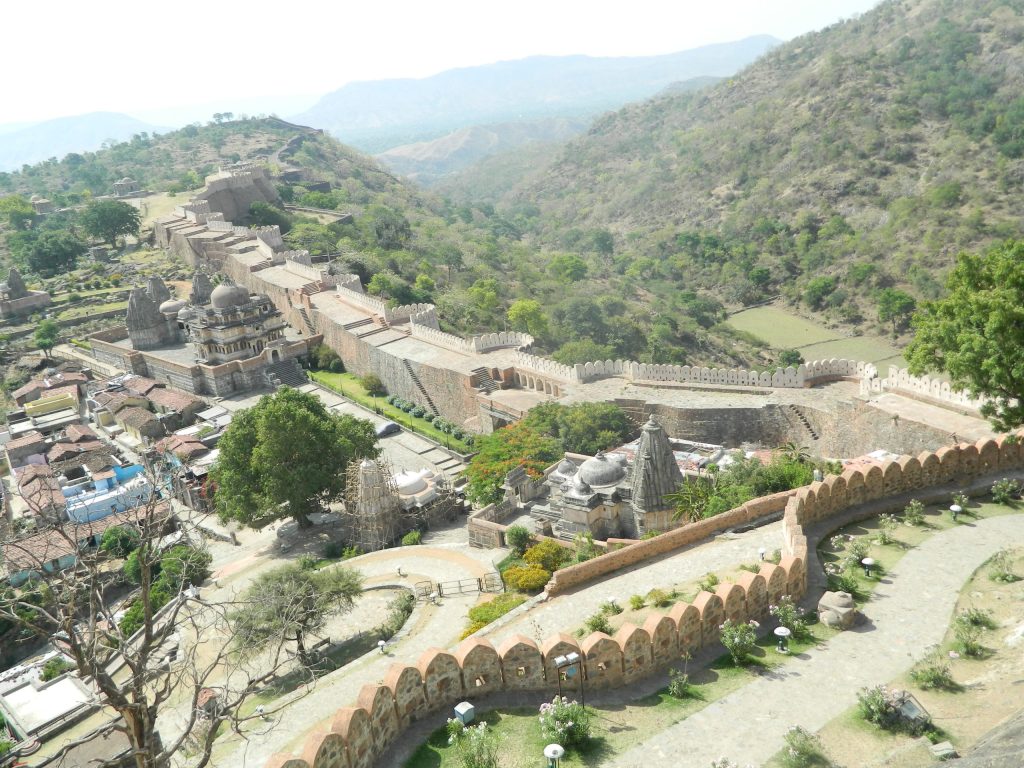
- Kumbhalgarh: built by Rana Kumbha of Mewar in the fifteenth century in the Aravalli hills. Its wall, about 36 kilometres long, is among the longest in the world. Maharana Pratap, the hero of Haldighati, was born here.
- Ranthambore: in Sawai Madhopur district, now surrounded by a tiger reserve. It was a Chauhan stronghold taken by Alauddin Khalji in 1301.
- Gagron: in Jhalawar district, at the meeting of two rivers, protected by water on three sides and with no foundations other than the rock it stands on
- Amber: just outside Jaipur, the palace-fort of the Kachhwaha rulers, with its hall of mirrors and painted gateways. It shows the influence of the Mughal court, with which its rulers were allied.
- Jaisalmer: founded in 1156, built of golden sandstone on a hill in the Thar desert. It is a living fort; about a quarter of the old town’s people still live within its walls.
What they share
Each fort enclosed far more than a garrison: palaces, temples, markets, and above all elaborate systems for collecting and storing rainwater, some of which are still in use. They used the natural defences of their sites, and their architecture developed over centuries of Rajput rule.
Why they are a World Heritage Site
UNESCO cites the forts as evidence of the power of the Rajput princely states and of the exchange of ideas between Rajput, Sultanate and Mughal architecture.
Visiting
The forts are widely scattered and cannot be seen on one trip. Amber is the easiest to reach, from Jaipur; Chittorgarh and Kumbhalgarh are usually visited from Udaipur.
Image: The wall of Kumbhalgarh Fort in Rajasthan, which runs for about 36 kilometres. Photo by Kanika Gaur, licensed under CC BY-SA 4.0, via Wikimedia Commons.