


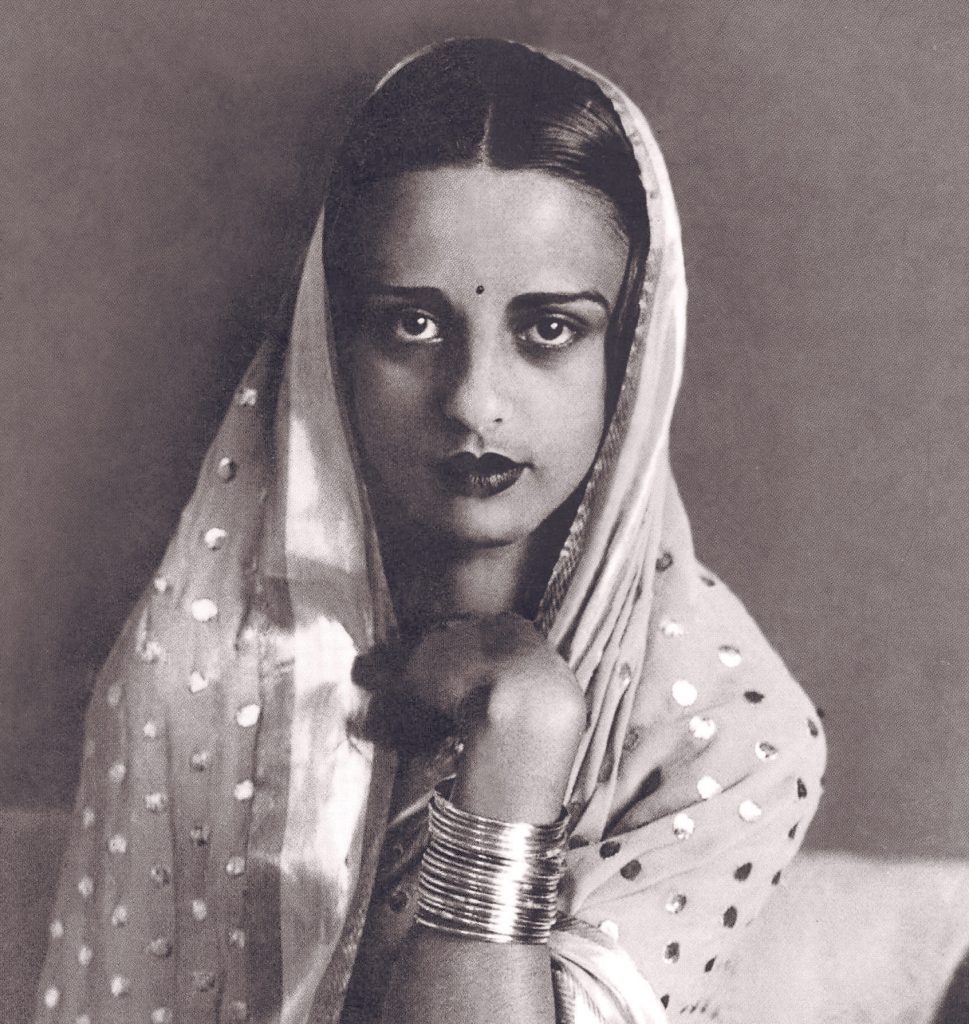

Amrita Sher-Gil (30 January 1913 – 5 December 1941) was an Indian painter, the daughter of a Sikh aristocrat and a Hungarian singer. Trained in Paris, she returned to India at twenty-one and in seven years produced a body of work that made her the most important woman painter of modern India. She died suddenly at twenty-eight. Her paintings are classed as national art treasures.
Quick Facts
| Full name | Amrita Sher-Gil |
| Born | 30 January 1913, Budapest, Hungary |
| Died | 5 December 1941, Lahore (aged 28) |
| Nationality | Indian |
| Education | Académie de la Grande Chaumière and École des Beaux-Arts, Paris |
| Occupation | Painter |
| Notable works | Young Girls, Three Girls, Bride’s Toilet, Brahmacharis, South Indian Villagers Going to Market, Village Scene, The Story Teller |
| Spouse | Dr Victor Egan (m. 1938) |
Early Life
She was born in Budapest. Her father, Umrao Singh Sher-Gil Majithia, was a Sikh nobleman from Punjab, a scholar of Sanskrit and Persian and a keen photographer. Her mother, Marie Antoinette Gottesmann, was a Hungarian opera singer. She and her younger sister, Indira, spent their early childhood in Hungary. In 1921 the family moved to Simla, where the girls gave concerts and acted in plays, and Amrita began to paint seriously.
Paris
In 1929, at sixteen, she was taken to Paris to study. She trained at the Grande Chaumière and then at the École des Beaux-Arts under Lucien Simon, and absorbed the work of Cézanne, Gauguin and Modigliani. Her painting Young Girls (1932) won a gold medal at the Paris Salon, and she was elected an Associate of the Grand Salon, the youngest member and the only Asian to be so honoured.
Return to India
She came to feel that her future as a painter lay in India, and returned at the end of 1934. “Europe belongs to Picasso, Matisse and Braque,” she wrote; “India belongs only to me.” She put aside the academic manner of Paris and looked to the frescoes of Ajanta and to Mughal and Pahari miniatures.
- Three Girls (1935): three young women waiting, resigned, for a fate they cannot alter; it won the gold medal of the Bombay Art Society
- Mother India, Hill Women and Hill Men
- A journey through south India in 1937 produced a famous trilogy: Bride’s Toilet, Brahmacharis and South Indian Villagers Going to Market
Her subject was the life of ordinary Indians, especially women, painted without sentimentality in flat areas of rich colour.
Marriage and Last Years
In 1938 she went to Hungary and married her cousin, Dr Victor Egan, against her mother’s wishes. The couple returned to India and lived on her family’s estate at Saraya, near Gorakhpur, where she painted scenes of village life such as Village Scene, In the Ladies’ Enclosure and Siesta.
In September 1941 they moved to Lahore, then the cultural capital of north India. She was preparing her first large solo exhibition there when she fell violently ill, sank into a coma and died on 5 December 1941. The cause was never established.
Character
She was outspoken about other painters, about her own talent and about her love affairs with men and women, and she scandalised the society of her day. Her letters show an exceptionally clear critical mind.
Legacy
- The Government of India has declared her works national art treasures, which means they cannot be taken out of the country. Most are in the National Gallery of Modern Art in New Delhi.
- The Story Teller sold in 2023 for about ₹61.8 crore, then the highest price paid at auction for a work by an Indian artist.
- Her nephew, the artist Vivan Sundaram, published her letters and made works based on the family’s photographs.
- A road in New Delhi and a crater on Mercury bear her name.
Featured image: Amrita Sher-Gil in 1936. Photo by an unknown photographer, in the public domain, via Wikimedia Commons.