
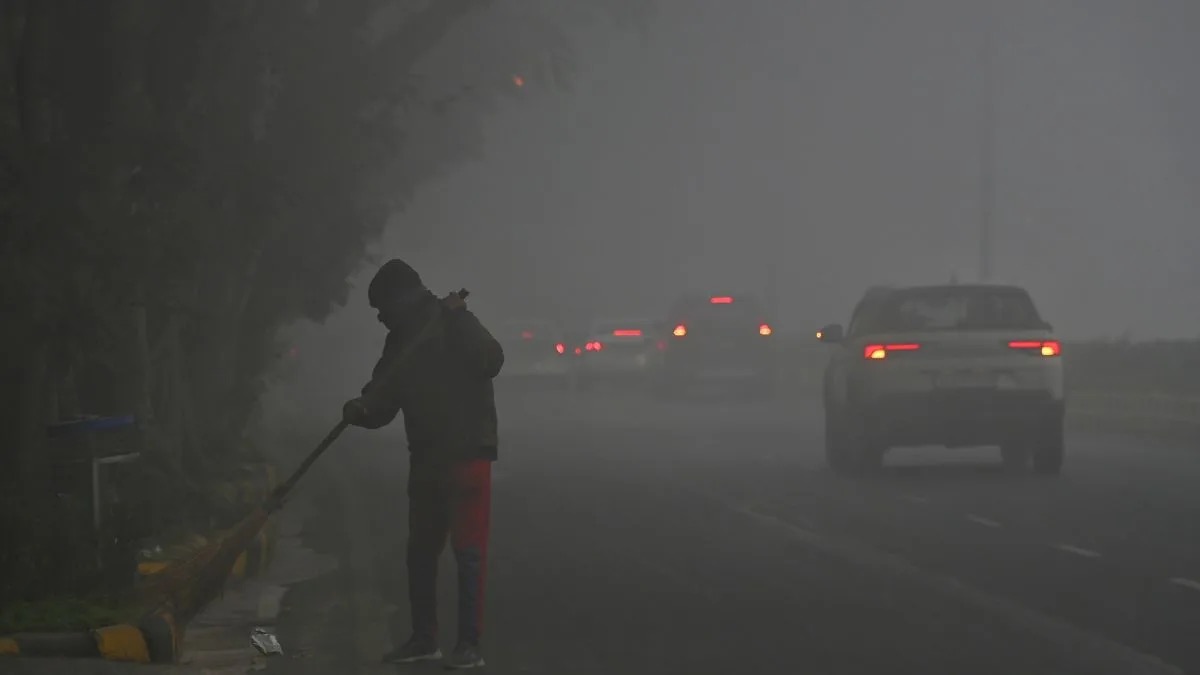
Delhi’s air quality remained in the poor category on 22 October 2026, with the Air Quality Index at 226 at 7 am, according to Central Pollution Control Board data, and the Commission for Air Quality Management invoked Stage 1 of the Graded Response Action Plan across Delhi-NCR. It was the second consecutive day in the poor band, which covers readings from 201 to 300. The index had risen from 179 on Tuesday to 244 by 2 pm on Wednesday, which led to the CAQM’s decision. A reading of 228 was recorded at 9:15 am on the government dashboard, and another service showed 242 at 9:30 am, since readings differ between monitors and times of day.
The argument that the situation is serious is based on the speed of the deterioration and the local readings. The index went up by 65 points in a day, from 179 to 244, and several stations were already in the very poor category: Jahangirpuri recorded 309 and Chandni Chowk 307. The IMD and IITM forecast that the AQI would stay in the poor category in the coming days. Reports linked the spike to overnight Dussehra celebrations, and winter conditions normally make the problem worse, as cooler air and slower winds trap pollutants. The CAQM ordered stricter dust control and the Municipal Corporation of Delhi stepped up its anti-pollution measures, which shows that the authorities treat the early reading as a signal to act before the season gets worse.
The counter-argument is that the numbers on the day are modest by the standards of Delhi’s worst days. Stage 1 of the plan applies to the poor category, with an AQI of 201 to 300, while Stage 2 covers very poor air at 301 to 400, Stage 3 severe air at 401 to 450 and Stage 4 severe-plus air above 450. A reading of 226 is at the lower end of the poor band, well below the 309 and 307 recorded at the worst stations. Readings also differ between monitors and times of day, so live figures should be taken from the CPCB or the CAQM.
The pollution season matters for the whole of north India because it affects millions of people and puts a strain on hospitals. Delhi-NCR has to deal with dust, vehicle emissions, industry and, in the coming weeks, stubble burning in neighbouring states. In past years the Rajya Sabha was told that stubble burning contributed an average of 10.6 percent of Delhi’s PM2.5 between 8 October and 7 December, with a peak of 35 percent, according to IITM Pune’s Decision Support System. The CAQM’s framework allows the measures to be stepped up quickly if the index rises, and the first week of the season shows how fast that can happen. The 2025 framework also set a ban on entry of most commercial goods vehicles into Delhi from 1 November 2025, with BS-IV commercial goods vehicles allowed until 31 October 2026, a date that falls in the middle of this season.
Delhi’s air is poor and the first stage of the response is in force. The index was 179 on Tuesday, 244 on Wednesday afternoon and 226 on Thursday morning. Whether it stays at Stage 1 or moves to a higher stage will depend on the weather and on how well the dust and vehicle rules are enforced.



Leave a Reply