
The Supreme Court on Wednesday, 14 October 2026, criticised the Election Commission of India strongly after the poll body said it could not trace the video recording of the original vote counting for the 2023 Karnataka Assembly election in the Sringeri constituency, according to Scroll, Law Trend and other reports. The bench of Justices Sanjay Kumar and Sanjeev Sachdeva said that it would not accept ‘lame excuses’ from the Commission.
The bench said: ‘Your whole purpose is to hold an election, and you need to have a document,’ according to the reports. It directed the Commission to produce all available records by the next hearing, made it clear that explanations about missing election records would not be accepted, and warned that it could draw an adverse inference if the required documents were not produced, according to Law Trend.
An adverse inference is a conclusion that a court may draw against a party that fails to produce evidence which it should have, namely that the missing evidence would have been unfavourable to that party. The reports reviewed describe the warning but do not say what inference the court might draw in this case, and the explanation of the term is general background.
The matter came to the Supreme Court through an appeal by T D Rajegowda, the Congress MLA from Sringeri, whose victory in the 2023 Assembly election was challenged by the BJP candidate D N Jeevaraj, according to the reports. Rajegowda defeated Jeevaraj by 201 votes. The reports reviewed do not describe what Jeevaraj alleges or the stage the case has reached.
The margin of 201 votes gives the missing video its importance. In a constituency where a few hundred votes decide the result, the way in which individual rounds of counting and postal ballots were handled can be decisive, which is a general point and not a finding in this case. The reports reviewed do not describe what Jeevaraj alleges about the count.
The record of the proceedings is limited in the sources reviewed. They do not say what the Election Commission told the court about how the video went missing, whether other recordings of the counting exist, or which stage of the case the appeal has reached. They also do not say when the next hearing will be held.
The incident arrived in the same week as another hearing involving the Commission. On 15 October the Supreme Court issued notice to the Election Commission and the Chief Election Commissioner on petitions by Rahul Gandhi and other opposition leaders against the Special Intensive Revision of electoral rolls, as IndiaX24 reports separately. The two cases are unrelated in their facts, but both involve the court asking the Commission to produce records and answers.
The court’s wording is notable. ‘Lame excuses’ is a strong phrase for a bench to use about a constitutional body, and the second sentence of its remark ties the Commission’s purpose to its records. Both statements are quoted in the reports, and they show that the bench treats the preservation of counting records as a basic duty of the Commission. The reports do not say whether the Commission offered an explanation for the loss, such as a failure of storage or a lapse in the retention period.
The Commission has not publicly responded to the court’s remarks in the sources reviewed. IndiaX24 will report the production of records at the next hearing.
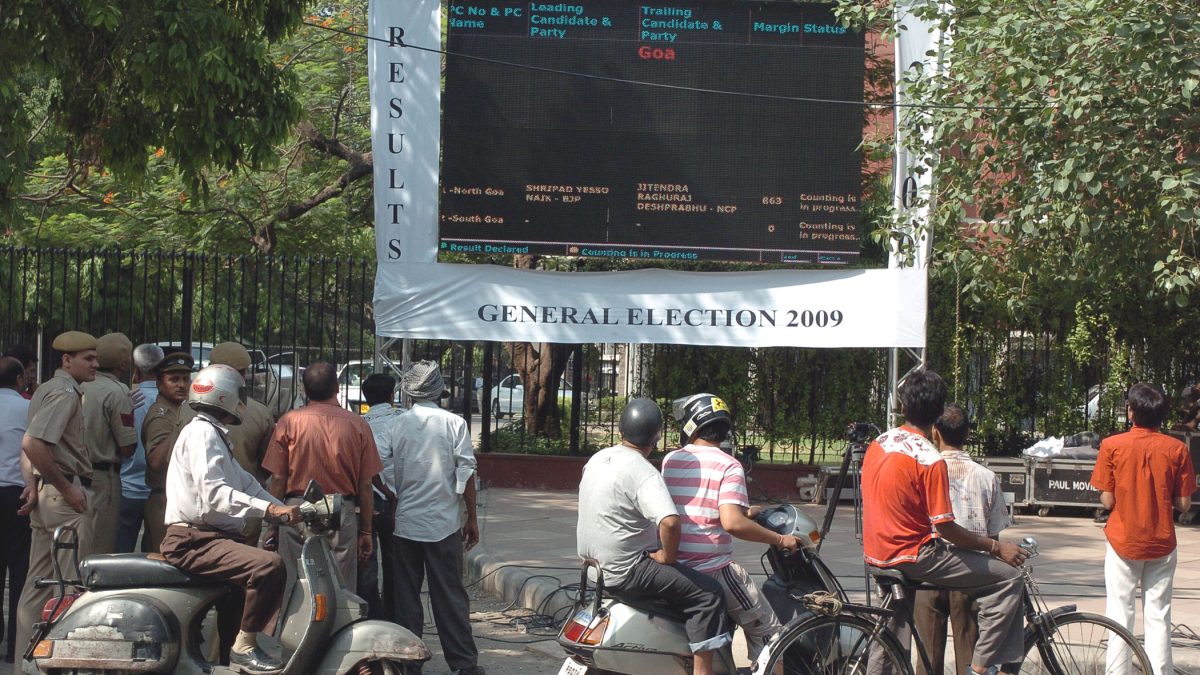
Image: A results display board at the Election Commission of India office (file photo from 2009; a stand-in image). Photo by Election Commission of India, licensed under Government Open Data License – India, via Wikimedia Commons.




Leave a Reply