
India’s next Census will collect data on caste for the first time since 1931, according to Wikipedia’s page on the 2027 Census. The decision to include caste enumeration was taken by the Cabinet Committee on Political Affairs on 30 April 2025, and the data will be collected during the second phase of the exercise, the population enumeration in February 2027. An ANI report of 14 August 2026 says that the Centre notified 40 questions for the Census, and describes caste enumeration as taking place for the first time since Independence.
The method has drawn criticism. The Wikipedia article says that the Census will record individual jati, or caste, in an open-text format and not through predefined dropdown lists, and that this approach has been criticised by opposition parties. The sources reviewed do not set out the reasons for the criticism in detail, so they cannot be attributed to any party here, and the government’s response is also not described.
The Census will be largely digital. According to Wikipedia, about 3.3 million enumerators will use their own smartphones, with paper alternatives available, and a mobile app and a Census portal will remove the need for paper records. Respondents will also be able to enumerate themselves online through a dedicated portal available in 16 languages, during the 15 days immediately before house-to-house work in each state or union territory.
The Census is in two phases. The first, the house-listing and housing census, runs from 1 April to 30 September 2026 in all states and union territories, with a 30-day period in each as it chooses, and the second is the population enumeration from 9 to 28 February 2027, with a reference date of 1 March 2027. A separate IndiaX24 article covers the schedule in more detail.
Provisional results are expected in late 2027, and the final report in late 2028, according to Wikipedia. The Census is also the basis for the redistribution of Lok Sabha seats, and the Census page notes that the Constitution (131st Amendment) Bill, 2026, which would have enabled delimitation on the basis of the 2011 Census, failed in April.
What was the last caste count? The last time that a Census counted all castes was in 1931, under British rule. Later censuses recorded Scheduled Castes and Scheduled Tribes, but not other castes, according to the page’s statement that the 2027 exercise will be the first time since 1931. The sources reviewed do not describe the history in further detail, nor the earlier socio-economic caste survey of 2011.
Why does it matter politically? Data on caste can inform the design of reservations, welfare schemes and representation, and parties have taken different positions on the demand for a caste count. The sources reviewed do not give party positions beyond the criticism of the open-text format, so none is described here.
The privacy of the data is a question that the sources reviewed do not address. Census law restricts the use of individual information, but the reports consulted do not describe the specific protections in the digital system, and readers should consult the Registrar General’s notifications.
Census 2027 will be the first digital Census and the first to count castes for nearly a century, and the way that the caste question is asked will shape how useful and how contested the data are.
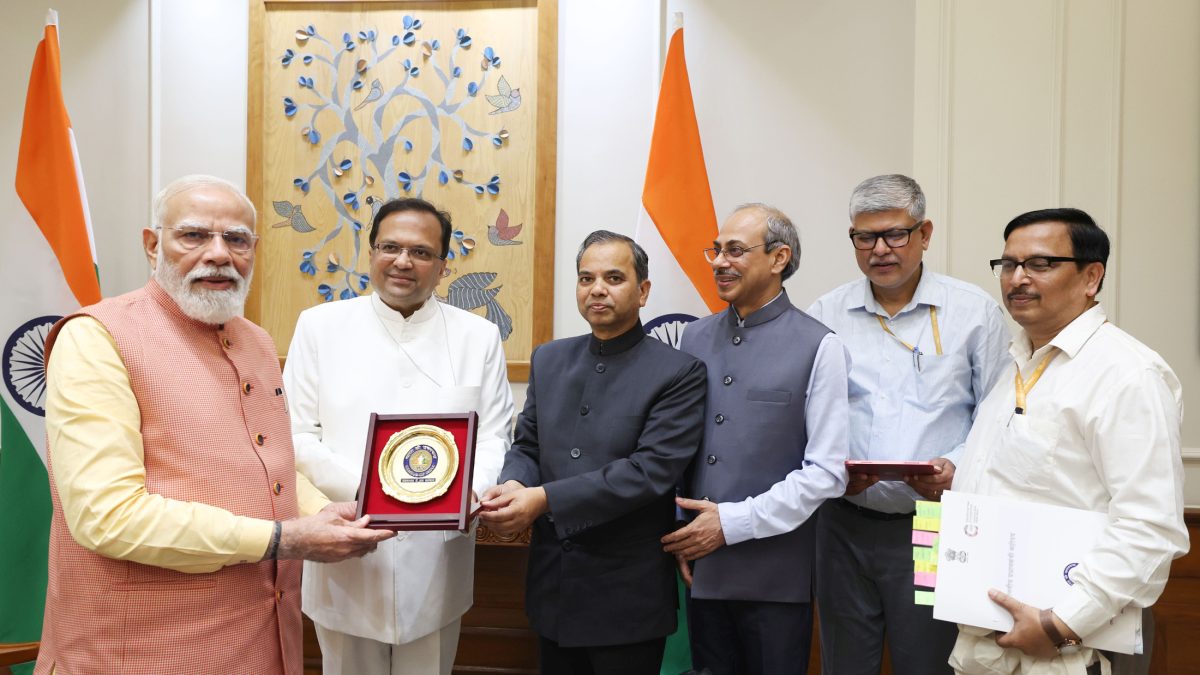
Featured image: Prime Minister Narendra Modi taking part in the self-enumeration exercise for Census 2027 (file photo). Photo by Prime Minister’s Office, licensed under Government Open Data License – India, via Wikimedia Commons.




Leave a Reply