
Since 2025, relations between Washington and Islamabad have changed sharply, and India has watched with concern. Pakistan’s army chief, Field Marshal Asim Munir, met President Donald Trump at the White House on 18 June 2025, a rare meeting for a military leader who was not a head of government. The contrast with earlier years was stark: Foreign Policy notes that in March 2025 the United States had proposed sanctions on Munir. Within months, Pakistan was nominating Trump for the Nobel Peace Prize, and Washington began describing Pakistan as a valued partner in counterterrorism, according to reports at the time.
Economic ties followed. Under a US-Pakistan trade deal, Pakistan’s proposed tariff rate was reduced from 29 percent to 19 percent, while India faced 50 percent duties in the same period, Foreign Policy reports. A mineral-extraction agreement valued at $500 million was negotiated, Pakistan opened markets to American farm goods, and World Liberty Financial, a company backed by the Trump family, signed a letter of intent with Pakistan’s crypto council. These details matter in India because they appeared alongside the tariff dispute, so many commentators in Delhi saw the two events as linked, although no official source has said so.
The sharpest irritant has been the May 2025 conflict between India and Pakistan. Trump said repeatedly that US mediation helped to end it, and India denied that US mediation had anything to do with the truce. Foreign Policy reports that India was deeply frustrated by Trump’s portrayal of India and Pakistan as equivalent, and that Pakistan’s willingness to accept credit contrasted with India’s inability to do so without creating a sovereignty problem. India’s long-standing position is that its dealings with Pakistan are bilateral and that third parties have no role in them.
Pakistan’s usefulness to Washington increased in 2026 because of Iran. After US strikes on Iran in June 2025, Pakistan acted as a channel between the United States and Iran and, in April 2026, delivered a ceasefire plan to both sides, according to Foreign Policy. Munir was reported to have dealt directly with Trump, Vice President JD Vance and Iranian officials. For Washington, a Pakistan that can talk to Tehran is valuable, and that gives Islamabad leverage it did not have a few years ago, as well as a stronger claim on American attention, a change that Indian commentators have noted with some concern.
Not every analyst reads this as a break with India. The National Interest argued that Trump’s Pakistan reset is not the end of an “India first” approach, and that the relationship with Delhi is deep enough to absorb diplomatic hits. The record so far supports a more modest conclusion: Washington is widening its contacts in South Asia rather than abandoning India. Whether it changes course will depend on the trade agreement, on cooperation in defence and technology, and on events involving Pakistan itself, which Indian officials will keep watching closely in the months ahead.
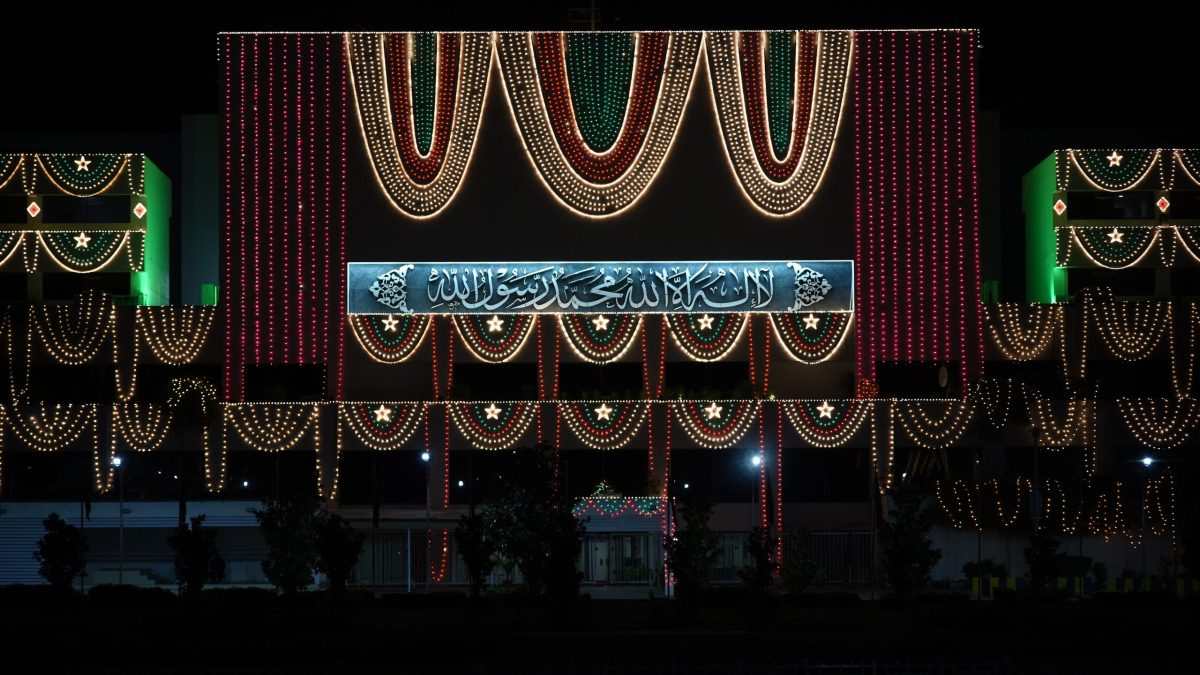
Featured image: Parliament House in Islamabad, Pakistan (file photo). Photo by Mhtoori, licensed under CC BY-SA 4.0, via Wikimedia Commons.




Leave a Reply