


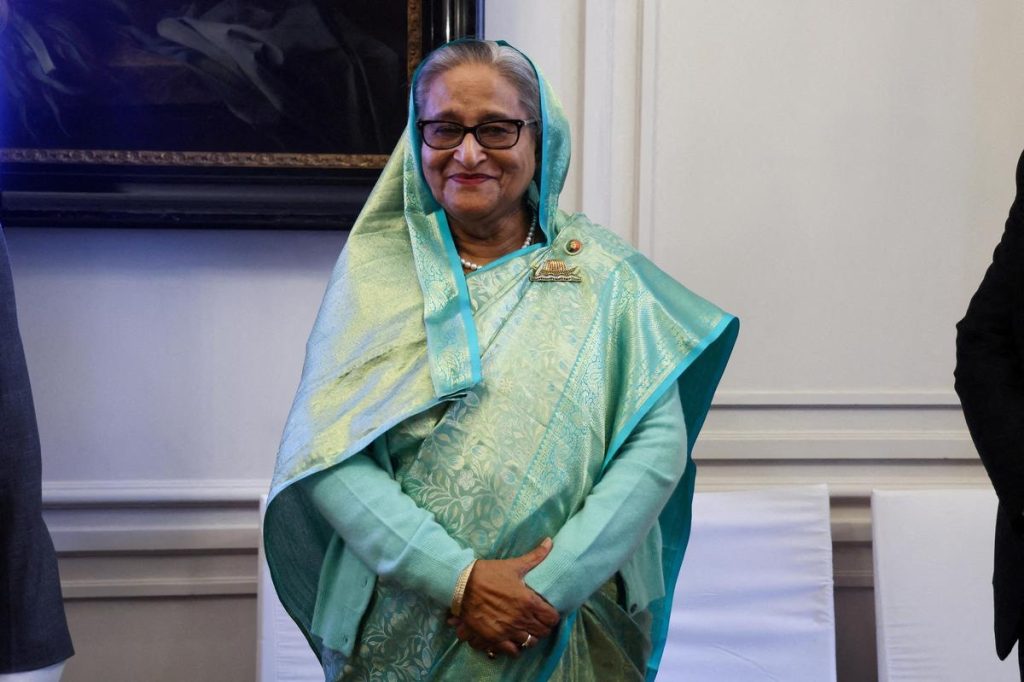
Ousted Bangladeshi Prime Minister Sheikh Hasina plans to return home from exile in India on 16 December, the day Bangladesh celebrates as Victory Day, marking the independence it won after a war with Pakistan, her spokesperson said on Tuesday, 24 November 2026. The announcement, which The Hindu reported with details from The Associated Press, sets up a direct confrontation with the government in Dhaka, which says she will be arrested the moment she enters the country and has asked India to extradite her.
Ms. Hasina went into exile in India on 5 August 2024, after a student-led mass uprising forced her to end her 15-year rule. She was later sentenced to death in absentia for crimes against humanity linked to the uprising, in which hundreds of protesters were killed. Ms. Hasina has rejected the verdict and has said she is ready to fight the case once she is back. In a statement on Tuesday announcing the date, her camp urged current Prime Minister Tarique Rahman to arrange her return on the national airline. "Since Sheikh Hasina was flown to India on a Bangladesh aircraft on August 5th, 2024, she now calls upon the government to arrange for her air transport from Delhi back to Dhaka," spokesman Syed Mozammel Ali said.
The choice of date carries symbolism. "It is deeply symbolic that she has chosen 16 December, our Victory Day, for her planned return to Bangladesh," Abu Obaidha Arin, an aide to Ms. Hasina, told The Associated Press. "We firmly believe that she will celebrate this historic day among her people, honoring the great victory achieved under the leadership of her father, Bangabandhu Sheikh Mujibur Rahman." Mr. Arin added that the aides were "equally confident that she will definitely return and under her leadership post return, Bangladesh will once again advance towards peace, stability and prosperity." Earlier this month, in an interview with the AP, Ms. Hasina said she would return to the country in December "at any cost", and that even death could not prevent her from returning home.
The government's answer has been blunt. A senior minister, State Minister for Foreign Affairs Shama Obaed Islam, told Reuters in an interview on Sunday, 22 November, that Ms. Hasina would be arrested and jailed if she returned. "As soon as she tries to enter Bangladesh, she will be arrested. And she will be taken to jail, and the law will take its course," she said. "We would like India to honour the extradition treaty and return her as a convict, and the law will take its course. She will have to face the music." Dhaka is instead seeking Ms. Hasina's extradition from India, expecting New Delhi to comply with an existing extradition treaty. India's External Affairs Ministry did not immediately respond to a request for comment on the latest remarks; in April 2026, the Ministry said it was examining Bangladesh's extradition request.
Ms. Obaed also said there had been no official discussions with India about sending an aircraft to bring Ms. Hasina back, rejecting the idea implicit in the request made by her aides. She said Dhaka wanted balanced ties with New Delhi that did not compromise Bangladesh's "dignity, self-respect and interests", and added: "India needs to decide what kind of foreign policy they need to adopt for Bangladesh." The comments show how the issue has become part of the wider relationship between the two neighbours, since Ms. Hasina has lived in India since fleeing Dhaka.
The legal status of Ms. Hasina and her party is another factor. She faces a death sentence in Bangladesh, and her Awami League party is banned following the 2024 uprising that ended her long rule. The United Nations has said that as many as 1,400 people were killed during the unrest. According to Reuters, as reported by The Hindu, Ms. Hasina has sought a new passport and identity card ahead of her planned return, requests the government has rejected. Those practical obstacles mean that even if India were willing to let her leave, she would need documents and an aircraft, and that the question of how she would travel remains unanswered.
The standoff has already brought Awami League supporters onto the streets. This month the party announced a week of protests and rallies in support of Ms. Hasina's return, culminating in a nationwide lockdown on 19 November. Police have recorded dozens of crude bomb blasts and incidents of arson targeting vehicles in at least 28 districts over the past 10 days, with several police officers and civilians injured, according to local media. Ms. Obaed described the violence as a survival tactic by Ms. Hasina's "politically bankrupt political party". Khalid Mahmud Chowdhury, a senior Awami League official, countered that the current political establishment was responsible for the violence. The competing explanations illustrate how polarised the debate has become: the government treats the unrest as organised violence by a banned party, while the party blames the authorities.
The issue also overlaps with another regional question. Dhaka is stepping up diplomatic pressure on neighbouring Myanmar over the return of Rohingya refugees, after the International Court of Justice ruled that thousands of killings and widespread sexual violence by Myanmar's security forces against the Muslim minority in 2017 amounted to State-sponsored genocide. Myanmar has criticised the ruling and said the Rohingya would only be able to return "when situations permit". About 1.2 million Rohingya live in Bangladesh after repeated repatriation attempts failed, and their return has been complicated by Myanmar's civil war and the Arakan Army militia's control of nearly all of Rakhine State. Ms. Obaed said the verdict "gives us, Bangladesh, the strength" to fight for the refugees' return "with dignity and safety". The point is that the government in Dhaka is balancing multiple pressures at once, from the unrest at home to a refugee crisis that has lasted years.
For India, the announcement poses a delicate diplomatic problem. Ms. Hasina has been living in the country since August 2024, and Bangladesh's government has asked for her extradition under an existing treaty. New Delhi has said only that it is examining the request, as the Ministry did in April. Any decision to facilitate her departure, or to refuse extradition, will affect relations with a neighbour that is central to India's eastern and northeastern security and trade. The Hindu's report noted that India's External Affairs Ministry had not commented on the new announcement.
What happens next depends on several decisions. Dhaka has made clear that it would arrest her on arrival, and it has not offered an aircraft. Ms. Hasina's aides have said she will return regardless, and her supporters are likely to keep up their street campaign as 16 December approaches. India's choices, whether to let her travel, to say nothing or to act on the extradition request, will be watched closely. Between now and Victory Day, the combination of a defiant exile, a government promising arrest and a banned party staging protests suggests that tension in Bangladesh is more likely to rise than fall, with consequences for peace in the country and for ties with India.