


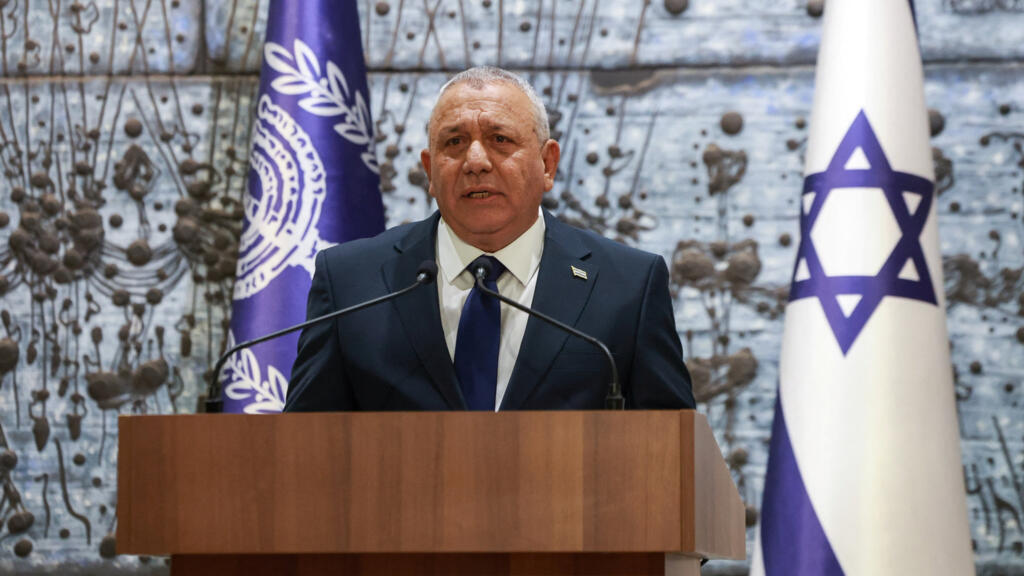
Israel's president has chosen Gadi Eisenkot, Prime Minister Benjamin Netanyahu's strongest rival, to try to form a new government following a deadlocked election that left neither man with a clear path to power. The choice was announced on Saturday, 7 November 2026, and Mr. Eisenkot was invited to the President's Residence on Sunday to be given the task. Mr. Netanyahu, Israel's longest-serving leader, is fighting to stay in office after his religious-nationalist coalition lost its majority in the 27 October election but still emerged as the largest bloc in parliament. President Isaac Herzog's role in nominating a candidate is largely ceremonial.
The case that Mr. Eisenkot has a real chance rests on the arithmetic of the Knesset. Netanyahu's wider coalition won only 53 seats in the 120-seat parliament, short of the 61 needed for a majority, even though Likud won the most seats of any single party with 27. Mr. Eisenkot's Yashar party emerged as the second-largest party with 21 seats, and his coalition of four centre-left to right-wing Jewish-led parties won 48. Two parties representing Israel's Arab minority won an unprecedented 19 seats, and their leaders nominated him first, giving him the most endorsements. Together those seats would give him 67, enough for a majority. He is also a former chief of the military, a profile that appeals to many voters, and he would be the country's first Prime Minister from the Mizrahi community.
The counter-argument is that the numbers do not translate into a workable government. Mr. Eisenkot has declined to join forces with Arab parties, and without their support he cannot reach 61 seats with his own coalition of 48. Analysts quoted in the reporting say that his possible pathways, a minority government with Arab backing from the outside, a coalition with ultra-Orthodox parties that he and his allies have shunned in the past, or a unity government with Mr. Netanyahu, are all unlikely to take shape. Mr. Eisenkot has sworn that he would not serve in government with Mr. Netanyahu, and he has publicly rebuked him over his leadership and his management of the military campaign in Gaza. He only entered politics in 2022, so he lacks the coalition-building record of his rival, who has spent years negotiating with partners of every kind and knows how to hold a fragile majority together. He has 28 days to forge a government, with a possible 14-day extension.
The outcome matters for Israel and for the wider region. If no one can form a government, the process can run for around 100 days, and if no one succeeds in that period another election is held, which would prolong political uncertainty during a time of war and regional tension. Decisions on Gaza and on relations with neighbours all depend on who governs. India, which has close defence and trade ties with Israel, also has an interest in a stable partner.
Gadi Eisenkot now holds the first real chance to unseat Benjamin Netanyahu, but weeks of negotiation lie ahead, and a fresh election remains a genuine possibility.