


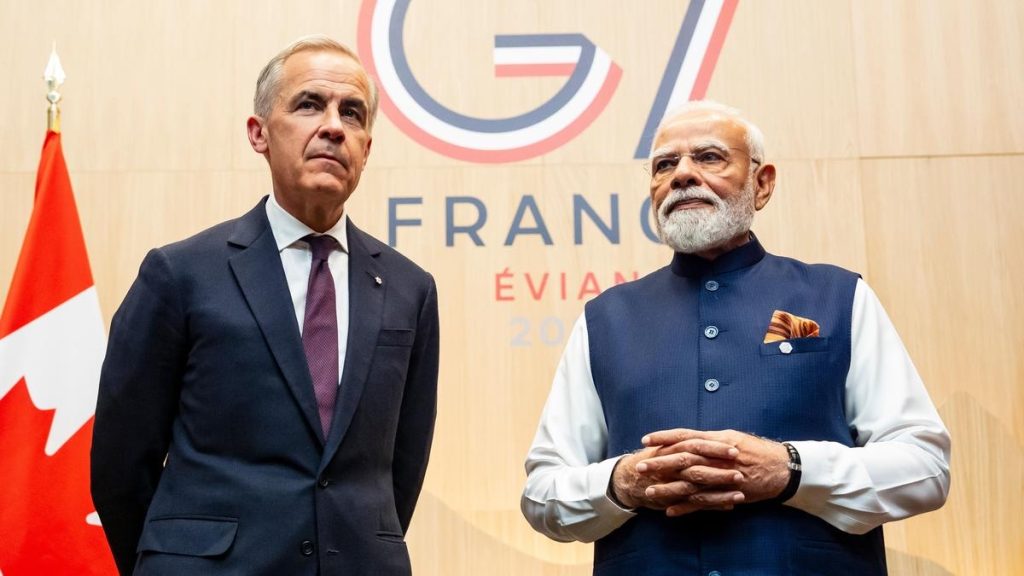
India and Canada are "very close" to concluding negotiations on a Comprehensive Economic Partnership Agreement (CEPA), an official said on Tuesday, 24 November 2026, as both sides aim to wrap up the talks by the end of this year. "Both teams are talking every day. We are very close," the official told The Hindu. The engagement is notable because the two countries had spent years in a diplomatic freeze, and a trade pact would mark the clearest sign yet that the relationship has been reset.
The latest round of talks has just ended. Last week, between 11 and 20 November, the two countries concluded the sixth round of negotiations for the agreement, which is aimed at unlocking new opportunities in trade and investment and at diversifying supply chains. The talks covered key areas including trade in goods, trade in services, rules of origin, trade remedies, intellectual property and investment promotion. Commerce Secretary Rajesh Agrawal also met Glenn Purves, Canada's Vice Minister of International Trade, and his delegation to review the progress of the negotiations.
The history of the talks explains why this phase is significant. The current negotiations mark a resumption: the two countries had earlier engaged in a similar exercise, but Canada paused it in 2023. They decided to resume this year because, as the report put it, much has changed on the global trade front over those two years. The CEPA was launched by Prime Minister Narendra Modi and Canadian Prime Minister Mark Carney in March this year. A separate Hindu interview with Vina Nadjibulla, co-founder and CEO of the Vancouver-based Centre for Strategic Statecraft, said the two countries have made "significant" progress in normalising diplomatic relations after the recent breakdown, and described an upcoming visit by Mr. Modi to Canada as an opportunity to reset bilateral relations.
The numbers show how much room there is to grow. The two sides have set a target to increase bilateral trade to $50 billion by 2030. In 2025-26, trade declined by 8.23% to $7.95 billion, made up of $4.67 billion of Indian exports and $3.28 billion of imports, from $8.66 billion in 2024-25. The trade balance was in India's favour by $1.38 billion. Reaching $50 billion would therefore require trade to grow about six-fold over the remaining years of the decade, which explains why both sides regard the CEPA as a necessary tool rather than an optional extra.
Services are an additional area. In 2025, India's bilateral services trade with Canada stood at about $14 billion, with India's exports worth $3.2 billion and imports worth about $11 billion. The report noted that India's main services exports include telecommunications, computer and information services and other business services. The gap between what India sells and what it buys in services, unlike in goods, runs in Canada's favour, which suggests that negotiators will have to find a balance in areas such as education, travel and other services when finalising the agreement.
On the goods side, major items of Indian exports to Canada include pharmaceutical products, machinery parts and mechanical appliances, iron and steel articles, electronic goods, organic chemicals, jewellery, gems and precious stones, clothing and textile articles, seafood, engineering goods and auto parts. Imports from Canada include pulses, fertilisers (potash), mineral fuels, wood pulp, gems and precious stones (diamonds), aircraft parts, machinery parts, paper and paperboard, and iron and aluminium scrap. This mix indicates complementarity: Canada supplies natural resources and agricultural inputs, while India sells manufactured goods and pharmaceuticals, and a tariff-reduction deal could expand both flows.
Canada's economy offers a sizeable market. The report said it represents a market of 41.65 million people (2025) with a GDP of $2.34 trillion at purchasing power parity. Canada is also home to more than 425,000 Indian students and a strong Indian community, which supports ties in education and services and has been a factor in political relations between the two countries. On investment, India is negotiating a separate bilateral investment protection agreement with Canada. India has received $4.8 billion in foreign direct investment from Canada between April 2000 and June 2026, making Canada the 16th largest investor in India. More than 600 Canadian companies have a presence in India, and more than 1,000 companies are actively pursuing business in the Indian market.
What would a CEPA change? Such agreements typically cover tariff cuts, services liberalisation and rules to make trade smoother, and the topics listed for the sixth round, from rules of origin to trade remedies and intellectual property, are the technical issues that decide how much of a tariff concession actually reaches exporters. The official did not describe which of these chapters is still open, and the statement that the teams are in daily contact suggests that the remaining differences are being negotiated line by line. The goal of concluding by the end of the year leaves roughly five weeks.
The wider context is diversification. In explaining why the talks were revived, officials pointed to the changes in global trade since 2023. For India, a Canada deal would add to its network of trade agreements and give exporters of pharmaceuticals, engineering goods and textiles better access to a rich-country market. For Canada, it would provide access to the world's most populous country and a way to reduce dependence on a small number of trading partners. The shared aim of supply-chain diversification, as the report framed it, is what links the two economies' interests.
There are caveats. The statement that talks are "very close" came from an unnamed official, and no agreement has been signed, so the timeline could slip. Trade between the two countries fell in 2025-26, a reminder that political relations and trade are linked and that the recovery in diplomatic ties has yet to show up in the data. And the agreement will need to address sensitive issues, from agriculture to services, that have bedevilled other trade talks. Still, the daily contact, the successful completion of a sixth round suggest momentum.
The coming weeks will show whether that momentum becomes a deal. If the two sides do conclude the CEPA by the end of 2026, it would be a milestone in the recovery of relations that Ms. Nadjibulla described, and it would give the $50 billion target for 2030 a framework in which to be pursued. If they miss the deadline, the talks are likely to continue into next year, given how far they have progressed. Either way, the message from both capitals is that the relationship is being rebuilt on the basis of trade and investment, and that the business case for it is strong.