


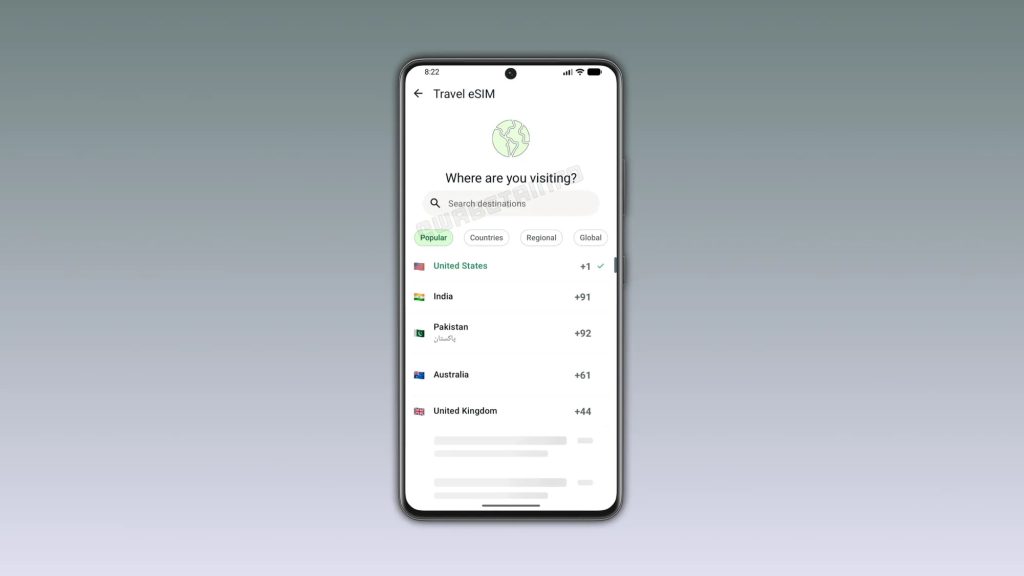
WhatsApp will soon let users buy and install a data eSIM for international travel without leaving the app, so that they can keep using the service on their existing phone number while abroad, the Meta-owned company said in a blog post on Thursday, 26 November 2026. The Hindu reported that the company named Jio among its partners, along with Smart Axiata, Smart Communications and Verizon, and said it would begin rolling out the feature in select countries soon. It did not name the countries or give pricing details. For a messaging app used by more than 3 billion people worldwide, according to Meta, even a small move into connectivity is a notable step, and for Indian travellers in particular the presence of Jio in the partner list makes it a development worth watching.
The company described the problem the feature is meant to solve in plain terms. "We're announcing a new way to buy and install a data e-SIM when travelling internationally in just a few taps without leaving the app. It'll be as effortless as sending a message," WhatsApp said. "That way, when you land, you can keep using WhatsApp on your same phone number as you normally would without having to find the closest airport kiosk to buy a local SIM card, hunt for a cafe with Wi-Fi or rack up roaming charges." Anyone who has landed in a foreign airport and searched for a SIM counter, or been surprised by a roaming bill, will recognise the situation.
An eSIM is a digital SIM that is downloaded to a compatible phone rather than inserted as a physical card, which allows a traveller to add a local data plan without swapping the SIM tray. A data eSIM, as the name suggests, provides mobile data and is typically used alongside the phone's main number, which stays active on the home network. That is the arrangement WhatsApp describes: a traveller keeps the existing number and uses the local data plan for WhatsApp and other apps. Because WhatsApp accounts are tied to a phone number, the service can continue to work as usual while the user is abroad on data, without the user having to register a new number.
The announcement was explained in a post on X by WhatsApp Head Kunal Shah, according to The Hindu, who described the effort as the company's early explorations around eSIMs. "What if WhatsApp could work anywhere you go in the world without any struggle," he wrote, adding: "Inviting partners everywhere to join us in this important mission." The wording is revealing. The company is presenting the feature as an early step and is openly asking more telecom operators and eSIM providers to join, which suggests the programme is at the start of a longer build-out rather than a finished product.
The partner list gives some clues about the shape of the service. Jio is an Indian telecom operator and Verizon a United States carrier, while Smart Axiata and Smart Communications are also telecom operators. The report names them as partners, working with eSIM providers and telecom partners, but does not say which operator will serve which market or whether the plans will be sold under their own brands. What the report confirms is that the rollout will begin in select countries, without naming them, and that pricing has not been announced. Until the company says more, any claims about the cost relative to ordinary roaming packs or to dedicated travel eSIM apps would be guesswork.
For Indian users, the potential benefit is straightforward. Many Indians use WhatsApp as their main means of communication with family and friends. A tool that lets someone buy a data plan for the destination country inside the chat app they already open every day could reduce the friction of staying connected abroad. The question is how it compares with existing options: telecom operators' international roaming packs, which are convenient but can be costly, and standalone travel eSIM services that have grown popular with travellers. WhatsApp has not provided the details needed to make that comparison.
There is also a business logic that the announcement hints at. WhatsApp's parent, Meta, has long sought ways to expand the usefulness of its messaging platforms beyond chat, from payments to business messaging. Travel connectivity fits that pattern: it addresses a real need at the moment when a user is most likely to be anxious about being offline, and it gives the company another reason for users to stay in the app. For telecom partners, it offers a new sales channel in front of a vast audience. The Hindu's report does not discuss revenue sharing or the commercial terms between the company and its partners, so those aspects remain undisclosed.
Privacy and regulation are likely to be part of the conversation as the feature develops, though the announcement does not address them. Buying a SIM-like product through a messaging app raises questions about identity checks, data handling and compliance with local telecom rules in each country, all of which differ. Telecom regulators in many countries require identity verification for SIM activation, and how that works for an eSIM sold inside a chat app is something the company will have to explain as the rollout reaches specific markets. Since the countries are not yet named, it is too early to say how these questions will be answered.
There are practical questions that users will want answered before they rely on the feature. An eSIM works only on phones that support it, so the benefit will be limited to compatible handsets. A data eSIM provides mobile data, not a new calling number, which fits WhatsApp's own use, since its calls and messages run over data, but it does not replace a traveller's regular SIM for ordinary voice calls and texts. The announcement does not say how long a plan would last, how much data it would include, or how a traveller would top up. Those are the details that will determine whether the feature is cheaper and simpler than the alternatives, and the company has said nothing on them yet.
For now, the facts are limited but clear. WhatsApp has announced a feature for buying and installing data eSIMs inside the app; it has named Jio, Smart Axiata, Smart Communications and Verizon among its partners; it says the rollout will begin soon in select countries; and it has not given pricing. Users who travel frequently will want to see the countries, the prices and the process before judging whether it changes the way they stay connected abroad.