


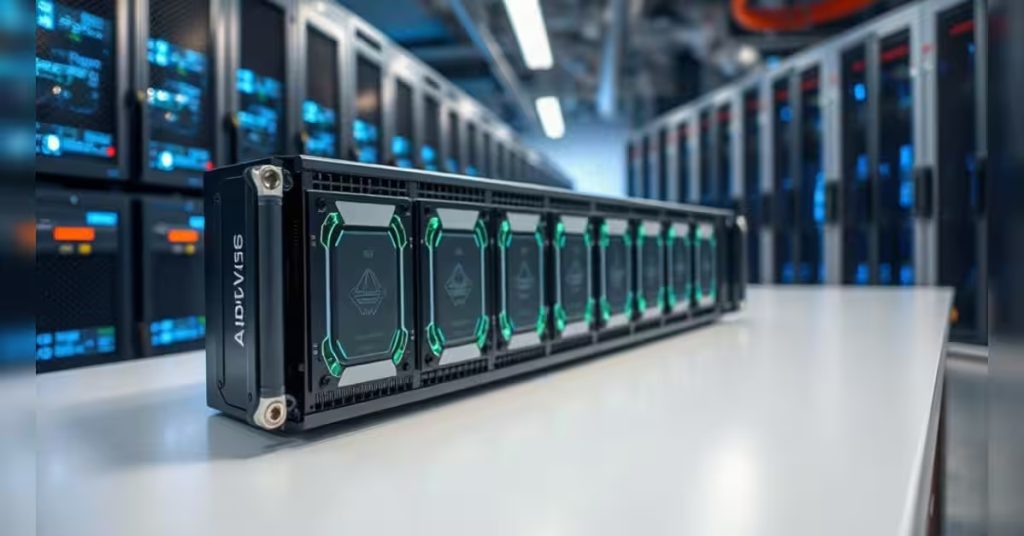
India's publicly supported artificial intelligence compute has passed 38,000 GPUs, according to the government's announcement at the India AI Impact Summit in New Delhi on 17 February 2026, and a further 20,000 were to be added over the following six months. The IndiaAI Mission was approved in March 2024 with an outlay of 10,371.92 crore rupees, about 1.14 billion US dollars, over five years. Researchers and start-ups can rent computing power at 65 rupees per hour, roughly 72 US cents. The question now is whether cheap hardware is enough to produce Indian AI models that can compete with the best in the world.
The argument in favour starts with the scale of what has already been delivered. The original target for the mission was 10,000 GPUs, so 38,000 means the programme has exceeded that goal by almost four times, and the planned 20,000 additions would take the total to around 58,000. Twelve start-ups have been selected to build indigenous multimodal foundation models trained on India-specific datasets, which addresses a real gap, since most global models perform poorly on Indian languages and local context. The mission also has seven pillars, including foundation models, start-up financing and AI governance, so compute is only one part of the plan. Officials also say about 90 billion US dollars of AI-related investment is already committed, and more than 400 billion dollars could follow across the AI stack over the next two years.
The counter-argument is that hardware does not automatically produce products or intellectual property. Only twelve start-ups have been chosen to build foundation models, a small number compared with the thousands of Indian technology firms and the roughly six million people who work in the sector. Reporting on the summit itself pointed to open questions about whether this infrastructure growth will lead to globally competitive products, and a memory chip facility that India wants is still awaiting announcement, which leaves a gap in the supply chain. Critics also note that the mission's budget of about 1.14 billion dollars is small beside the private sums being spent by global technology companies, so state-backed compute may remain a supplement rather than a foundation.
This matters beyond the technology sector. Control over AI infrastructure is becoming a question of national security and economic independence, and the minister's own stated aim is that India should control its own destiny in the technology stack. The government projects that India's technology sector will pass 280 billion dollars in revenue this year and that AI could add 1.7 trillion dollars to the economy by 2035. If the compute is used well, it can lower costs for students and start-ups in smaller cities as well as in Bengaluru.
India has built the machines faster than expected, and that is a genuine achievement. The harder job begins now: turning 38,000 GPUs into models, products and companies that people actually use. The mission will be judged on those outcomes, not on the hardware count. Students, researchers and start-ups outside the big metros will be the first to show whether subsidised access at 65 rupees per hour translates into working products and jobs.