


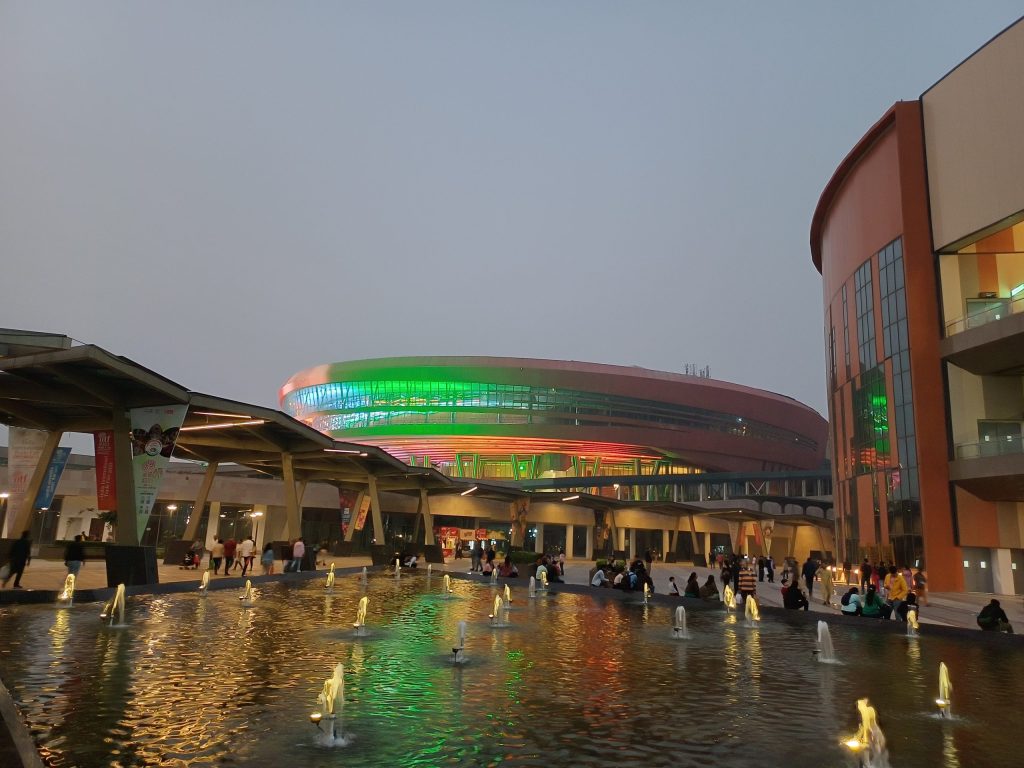

The India AI Impact Summit 2026 was held at Bharat Mandapam in New Delhi from 16 to 21 February 2026, according to Wikipedia. It was originally planned for 16 to 20 February and was extended because of demand. It was the fourth in a series of global AI summits that began at Bletchley Park in 2023, followed by Seoul in 2024 and Paris in 2025, and the next ones are planned for Geneva in 2027 and the UAE in 2028.
The attendance was large. More than 100 countries were represented, including more than 20 heads of state and over 60 ministers. Technology leaders who attended included Sundar Pichai of Google, Sam Altman of OpenAI, Dario Amodei of Anthropic, Demis Hassabis of Google DeepMind and Mukesh Ambani of Reliance Industries. Prime Minister Narendra Modi inaugurated the summit on 19 February, and French President Emmanuel Macron and UN Secretary-General Antonio Guterres were among the opening speakers.
The themes were organised under three sutras, called People, Planet and Progress, across seven working groups. Before the main days, the summit recorded a Guinness World Record, with 250,946 AI responsibility pledges in 24 hours on 16 and 17 February, according to the article.
On models, Sarvam AI launched its 30-billion and 105-billion-parameter models, which use a mixture-of-experts design, along with speech and vision models and its Kaze smart glasses. BharatGen, the consortium led by IIT Bombay, presented a model called Param2 with 17 billion parameters that supports 22 Indian languages. These two launches are covered in more detail in other IndiaX24 articles.
On infrastructure, the government said it planned to add more than 20,000 GPUs to the 38,000 that already exist under the IndiaAI Mission. Microsoft announced an investment of $50 billion to bring AI to lower-income countries by the end of the decade, according to the same article, which does not say how much of it is meant for India.
The summit also drew criticism. A university presented a Chinese-made Unitree Go2 robot dog as an indigenous development and was ordered to vacate its stall. There were reports of product theft and of delegates left without food or water during a security lockdown, and the venue was closed to the public on 19 February for the Prime Minister’s visit, which angered registered attendees. Members of the Indian Youth Congress protested inside the venue on 20 February, and four were sent to police custody and later granted bail on 2 March.
Commentators also questioned the substance. Bloomberg reported chaotic conditions, and TechPolicy.Press criticised what it called a trade fair focus over governance and noted that chief executives received parity with governments while civil society was excluded. Reports said that the US delegation framed AI as a geopolitical competition with China, according to the Wikipedia summary.
The sources reviewed do not describe the final declaration or the commitments that governments signed, so those cannot be reported here. The article gives the pledges and announcements but not the formal outcome documents, and the full text should be checked at the official summit site.
As an event, the summit showed India’s ambition to be a host of global AI diplomacy and a hub for AI products, while the problems with its organisation and the doubts about its governance outcomes were part of the same story.
Featured image: Bharat Mandapam in New Delhi, the venue of the India AI Impact Summit (file photo). Photo by DesiBoy101, licensed under CC BY 4.0, via Wikimedia Commons.