



The Defence Ministry has signed a contract worth Rs 2,563 crore with NewSpace India Limited for GSAT-7C, the Indian Air Force’s first dedicated communications satellite, which is expected to be operational by 2030, according to ThePrint. The Defence Acquisition Council gave in-principle approval in November 2021 at a cost of Rs 2,236 crore. The satellite is meant to give “secure, resilient and seamless communications among IAF assets” and to support software-defined radios, providing beyond-line-of-sight connectivity through a satellite relay when conventional radio links fail. Defence sources told ThePrint a launch could take place within two years, though there is no official confirmation from ISRO.
The case that GSAT-7C meets a real need is made by what it will do and how it compares with the earlier satellite. The IAF currently relies on GSAT-7A, launched in December 2018, which it shares with the Indian Army, and it is used for airbase, radar and airborne communications. GSAT-7C would be used exclusively by the Air Force, giving it a dedicated network that is not shared with another service. A satellite link matters when ground-based radio links are interrupted, and software-defined radios linked through the satellite would keep aircraft, ground stations and radars in contact over long distances. The Defence Acquisition Council approved the project in November 2021, and the signing of a contract with NewSpace India Limited, the commercial arm of the space department, moves it from approval to delivery.
The case for caution is about time and cost. The in-principle approval was given in November 2021, and the satellite is not expected to be operational until 2030, more than eight years later, which is a long gap for a communications capability. The contract value of Rs 2,563 crore is about 14.6 percent, or Rs 327 crore, above the Rs 2,236 crore originally approved. The figure is a signed contract value rather than an estimate, so it reflects the cost of delivering the satellite as it is now specified. Even the earlier launch window that defence sources mentioned, within two years, has no official confirmation from ISRO, so the timeline is uncertain. Until then, the Air Force will keep using GSAT-7A, which it shares with the Army, and any delay or failure of a launch would extend that period.
The contract matters for India’s air power because secure, long-range communication is essential to coordinate fighters, radars and airbases, and a dedicated satellite reduces the Air Force’s dependence on shared or commercial links. Defence sources said the launch could be within two years, a date that ISRO has not confirmed. For India’s space sector, it is a significant order for NewSpace India Limited, which sells the products of the space department commercially, and it shows the government turning to the space department’s commercial arm for defence needs. For the country’s military planning, it adds to the satellite network that supports operations, and the 2030 date will be watched.
India’s Air Force will get its own communications satellite, at a higher price and a later date than first planned. The launch date, still unconfirmed, is the next milestone to watch. The contract was reported on October 15, 2026, and the date of delivery will determine how long the Air Force must rely on the shared satellite.
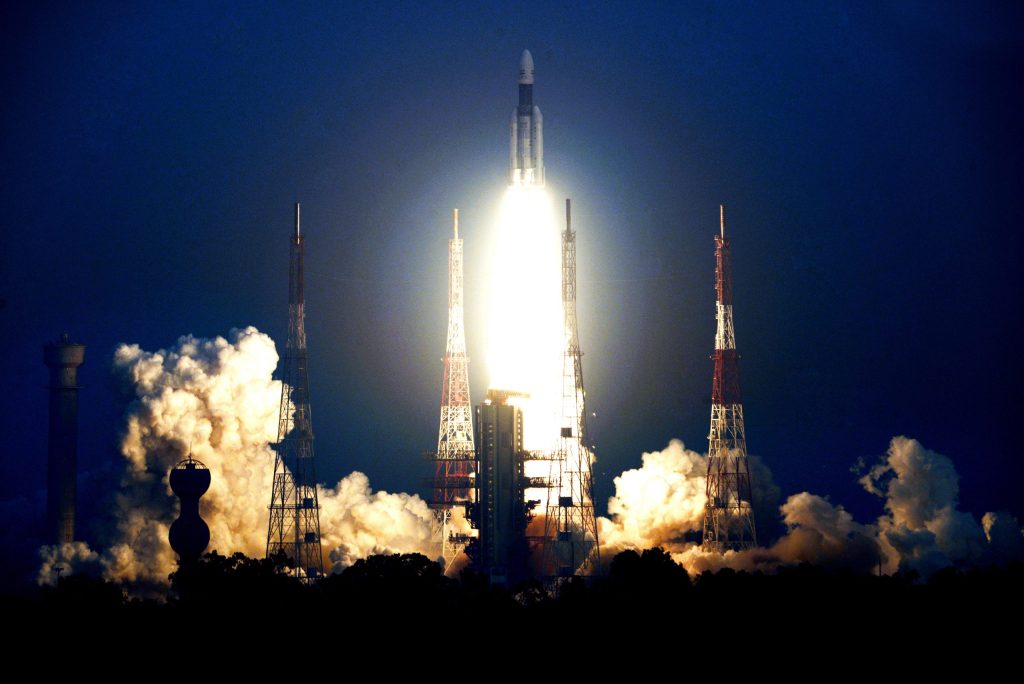
Image: The launch of a GSLV Mk III from Sriharikota (file photo; not GSAT-7C). Photo by Indian Space Research Organisation, licensed under Government Open Data License – India, via Wikimedia Commons.