



The Defence Research and Development Organisation (DRDO) has carried out the first live jump using its new Advanced High-Altitude Parachute, in a trial near Nyoma in eastern Ladakh on Tuesday, 6 October 2026.
The trial
- Jump height: 16,000 feet above mean sea level
- Parachute opened at: about 15,500 feet
- Landing: the Mudh drop zone, which is itself about 13,700 feet above sea level
- Result: the parachutist landed safely, according to reports of the trial
What the parachute is for
The Advanced High-Altitude Parachute, or AHAP, is a static-line system. In a static-line jump the parachute is opened automatically by a line attached to the aircraft, so that large numbers of soldiers can be dropped quickly one after another. This is the method used for mass drops of paratroopers, as distinct from the free-fall jumps made by special forces.
The system is designed to work at altitudes of up to 18,000 feet. That matters because air at such heights is much thinner than at sea level: a parachute descends faster and opens differently, and a canopy built for the plains may not slow a soldier enough before a landing zone that is itself more than four kilometres above sea level.
Who built it
The parachute was developed by the Aerial Delivery Research and Development Establishment in Agra, a DRDO laboratory, and manufactured by the Ordnance Parachute Factory in Kanpur.
Why Ladakh
Nyoma lies close to the Line of Actual Control with China, and its airfield has been upgraded in recent years. Since the military stand-off in eastern Ladakh that began in 2020, the armed forces have put greater weight on being able to move troops and equipment rapidly at high altitude. A parachute cleared for use at these heights would allow airborne troops to be dropped directly into mountain areas.
Also this week
The Week reported that the DRDO completed two high-altitude tests in the same period, the other being a trial of an indigenous high-altitude airship intended for surveillance.
What next
A first live jump is an early step. Further trials, including jumps by groups of soldiers and with full combat loads, would normally be needed before the system is cleared for service.
Trial details are as reported by The Week, Bharat Shakti and GKToday from the Ministry of Defence’s announcement.
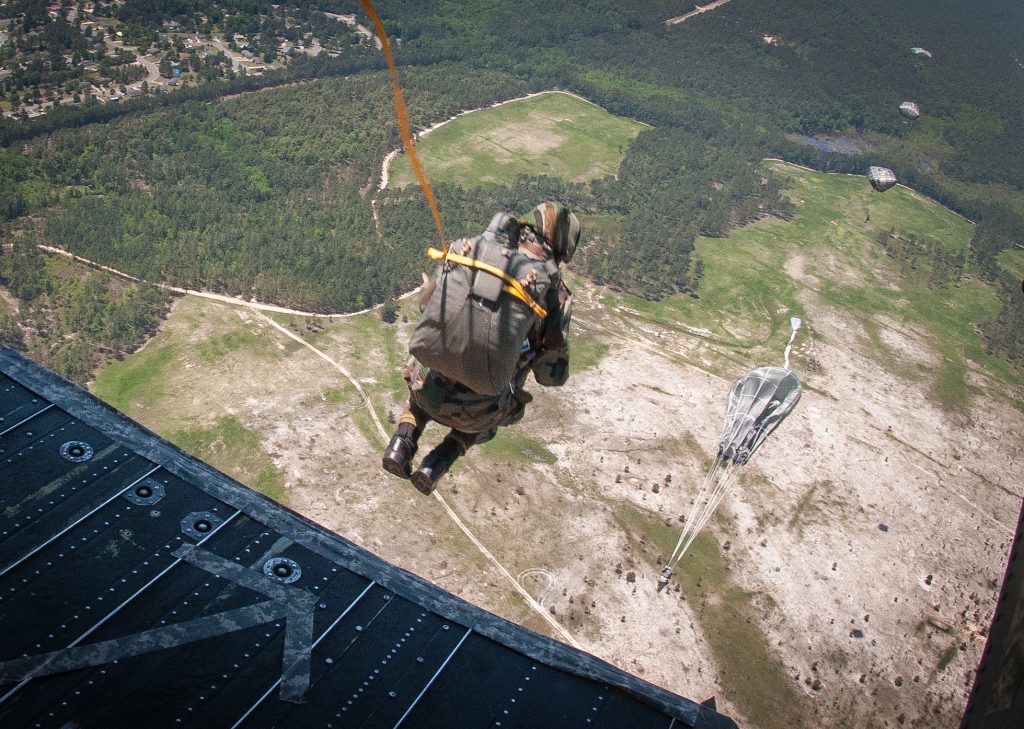
Image: An Indian Army paratrooper jumps from a helicopter during a training exercise in 2013 (file photo; not the trial described). Photo by Sgt. Michael J. MacLeod, in the public domain, via Wikimedia Commons.