


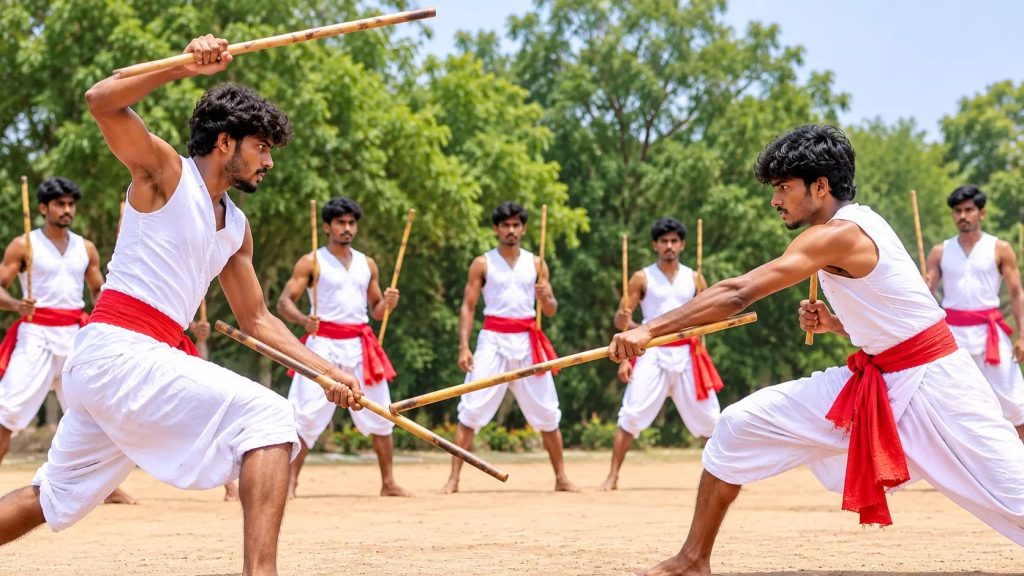
A bamboo stick in hand, concentration in the eyes and lightning-fast movements: the skills of Karra samu, Telangana's traditional stick-fighting art, are set to reach a national audience for the first time as the discipline makes its debut at the Khelo India Youth Games. The Hindu reported on 27 November 2026 that the art will be showcased at the Games, which are to be held in Telangana from 11 to 22 December, with demonstrations at the State Sports School in Hakimpet to introduce the indigenous art to young athletes, coaches and sports administrators from across the country. There is an important caveat: Karra samu has been included as a demonstration discipline this year, and there will be no medal events.
The inclusion matters for cultural and sporting reasons. As The Hindu puts it, just as Bathukamma and Bonalu have brought national attention to Telangana's cultural identity, Karra samu practitioners now have a chance to showcase the state's sporting heritage. The stick-fighting art once drew crowds at village festivals and religious processions across Telangana, and it has been passed down through generations. It is significant at a time, the report notes, when several traditional rural sports and physical disciplines are fading with the growing popularity of modern competitive sports.
What is Karra samu? It is a martial art with deep roots in Telangana's rural culture. It was traditionally learnt as a means of self-defence and gradually became an integral part of village festivities and processions. Mastery requires more than strength: agility, concentration, presence of mind and coordination between the movements of the hands and legs are essential, and practitioners must keep their balance while executing swift and intricate movements with the stick. Regular practice is the key to proficiency. Unlike many modern sports, it needs no expensive equipment or elaborate infrastructure, so training can take place even in villages, which makes it accessible to children. Early exposure, The Hindu says, can improve fitness, confidence and discipline among both boys and girls.
Demonstrations broadly feature two forms. In Alankaram, an individual performer displays a range of movements and manoeuvres with the stick, showing speed, dexterity and coordination. In Yuddham, two practitioners engage in a contest, demonstrating their skills within prescribed rules. Both forms will be introduced to participants and visitors at the Hakimpet Sports School. For a discipline that is not yet in the medal programme, a demonstration slot is a way to show how the art works, what rules govern the contests and what training looks like, before anyone decides whether it should be a competitive discipline.
Khelo India's wider record on traditional sports helps explain what might come next. The programme has provided a platform for indigenous disciplines from different states, including Maharashtra's Mallakhamb, Kerala's Kalaripayattu, Punjab's Gatka and Manipur's Thang-Ta. This edition will feature nine events in Mallakhamb, eight each in Kalaripayattu, Thang-Ta and Yogasana, and six in Gatka, taking the total to 39 events across five traditional disciplines. The Union government has created a special component under Khelo India to promote indigenous, rural and tribal sports, which encourages providing equipment, training facilities and developing qualified coaches so that traditional disciplines get wider recognition and participation. Karra samu is not yet part of that medal programme, but its debut as a demonstration gives it a visible place alongside them.
The Telangana government is also working for national recognition. Chief Minister A. Revanth Reddy recently unveiled a special booklet on Karra samu during a review of preparations for the Khelo India Youth Games, and The Hindu's headline says he is "keen to give it a push". The state's approach appears to combine heritage promotion and sports administration: introduce the art to sports experts, coaches and representatives of associations from other states, then use that exposure to identify skilled practitioners in villages and engage them in training young people.
The numbers in the Khelo India programme put the debut in perspective. Of the 39 events this edition will feature, Mallakhamb accounts for nine, while Kalaripayattu, Thang-Ta and Yogasana have eight each and Gatka six, so no single traditional discipline dominates the programme. A demonstration slot for a sixth art form therefore adds variety without changing the medal table, and it gives Telangana a way to present its own heritage on the home stage at no cost to the existing events. It also gives the organisers a chance to see how audiences, especially young athletes, respond to a contest in which the only equipment is a bamboo stick.
The human element deserves attention too. The Hindu stresses that the art is passed down through generations and was once a fixture of village festivals and religious processions, which means that its practitioners are often farmers, artisans and community performers, not full-time athletes. Giving them a national platform, even as demonstrators, recognises a tradition that has survived largely on community support. The state's plan, as described, is to identify skilled practitioners in villages and involve them in training young people, which would turn the Games into a talent-spotting exercise as well as a showcase.
What are the arguments for and against a bigger role for Karra samu? The case in favour is strong on grounds of access and culture. The art needs little equipment, it is rooted in rural communities, and it could give children in villages a structured, low-cost route into a martial discipline. It has a visual appeal that suits a national stage, with its two forms offering both solo display and contest. The Hindu says identifying skilled practitioners in villages and engaging them in training young people "could help revive the discipline".
The case for caution is about structure and standards. For a discipline to enter a medal programme at a national games, it generally needs agreed rules, trained referees, age-group categories and safety protocols. The Hindu's report says Yuddham contests are held "within prescribed rules", but it does not describe a national governing body or a standard rule book, and whether such a framework exists beyond Telangana is not clear from the report. A contact sport using sticks also raises safety questions, particularly for young participants, which would need to be addressed with protective equipment and clear scoring. These are normal steps in the evolution of any traditional sport, but they take time, and a demonstration is only the first.
What can readers expect? The demonstrations in Hakimpet during the Games will be the main event, and they are likely to attract attention from coaches and administrators who see them for the first time. If the response is positive, Telangana may seek to have Karra samu included in future editions as a competitive discipline, and the booklet unveiled by the Chief Minister suggests the state is preparing the case. For now, the practical message for young athletes in Telangana is that a village art many grew up watching at festivals is about to be shown to the country's sports establishment. Whether it becomes a medal sport or remains a showcase, the debut already counts as a recognition of a part of the state's heritage that was in danger of being forgotten.