


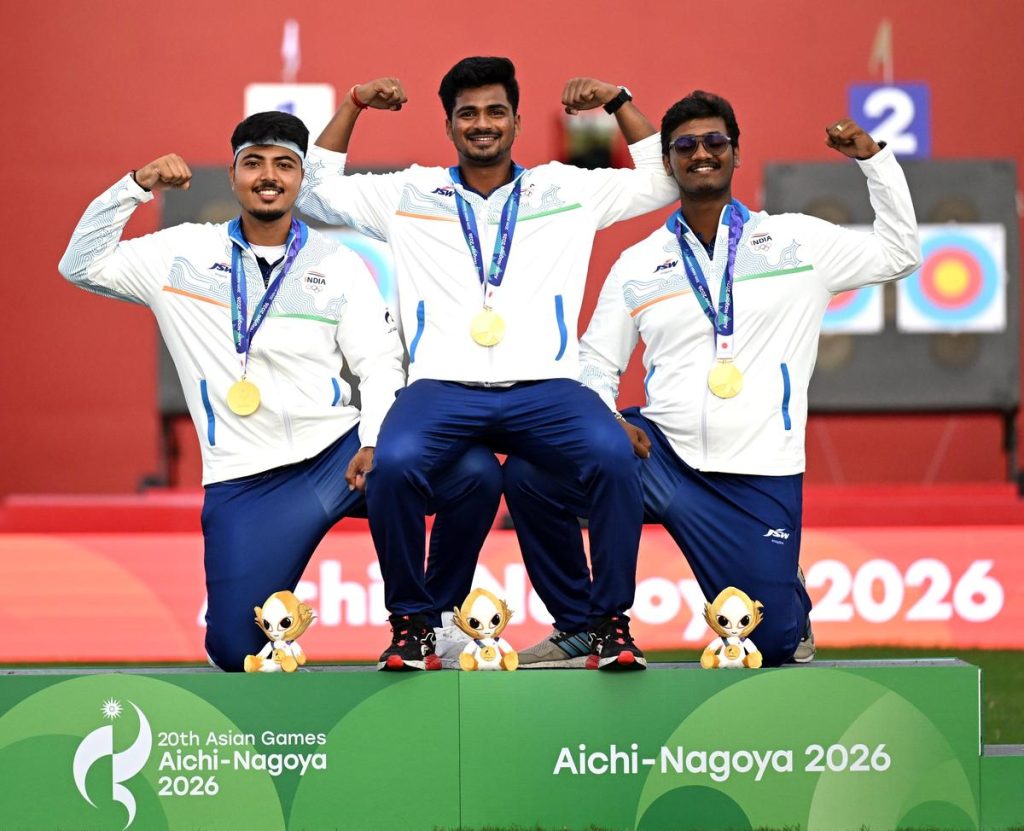
India finished fourth at the 2026 Asian Games, held from 19 September to 4 October in Nagoya and other parts of Aichi Prefecture in Japan, with 21 gold, 27 silver and 37 bronze medals, a total of 85. The country sent 495 athletes who competed in 36 sports. The tally is seven golds short of the 28 won at the previous Games in Hangzhou in 2023, where India also passed 100 medals. Manu Bhaker and Pawan Sehrawat carried the flag at the opening ceremony and Neeru Dhanda at the closing, after Dhanda won the women's trap and the mixed trap team events. The numbers have prompted a debate over whether the team underperformed or whether the results should be judged on other grounds.
The argument that this was a successful Games begins with the strength of the team events and a deep spread of medals. India won six golds in team sports, with both the men's and women's teams taking gold in cricket, hockey and kabaddi. Archery produced five golds among nine medals, including Kumkum Mohod's women's individual recurve title, boxing delivered three golds in six medals through Lovlina Borgohain, Parveen Hooda and Ankush Panghal, and wrestling added two golds through Aman Sehrawat at 57 kg and Sujeet Kalkal at 65 kg. Shooting returned 15 medals, including three golds. Pranavi Urs added a gold in women's individual golf, a sport that rarely features in discussions of Indian medal hopes, and Neeru Dhanda won two golds in trap shooting. Finishing fourth in a continental event that has China, Japan and South Korea near the top is a good result for a country that is still building its sporting system, and 85 medals show a broad base across many disciplines.
The counterargument is that the numbers reveal weaknesses that should worry the sports authorities. Gold medals fell from 28 to 21, and athletics, traditionally a source of prestige, produced only one gold among 24 medals, with nine silvers and 14 bronzes, which suggests that Indian athletes are finishing close to the top but failing to win. Squash returned five medals without a single gold, and shooting won 12 of its 15 medals in silver or bronze. India's team sports gave six golds, nearly three in ten of its total, which means the individual sports supplied the other 15. India's ambition to host major Games in the future will need results in more of the high-value events, and a fourth place in the table is a reminder that the countries ahead usually win more of them.
Boxing and wrestling, which together won nine medals with five golds, also showed that India's combat sports remain a reliable source of medals, while squash, with five medals and no gold, still has work to do. The Asian Games matter because they are the main yardstick for Indian sport between Olympic cycles, and the results will shape funding and selection. The federations whose athletes won gold, such as archery, boxing and the team sports, can use the performances to argue for continued support, while athletics will face questions about why so many medals fell short of gold. The fall in the number of golds also invites a closer look at how athletes are prepared for peak events, including the use of sports science, injury management and international competition in the year before the Games. Looking ahead, the next Olympic cycle begins now, and the focus will shift to how many of these medallists can convert their form into places at the Olympic Games, where the standard is higher and the competition more intense.
India's 85 medals show a team with wide strength and clear gaps. The challenge now is to turn silver and bronze into gold, particularly in athletics and shooting, where the margins were smallest.