


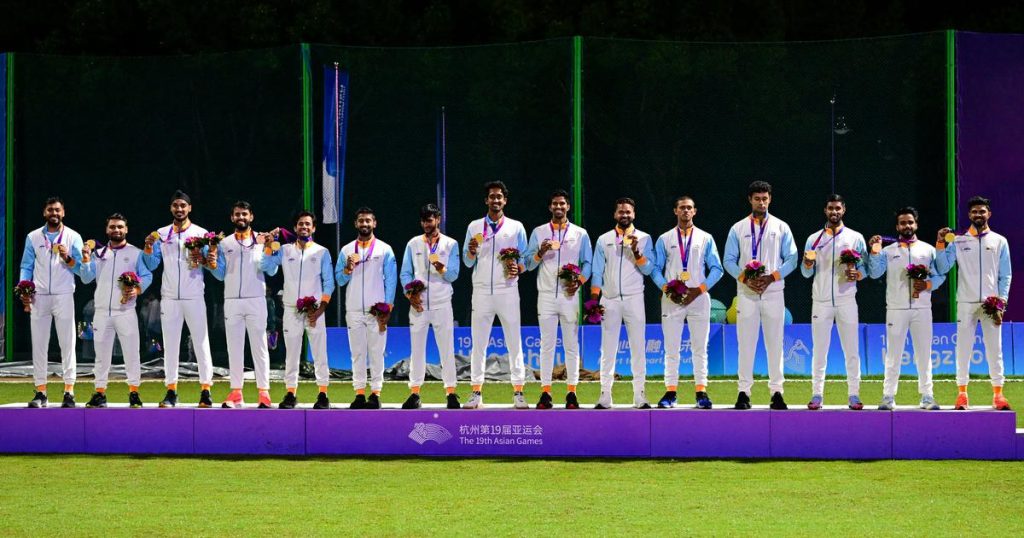
India beat Pakistan by 19 runs in the final of the men’s cricket tournament at the 2026 Asian Games in Nisshin, Japan, on 3 October, and won the gold medal for the second straight time. Captain Shreyas Iyer won the toss and chose to bat, and India made 211 for 6 in 20 overs. Pakistan, chasing 212, finished on 192 for 6. Pakistan took the silver medal and Sri Lanka the bronze. India had reached the final by beating Sri Lanka by 124 runs in the semifinal, while Pakistan had beaten Bangladesh by six wickets to reach their first Asian Games final.
The case that India deserved the gold rests on the strength of its batting. Abhishek Sharma scored 61 off 28 balls with three fours and seven sixes, and Vaibhav Sooryavanshi added 15 off nine balls with two sixes, so the opening stand took the game away from Pakistan early. The late overs produced the biggest acceleration: Tilak Varma was unbeaten on 51 off 22 balls with three fours and four sixes, and Shivam Dube made 27 off 15. Ishan Kishan scored 20 off 18, Shreyas Iyer 21 off 24 and Axar Patel was unbeaten on 1. Washington Sundar was named as a key contributor with the ball, and India’s bowlers kept Pakistan from completing what would have been a record chase. The semifinal margin of 124 runs showed the same dominance. Sharma scored at a strike rate of about 218 and Varma at about 232, which are very high rates even for a 20-over game, and Sooryavanshi’s 15 off nine balls helped India reach the later overs with wickets in hand.
The counter-argument is that the final was closer than the scoreboard first suggests. Pakistan began the chase with intent and finished on 192 for 6, only 19 runs short of the target, with four wickets in hand. They lost only six wickets in 20 overs, which means their batting order was still scoring when the overs ran out. India’s innings also had soft spots: Sanju Samson made 2 off four balls, Iyer needed 24 balls for his 21, and the biggest hitting came from just two batters, Sharma and Varma, who between them scored 112 of the 211 runs. A team that depends on a handful of players for more than half of its runs can be exposed on a bad day. Pakistan’s chase of 212 began with intent but fell behind the required rate in the middle overs, and India’s bowlers prevented what would have been a record chase.
The result matters beyond cricket. The gold was India’s second in a row in the event, and Pakistan’s journey to the final had included a six-wicket win over Bangladesh. India finished fourth in the overall medal table with 85 medals, of which 21 were gold, 27 silver and 37 bronze, and the cricket gold was one of the headline moments of those Games. A win over Pakistan in a final carries extra weight in India, and the Pakistan team was playing its first Asian Games final, so the result was a notable one for Asian cricket as well.
India won the gold with a strong batting performance and a disciplined defence of the total. The margin was 19 runs, which is small enough to be a reminder that finals against Pakistan are rarely one-sided.