


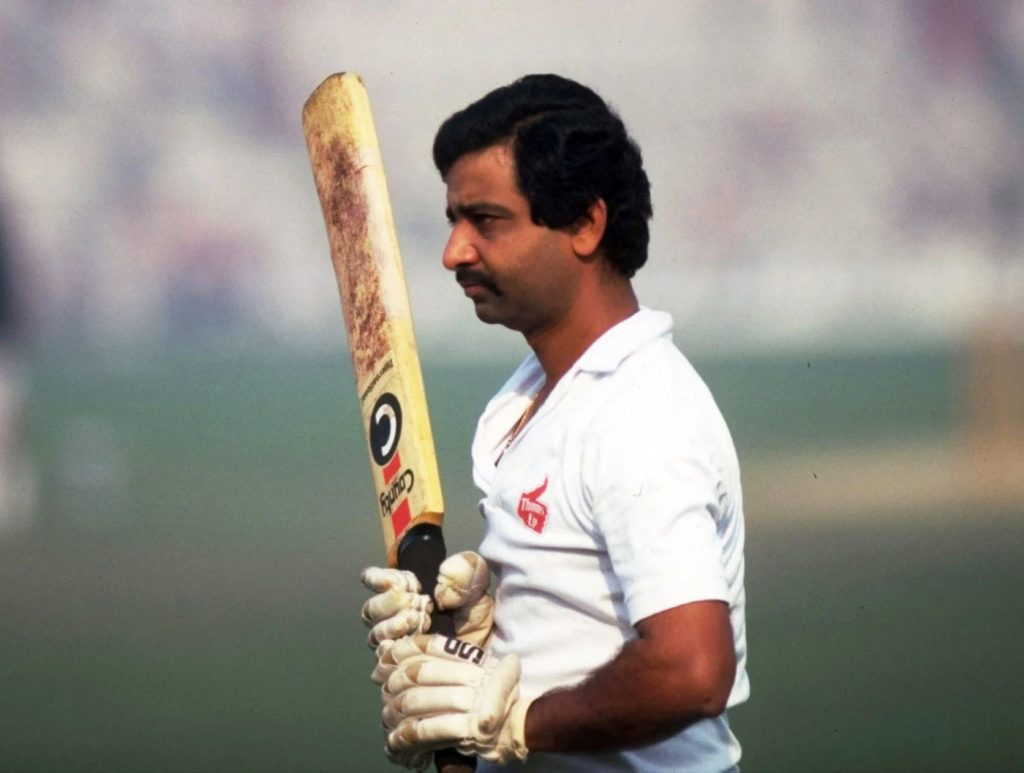
Gundappa Ranganath Viswanath (born 12 February 1949), known as Vishy, is a former Indian cricketer who is regarded as one of India's finest batters of the 1970s. He played Test cricket for India from 1969 to 1983, making 91 appearances and scoring 6,080 runs, and also played one-day internationals from 1974 to 1982, including the World Cups of 1975 and 1979. For Karnataka, which was then Mysore, he played throughout his career. He remains the only cricketer to score a double century on first-class debut and a century on Test debut. He is also the brother-in-law of Sunil Gavaskar and received the Padma Shri in 1971.
Gundappa Viswanath at a Glance
| Born | 12 February 1949, Bhadravathi, Karnataka, India |
| Age | 77 years (as of November 2026) |
| Role | Right-handed batter |
| Test career | 1969 to 1983, 91 Tests, 6,080 runs |
| ODI career | 1974 to 1982 |
| Domestic team | Karnataka (Mysore) |
| Nickname | Vishy |
| Spouse | Kavita (sister of Sunil Gavaskar), married March 1978 |
| Son | Daivik |
| Honours | Padma Shri (1971), Arjuna Award (1977-78), C. K. Nayudu Lifetime Achievement Award |
Early Life and First-Class Debut
Gundappa Viswanath was born on 12 February 1949 in Bhadravathi, Karnataka. He made his first-class debut for Mysore in 1967 against Andhra, scoring a double century, 230 runs, and he remains the only player to have made a double century on first-class debut and a century on Test debut. That first innings marked him out as a major talent at an early age.
Batting Style
Nicknamed Vishy, he was known for an elegant and wristy style that emphasised timing over power. He had a complete repertoire of shots around the wicket, and his favourite was the square cut, which he used to great effect against fast bowlers. He regularly fielded at slip. His best performances tended to come on difficult pitches, and some of his most valued innings were not centuries but were important to the team's success.
Test Career
A Memorable Debut
On his Test debut against Australia at Kanpur in 1969 he scored a century, in a drawn match, after being dismissed for a duck in the first innings, which made him one of only four batsmen to have scored a duck and a century in the same debut Test.
The 1970s: Peak Years
Viswanath was at his peak in the mid-1970s. He averaged over 50 against Australia and the West Indies, two sides known for strong pace attacks. Against the West Indies at Madras in 1974-75 he scored 97 not out in a total of 190, against an attack that included Andy Roberts, in an innings that led to an Indian victory. Wisden has ranked it the 38th best innings of all time and the second best non-century. He had scored a match-winning century in the previous Test at Calcutta, and he made 95 in the final Test at Bombay, although the series was lost 3-2.
In 1975-76 he made 112 at Port of Spain, helping India reach a target of 403, which at the time was the highest successful run-chase in Test cricket. In 1978-79 at Madras he top-scored again with 124 out of 255, and India went on to win the match and the series 1-0 in a six-match series.
Captaincy
Viswanath had a brief spell as India's captain in 1979-80, in two Tests, one of which was drawn and the other lost, the latter being the Golden Jubilee Test against England. In that match he recalled the England wicketkeeper Bob Taylor to the crease after the umpire had given him out, and Taylor went on to make runs that helped England win. The Test, played at Bombay in 1980 to mark the golden jubilee of the BCCI, was won by England by ten wickets, with Ian Botham scoring a century and taking 13 wickets in the match. The gesture is still remembered as a rare example of sportsmanship at the highest level, even though it came in a match India went on to lose.
Final Years as a Player
He retired from Test cricket in 1983 with 6,080 runs and 14 centuries. His 114 against Australia at Melbourne in 1981, in a match India won by 59 runs, is among the finest overseas innings by an Indian batter.
After Retirement
After he stopped playing, Viswanath served as an ICC match referee from 1999 to 2004. He was also chairman of the national selection committee and served as manager of the Indian team. He has been involved in coaching at the National Cricket Academy (NCA) and has served as vice-president of the Karnataka State Cricket Association (KSCA). On 12 March 2022 his autobiography, Wrist Assured, was launched at Bengaluru during the second Test between India and Sri Lanka, at the dinner break of the day-night match, when it was unveiled by his former teammates Kapil Dev and Gavaskar.
Personal Life
In March 1978 Viswanath married Kavita, the sister of his teammate Sunil Gavaskar. They have a son, Daivik, and live in Bengaluru. The family link between two of India's leading batters of the 1970s is one of the best-known in Indian cricket.
Awards and Recognition
- Padma Shri (1971)
- Arjuna Award (1977-78)
- Col. C. K. Nayudu Lifetime Achievement Award from the BCCI, the highest honour the board gives a former player
- Authored the autobiography Wrist Assured (2022)
Legacy
Viswanath is remembered for the grace of his batting and for playing his best cricket when the conditions were hardest. Fast bowlers such as Roberts, Dennis Lillee and Jeff Thomson were among the toughest in the world in his time, and many of his best knocks were played against them. He is counted among Karnataka's greatest batters, and the state has since produced other major names, including Rahul Dravid. For many fans, the image of Vishy cutting a fast bowler square on the off side, with his wrists doing the work, is one of the enduring pictures of Indian batting in that decade.
Frequently Asked Questions
How many Test runs did Gundappa Viswanath score?
He scored 6,080 runs in 91 Tests between 1969 and 1983.
What is special about Viswanath's debut?
He remains the only cricketer to score a double century on first-class debut and a century on Test debut.
Is Gundappa Viswanath related to Sunil Gavaskar?
Yes. He married Gavaskar's sister, Kavita, in March 1978, making the two brothers-in-law.
Did Viswanath captain India?
Yes, briefly. He led India in two Tests in 1979-80.
Which awards has Viswanath received?
The Padma Shri (1971), the Arjuna Award (1977-78) and the C. K. Nayudu Lifetime Achievement Award.