


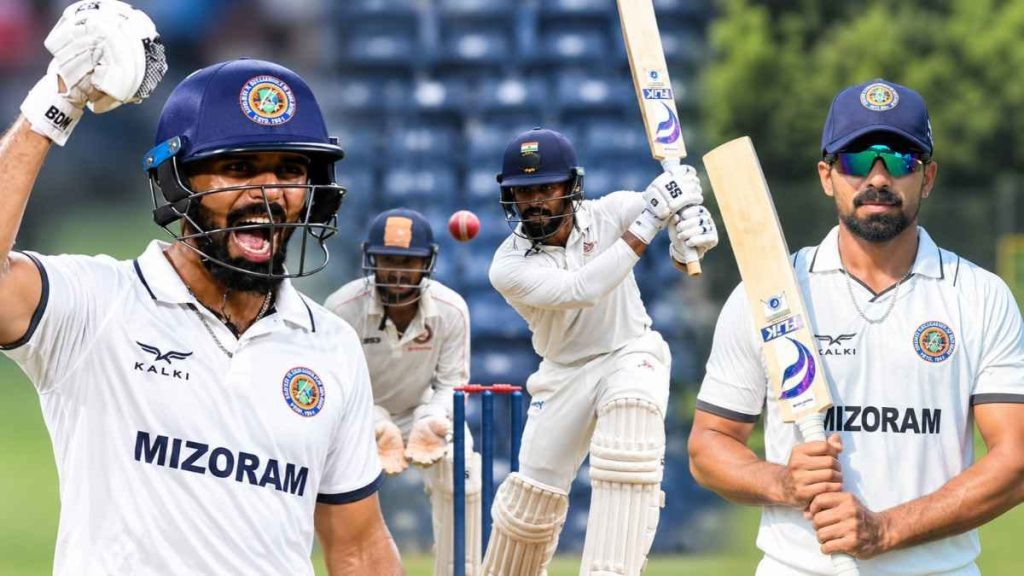
Chinmay Sutar scored an unbeaten 400 for Mizoram against Nagaland in a Plate Group match of the 2026-27 Ranji Trophy, becoming only the second batter to reach 400 in an innings in the tournament’s history. He faced 517 balls and hit 46 fours and seven sixes, and Mizoram declared at 581 for 9 before Nagaland batted. The only higher score in the competition is Bhausaheb Nimbalkar’s unbeaten 443 in 1948. Sutar’s strike rate over the innings was about 77 runs per 100 balls, a brisk pace for a score of this size, and he finished 43 runs short of Nimbalkar’s record. The innings was reported on the second day of round two, on 19 October 2026, and it has made Sutar one of the most talked-about names in domestic cricket this season.
The argument that the innings deserves a place in the record books is based on its scale and its length. A score of 400 is unusual in any form of first-class cricket, and the Ranji Trophy has seen only two in more than seven decades since the 1948 innings by Nimbalkar, who made 443 not out. Sutar batted for 517 balls, which is the equivalent of about 86 overs at the crease, and he scored at a steady pace, with 46 fours and seven sixes accounting for 226 of his runs in boundaries. His effort allowed Mizoram to declare at 581 for 9, and when Nagaland began their innings they were 50 for 1 at the close of the day, already under pressure. For a team from the Northeast competing in the Plate Group, such an innings also puts the state’s cricket on the national map.
The counter-argument is that the innings has to be read in context. The match was played in the Plate Group, where the teams are from the lower tier of the competition. Mizoram’s other batsmen and the extras added only 181 runs to Sutar’s 400, which means that the rest of the innings was modest in comparison. The declaration at 581 for 9 meant that nine wickets fell, so Nagaland did get through some of the order. The match was still in its early stages when the innings ended, so the result for Mizoram will depend on how many wickets the bowlers can take. Records of this kind also invite comparisons that are hard to make across seven decades, since the pitches, the bats and the format of the competition have all changed since 1948.
The record matters for Indian domestic cricket because it shows that talent exists outside the traditional centres. Mizoram, Nagaland, Sikkim and Arunachal Pradesh play in the Plate Group, and their players rarely get national attention. A 400 gives those teams, and the selectors who follow the tournament, a reason to look at them more closely. It also adds to a season in which several large scores have been made in the first two rounds.
Sutar’s 400 not out is the second highest score in Ranji Trophy history, and it will be remembered long after the match ends. Whether it leads to opportunities at a higher level will depend on how selectors treat runs made in the Plate Group.