


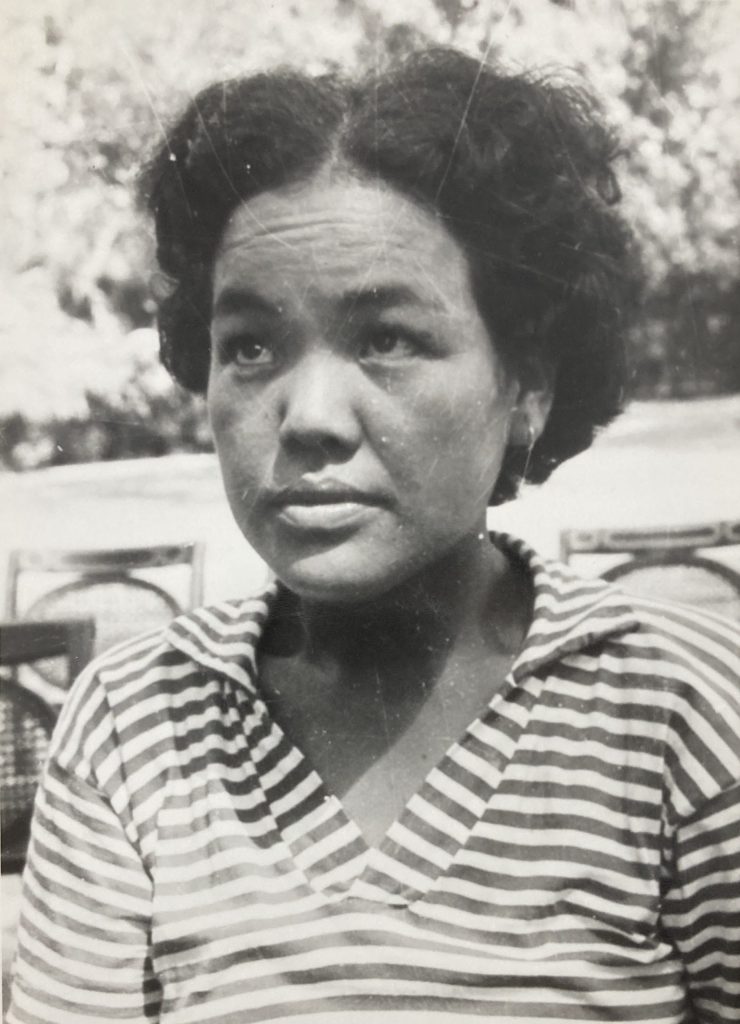

Bachendri Pal (born 24 May 1954) is an Indian mountaineer who, on 23 May 1984, became the first Indian woman to reach the summit of Mount Everest. She went on to lead expeditions of women on Everest, down the Ganga and across the Himalaya, and for more than three decades directed an adventure programme that trained thousands of young people. She was awarded the Padma Bhushan in 2019.
Quick Facts
| Full name | Bachendri Pal |
| Born | 24 May 1954, Nakuri, Uttarkashi district, Uttarakhand |
| Age | 72 |
| Education | D.A.V. College, Dehradun (M.A. in Sanskrit; B.Ed.) |
| Occupation | Mountaineer, adventure educator |
| Known for | First Indian woman to climb Mount Everest (1984) |
| Awards | Padma Shri (1984), Arjuna Award (1986), Padma Bhushan (2019) |
Early Life
She was born in Nakuri, a village in the Garhwal Himalaya, one of several children of a small trader who carried goods by mule to the Tibetan border. The family was poor. At twelve, on a school picnic, she and her friends scrambled up a peak of about four thousand metres and had to spend the night there without food or shelter.
She had to fight to stay at school, sewing clothes to pay her way, and became the first woman of her village to graduate, going on to a master’s degree in Sanskrit and a teaching degree. Her family expected her to become a schoolteacher. She chose the mountains, to their dismay.
Training
She enrolled at the Nehru Institute of Mountaineering at Uttarkashi, was judged the best student of her course, and climbed Gangotri I and Rudugaira in 1982. She became an instructor at an adventure school for women founded by the Everest climber Brigadier Gyan Singh.
Everest, 1984
In 1984 she was chosen for India’s fourth Everest expedition, a mixed team with six women.
On the night of 15–16 May an avalanche from the Lhotse glacier buried the tents at Camp III, at about 7,300 metres. She was struck on the head and dug out with a knife by a team-mate. More than half the team were injured or shaken and went down. Asked whether she wished to descend, she said no.
On 22 May she climbed to the South Col with a small party. At 6.20 the next morning she set out with the Sherpa sardar Ang Dorjee, climbing without fixed ropes on sheets of hard ice in a strong wind and a temperature far below freezing. They reached the summit at 1.07 in the afternoon of 23 May 1984. It was the day before her thirtieth birthday. She was the fifth woman in the world to stand there.
Later Expeditions
- **1993:** leader of an Indo-Nepalese women’s expedition to Everest, which put eighteen climbers on the summit, seven of them women, among them Santosh Yadav
- **1994:** leader of a women’s rafting expedition down the Ganga from Haridwar to Calcutta, more than two thousand kilometres
- **1997:** leader of the first Indian women’s traverse of the Himalaya, from Arunachal Pradesh to the Siachen glacier, about 4,500 kilometres on foot
- **2018:** at sixty-four, leader of a month-long rafting expedition down the Ganga to draw attention to its pollution
The Tata Steel Adventure Foundation
In 1984 Tata Steel invited her to Jamshedpur to set up an adventure programme, which she directed until her retirement in 2019. It has given outdoor leadership training to several thousand people. Among those she trained and mentored were Premlata Agarwal, who climbed Everest at forty-eight and the highest peak of every continent, and Arunima Sinha, who climbed Everest in 2013 after losing a leg.
After the floods of 2013 in Uttarakhand she led teams of climbers who carried relief on foot to cut-off villages.
Honours
- Padma Shri and the gold medal of the Indian Mountaineering Foundation (1984)
- Arjuna Award (1986)
- National Adventure Award (1994)
- Padma Bhushan (2019)
Books
Her autobiography, Everest: My Journey to the Top, is read in Indian schools.
Personal Life
She is unmarried and divides her time between Jamshedpur and Uttarakhand. She has said that the greatest obstacle she overcame was not the mountain but the belief, in her own village, that such things were not for girls.
Featured image: Bachendri Pal. Photo by Medhavigandhi, licensed under CC BY 4.0, via Wikimedia Commons.