


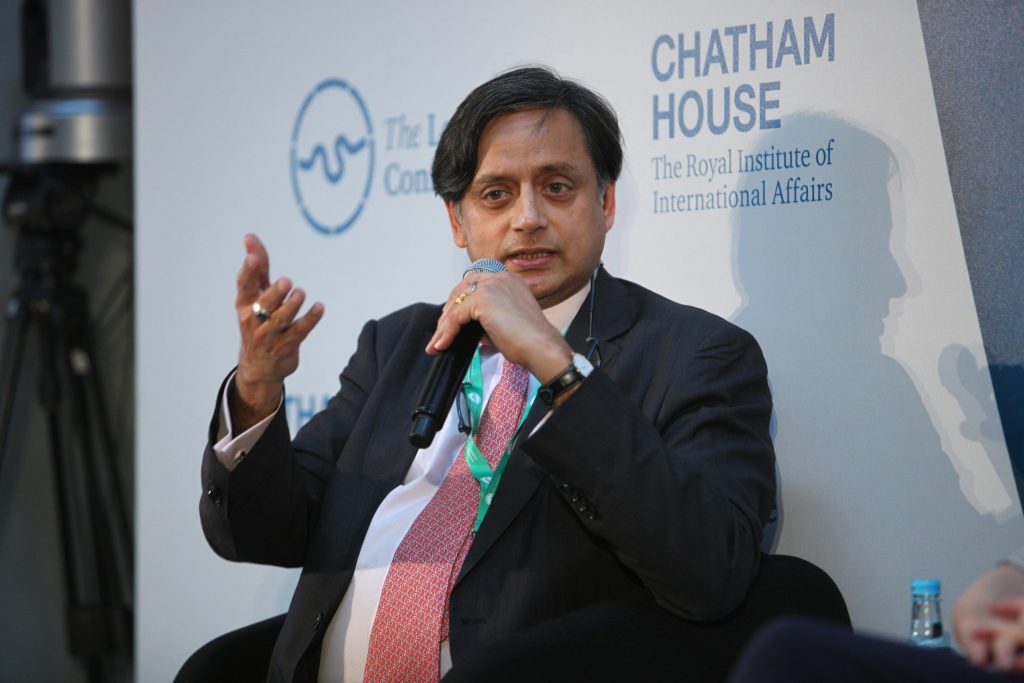
Congress MP Shashi Tharoor said on 19 October 2026 that India is not Bangladesh or France and rejected the allegation that the opposition’s protests over the electoral roll are an attempt at regime change. He said the demand was for free and fair elections and for the restoration of citizens’ voting rights, that the Congress would not condone violence and that peaceful protest is a constitutional right. The next day, on 20 October, RSS chief Mohan Bhagwat told the annual Vijayadashami gathering in Nagpur that attempts to dismantle India through regime change would not succeed, citing France, Albania, Nepal and Bangladesh. The two statements frame a dispute over the Special Intensive Revision of the electoral rolls.
The argument that the opposition is raising a legitimate concern rests on what it has done and what it has asked for. Tharoor described a march toward the Election Commission and Jantar Mantar, followed by a petition to the Supreme Court, and he demanded the resignation of the Chief Election Commissioner. He cited voter deletions in West Bengal, Bihar and Goa and software problems that stop electoral officers from restoring wrongly deleted names. On 5 October the Supreme Court issued notices to the Centre, the Election Commission and Chief Election Commissioner Gyanesh Kumar on petitions alleging that 14 decisions on the revision, taken between October 2025 and August 2026, were made without the concurrence of the other commissioners. The bench led by Chief Justice Surya Kant declined to suspend Kumar but sought responses.
The counter-argument is that the protests have created a political climate that the government and its allies regard as dangerous. Bhagwat said a storm from the West was trying to exploit social divisions and install proxies, and he urged protesters to remain within constitutional bounds. The BJP has said that Tharoor acknowledged that the revision benefited the Congress because fake voters enlisted during the Left rule were removed from the roll, although that is the BJP.s characterisation and Tharoor has not been quoted confirming it. The court did not grant interim relief, and it said it needed an authenticated record, so the petitioners’ claims remain allegations. Tharoor’s remarks about France and Bangladesh also show that the comparison with foreign unrest has entered the debate, and critics say that is an indication of how tense it has become.
The dispute matters because the credibility of the electoral roll underpins every election. The Election Commission is preparing for polls in five states, Manipur, Uttar Pradesh, Uttarakhand, Punjab and Goa, in early 2027, and a roll that is seen as unfair would weaken the legitimacy of those results. Both sides agree on the need for peaceful conduct, but they disagree about whether the protests are democratic or destabilising. In his Nagpur speech Bhagwat named four countries where upheavals had not solved problems, which gave the speech a direct link to the political debate at home.
Tharoor and Bhagwat used similar words to say opposite things about the same protests. Tharoor repeated that the Congress wanted only a fair roll, and Bhagwat said the protests should remain within the Constitution. The Supreme Court’s handling of the petitions, and the way the Election Commission answers the allegations, will do more to settle the matter than the speeches.
Featured image: Congress MP Shashi Tharoor (file photo). Photo: Chatham House, CC BY 2.0, via Wikimedia Commons.