


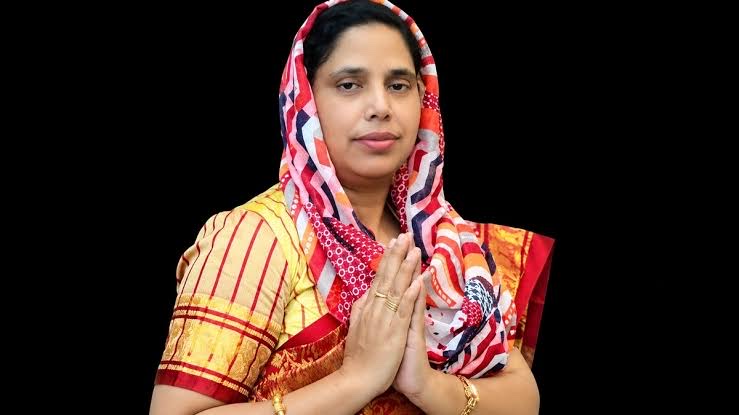
Trinamool Congress MLA Sabina Yeasmin and her husband, Mehebub Alam, appeared before the National Investigation Agency (NIA) on Monday, 23 November 2026, in connection with the agency's probe into alleged attacks on judicial magistrates during the Special Intensive Revision (SIR) exercise in West Bengal's Malda district. The couple appeared at the NIA's New Town office in Kolkata. Ms. Yeasmin told reporters before entering that the summons was "a politically motivated move", and said that she and her husband had no knowledge of the alleged attacks and were not at the site when they took place.
The NIA is investigating alleged attacks on judicial officers and on a judge's vehicle during violence in the Kaliachak and Mothabari areas of Malda on 1 April. Demonstrators had blocked National Highway 12 at Kaliachak that day to protest against the SIR of electoral rolls. The SIR, a revision of voter lists, has been a politically charged exercise in West Bengal, and the protests in Malda were part of the opposition to it. The central question in the NIA's inquiry is who was responsible for the violence against judicial officers who were reportedly on duty in the area, and whether any political figures played a part.
Ms. Yeasmin's account of her whereabouts on 1 April is specific. She said that her husband was at the collector's office regarding her nomination papers, which were to be filed the next day, 2 April, for the assembly elections, when the violence occurred. She said she herself was at the BDO office, staging a demonstration with some party supporters. "Neither my husband nor I had any role in the road blockade," she said. These statements are her own and are presented as such; the NIA has not publicly responded to them, and the report does not say what the agency asked her or whether it considers her a suspect.
The case has a strong political backdrop. Ms. Yeasmin joined the Ritabrata Banerjee-led faction of the Trinamool Congress after the West Bengal assembly elections, in which the BJP won. Later, she resigned from her post as president of the Democratic Trinamool Congress women's wing in October and expressed her personal allegiance to former West Bengal chief minister Mamata Banerjee. The sequence of events, from a faction split to a change of loyalty, shows how fluid the opposition landscape in the state has become since the BJP's victory, and it adds a layer of political interpretation to the NIA's questioning.
The involvement of the NIA in the case is itself notable. The agency is India's central counter-terrorism and serious-crime investigator, and it normally handles cases of terror, organised crime and offences with national security implications. Its investigation into attacks on judicial officers during a protest suggests that the central authorities regard the incident as serious. Critics, including the MLA, characterise such interventions as politically driven, while supporters of the agency say that attacks on judicial officers cannot be tolerated and that a central probe is justified when the state police may be seen as compromised or overstretched.
The allegations of violence against judicial officers are particularly sensitive. An attack on judicial officers is widely regarded as an attack on the judicial system. The Hindu's report refers to "alleged" attacks on judicial magistrates and on a judge's vehicle; it does not describe the injuries or the damage, and the reports do not provide numbers of people arrested or charged. Without that information, it is not possible to say how many people are accused or how the investigation has progressed.
For Ms. Yeasmin, an appearance before a central agency is a significant moment in her political career. By appearing voluntarily and publicly denying involvement, she has sought to set out her version of events and to frame the case as a political attack, which is a familiar response by politicians facing central agencies. Whether the NIA accepts her explanation will depend on the evidence it has gathered, including footage, witness statements and records of where people were on the day.
The SIR itself continues to be a source of controversy in Bengal. A commentary in The Hindu on Sunday argued that "the SIR exercise is also a technology failure", reflecting wider criticism of how the revision has been carried out. The protests on 1 April, which led to the blockade of National Highway 12, were a sign of the depth of feeling around the issue in Malda. The violence that occurred during those protests has now become a subject of a national investigation, which links the debate over electoral rolls to questions of law and order.
Political reaction in the state is likely to be sharp. The BJP, which now governs West Bengal, has often accused the Trinamool Congress and its supporters of inciting disorder, while the Trinamool and its offshoots accuse the BJP and central agencies of targeting opponents. Ms. Yeasmin's position, as a legislator who has moved between factions, adds to the complexity. Observers will watch whether other political figures are called by the NIA, and whether the questioning leads to arrests or charges, or whether it ends with the agency simply recording statements.
For the judiciary, the case raises questions about the safety of judicial officers who are asked to perform duties in politically tense situations. If magistrates were attacked while supervising or overseeing a process connected with the SIR, as alleged, then it is important that the perpetrators are identified and held to account. At the same time, due process requires that people are not named or punished without evidence, and the principle of presumption of innocence applies to Ms. Yeasmin and her husband as it does to anyone else.
The next steps are uncertain. The NIA may call the couple for further questioning, may seek additional documents, or may proceed to file charges against those it believes were involved. Ms. Yeasmin's lawyers could also approach the courts if she believes that the agency is acting improperly. For now, the outcome of Monday's appearance has not been made public, and the NIA has not released a statement describing what was asked or what the couple said.
In the broader picture, the case highlights how the SIR exercise has become entangled with the politics and law of West Bengal. A routine administrative process of revising voter lists has led to street protests, alleged violence, a central investigation and a political realignment among Trinamool leaders. How the NIA handles the case, and whether it produces credible evidence, will influence public perceptions of both the agency and the political actors involved. Until the investigation concludes, the facts of what happened on 1 April in Kaliachak and Mothabari will remain contested, with each side presenting its own narrative.