



The Supreme Court has declined a proposed meeting with the joint parliamentary committee that is examining the bills on simultaneous elections for the Lok Sabha and state assemblies. The meeting had been planned for 6 October 2026 between the Chief Justice, senior judges and the committee, according to LiveLaw and Outlook. The court said that the proposed amendment might become the subject of judicial review and that it was not expedient or desirable to discuss the issue on the administrative side.
The decision was taken by senior judges and communicated by the office of the Secretary General of the Supreme Court to the Legislative Department, according to Outlook. The committee has not been told that the matter is closed, since a report said that the committee claims that the meeting was shelved. The reasoning of the court was quoted, but the sources reviewed do not give the full text of the communication.
The committee is examining two bills that were referred to it in December 2024: the Constitution (129th Amendment) Bill, 2024 and the Union Territories Laws (Amendment) Bill, 2024. They seek to enable simultaneous elections to the Lok Sabha and state assemblies. According to Outlook, the committee has 39 members, and its tenure was extended to the last week of a session of Parliament. It is headed by P. P. Chaudhary, a BJP MP and former law minister.
The proposal itself has a disputed description. Outlook says that the Election Commission requested an informal interaction described as a local study visit on 28 September, and that the committee chairman said the purpose of the visit was to familiarise members with the Supreme Court’s facilities, not to discuss legislation. The sources do not explain how a study visit became a proposed meeting with judges, and the two accounts differ on the purpose of the interaction.
The senior advocate Kapil Sibal objected strongly. At a press conference he said that such a meeting would be a violation of the separation of powers and that it had never happened in the history of the country, according to LiveLaw, and Outlook quotes him as calling the proposal a joke on the Constitution and asking why sitting judges would meet a committee on a matter that they might later have to judge.
The committee has already consulted outside experts. It has said that it consulted former Chief Justices of India, former Supreme Court judges and other legal experts, and Outlook counts four former Chief Justices who have testified before it. It has also been consulting political parties, legislators and constitutional experts, according to LiveLaw. A search summary adds that the Supreme Court has not issued any judgment on the proposal.
Why does the court’s position matter? A constitutional amendment can be challenged in the Supreme Court, which can examine whether it breaches the basic structure of the Constitution, so judges who take part in discussions on its content could face questions about their impartiality when they later hear a challenge. The court’s statement that it might be asked to review the amendment reflects that concern.
The proposal for simultaneous elections would need to pass both houses of Parliament by a special majority and might need ratification by states, as the 129th Amendment Bill is described in other coverage, but the sources reviewed for this article do not describe those requirements, so they are not explained here. The defeat of a different constitutional amendment in the Lok Sabha in April, covered by IndiaX24, shows how hard such votes can be.
For now, the committee’s work continues without the planned meeting, and the court’s refusal underlines the distance that it keeps from a bill that it may one day have to examine.
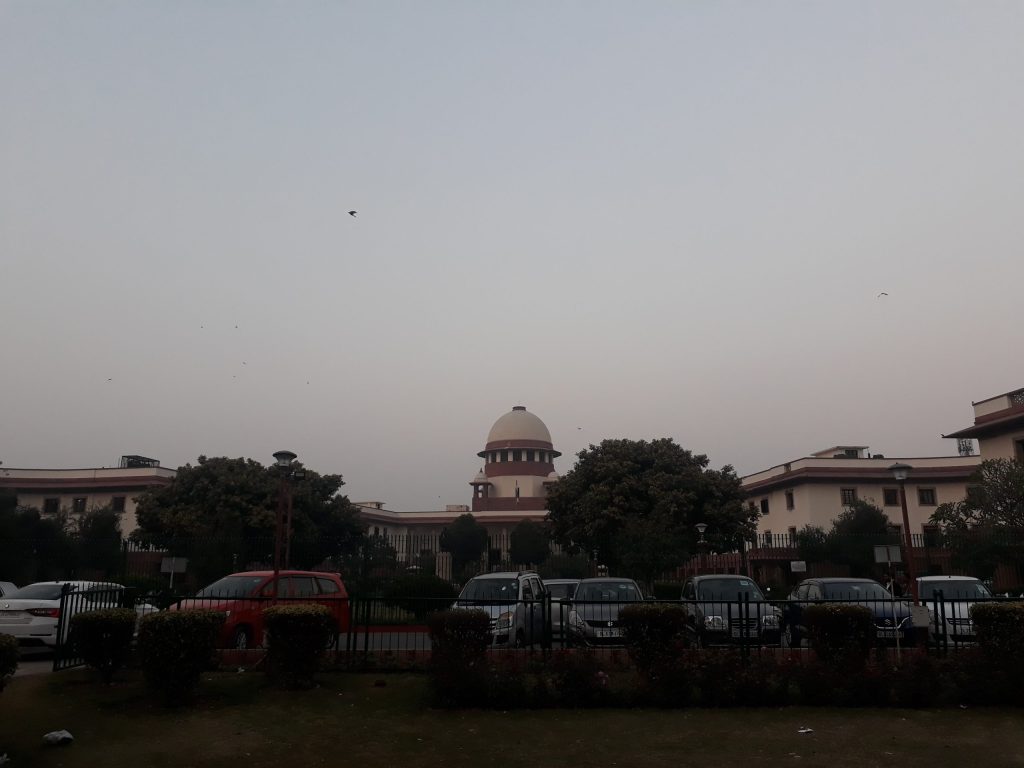
Featured image: The front of the Supreme Court of India, New Delhi (file photo). Photo by Pinakpani, licensed under CC BY-SA 4.0, via Wikimedia Commons.