


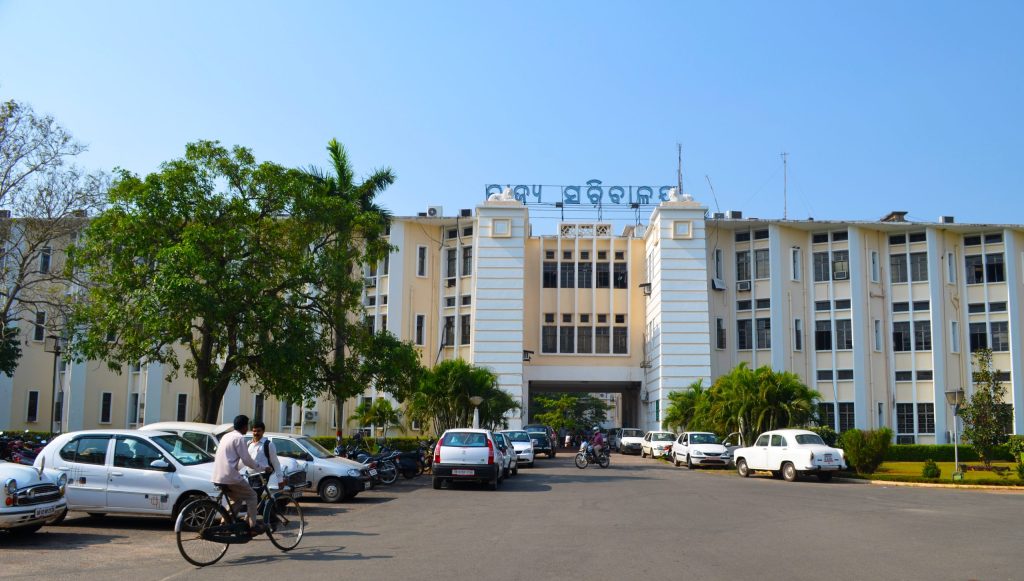

The Odisha Cabinet, chaired by Chief Minister Mohan Charan Majhi, met on 13 October 2026 and approved 16 proposals across 11 departments, according to Organiser. The Cabinet also passed a resolution congratulating Prime Minister Narendra Modi on completing 25 years as head of government, as IndiaX24 has reported in a separate article on the Union Cabinet’s similar resolution.
In education, the Cabinet extended free textbooks to about 28.7 lakh students in Classes IX and X in government and government-aided secondary schools. The scheme is funded at Rs 284.07 crore over five years, from 2025-26 to 2029-30, according to Organiser. That means about Rs 56.8 crore a year on average, a division by IndiaX24, and the report does not say how many of the five years the scheme has already run.
For urban infrastructure, the Cabinet approved an Urban Storm Water Drainage Management and Improvement Programme of Rs 500 crore over five years, from 2026-27 to 2030-31. It targets the reduction of waterlogging in urban local bodies and block headquarters, according to the report. The cost averages Rs 100 crore a year, a division by IndiaX24.
For digital resilience, a disaster recovery-cum-data centre will be built at Keonjhar at a cost of Rs 176.83 crore. It will serve as a backup for the Odisha State Data Centre in Bhubaneswar and is to be implemented in nine months, according to the report. A backup site in a different town reduces the risk that a single disaster could disrupt the state’s digital services, which is a general point and not part of the report.
For water security, an in-stream water storage project on the Tel River at Tustapali village in Bolangir district was approved at Rs 105 crore. It is intended to address seasonal water shortages, according to the report. The reports reviewed do not give the storage capacity or the area that will benefit.
The four items described come to Rs 1,065.9 crore in total, which is IndiaX24’s sum of Rs 284.07 crore, Rs 500 crore, Rs 176.83 crore and Rs 105 crore. Some of those amounts are spread over five years, so the total is a commitment over time and not a one-year spend. The reports reviewed do not give the cost of the other 12 proposals.
Organiser describes the proposals as reflecting priorities in education, infrastructure resilience and climate adaptation. IndiaX24 has found only this one detailed source for the list of proposals, so the figures should be read as that outlet’s account until the state publishes the decisions.
The sums give a feel for the scale. The storm water programme at Rs 500 crore is the largest of the four items, and it is about 47 per cent of the Rs 1,065.9 crore total, a share that IndiaX24 has calculated. The Keonjhar data centre costs Rs 176.83 crore and is the only item with a stated completion period, nine months, so it could be ready around mid-2027 if work begins soon, which is an estimate and not an official date.
Odisha’s cabinet decisions are normally followed by government orders and budget provisions. The reports reviewed do not give the dates by which the textbook scheme or the drainage programme will begin to operate.
IndiaX24 will report on the remaining proposals if the state government publishes the full list.
Image: The Odisha state secretariat hall in Bhubaneswar (file photo). Photo by Subhashish Panigrahi, licensed under CC BY-SA 3.0, via Wikimedia Commons.