


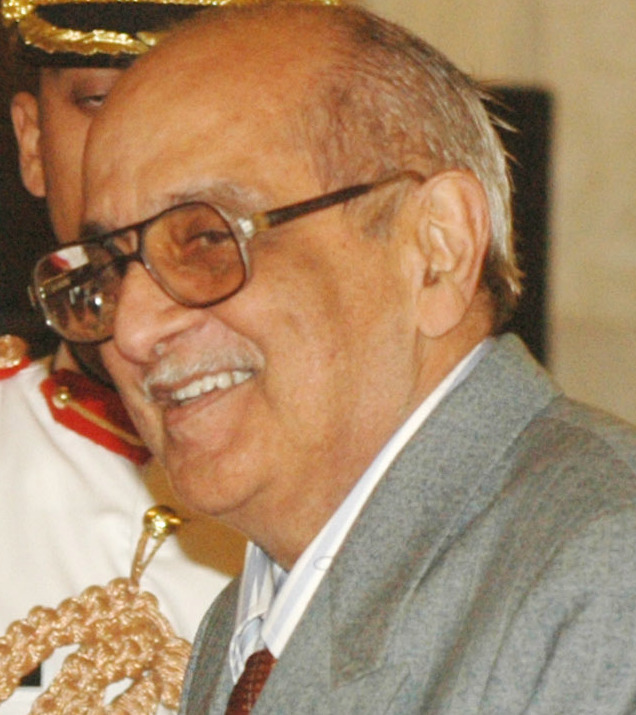

Fali Sam Nariman (10 January 1929 – 21 February 2024) was an Indian jurist and senior advocate of the Supreme Court of India, among the most respected constitutional lawyers the country has produced. He practised for more than seventy years, appeared in many of the cases that shaped Indian constitutional law, and resigned as a law officer of the government the day after the Emergency was declared in 1975.
Quick Facts
| Full name | Fali Sam Nariman |
| Born | 10 January 1929, Rangoon, Burma |
| Died | 21 February 2024, New Delhi (aged 95) |
| Education | Bishop Cotton School, Shimla; St Xavier’s College, Bombay; Government Law College, Bombay |
| Occupation | Senior Advocate, Supreme Court of India |
| Offices | Additional Solicitor General of India (1972–1975); nominated member of the Rajya Sabha (1999–2005); President, Bar Association of India (1991–2010) |
| Awards | Padma Bhushan (1991), Padma Vibhushan (2007) |
| Spouse | Bapsi Nariman |
| Children | 2 |
Early Life
He was born in Rangoon, where his father worked for an insurance company, into a Parsi family. When Japan invaded Burma in 1942, the family, like many thousands of Indians, fled overland, part of the way on foot, to India. He was twelve.
He went to school at Shimla, took a degree in economics and history in Bombay, and studied at the Government Law College. His father wanted him to enter the civil service; he chose the law, and stood first in the advocates’ examination.
The Bar
He joined the Bombay High Court in 1950, in the chambers of Jamshedji Kanga, where the leading lawyers of the next generation, among them Nani Palkhivala, were trained. He was designated a senior advocate in 1971 and moved to Delhi in 1972 as Additional Solicitor General of India.
The Emergency
On 26 June 1975, the day after the Emergency was proclaimed, he sent in his resignation, the only law officer of the Union to do so. He said later that it was the only decision of his life of which he was wholly proud.
Landmark Cases
- **Golak Nath (1967):** on the power of Parliament to amend fundamental rights
- **Minority institutions:** a series of cases, including T. M. A. Pai Foundation (2002), on the right of religious and linguistic minorities to run schools and colleges
- **The judges’ cases:** he argued for the supremacy of the judiciary in appointing judges in the case of 1993 that created the collegium system, and in 2015 led the successful challenge to the National Judicial Appointments Commission
- **S. P. Gupta and others:** on the independence of the judiciary
- **Narmada:** he appeared for the Gujarat government in the Sardar Sarovar matter and gave up the brief in 1998 in protest at attacks on Christians in the state
Bhopal
He appeared for Union Carbide in the litigation that followed the gas disaster of 1984 at Bhopal, which ended in the settlement of 470 million dollars approved by the Supreme Court in 1989. The settlement was widely condemned as inadequate. He defended his role for years, but in his later writing and interviews said that, looking back, he regretted having taken the case. See the Bhopal gas tragedy.
International Work
He was a leading figure in international commercial arbitration: president of the International Council for Commercial Arbitration, a vice-chairman of the court of arbitration of the International Chamber of Commerce, and chairman of the executive committee of the International Commission of Jurists.
Parliament
The President nominated him to the Rajya Sabha in 1999. He sat as an independent and spoke often, particularly on the judiciary and on the conduct of Parliament.
Books
- Before Memory Fades (2010), his autobiography, required reading for young lawyers
- The State of the Nation, India’s Legal System: Can It Be Saved? and God Save the Hon’ble Supreme Court
- You Must Know Your Constitution (2023)
Personal Life
He married Bapsi Contractor in 1955; she wrote cookery books and died in 2020. Their son, Rohinton Nariman, was Solicitor General of India and a judge of the Supreme Court from 2014 to 2021; their daughter is Anaheeta. He remained in practice into his nineties, and to the end was a critic of what he saw as threats to secularism and to the independence of the courts.
He died in New Delhi on 21 February 2024. The Chief Justice of India and courts across the country paid tribute.
Featured image: Fali Nariman at the Padma Vibhushan investiture at Rashtrapati Bhavan, March 2007. Photo by the President’s Secretariat, licensed under Government Open Data License – India, via Wikimedia Commons.