


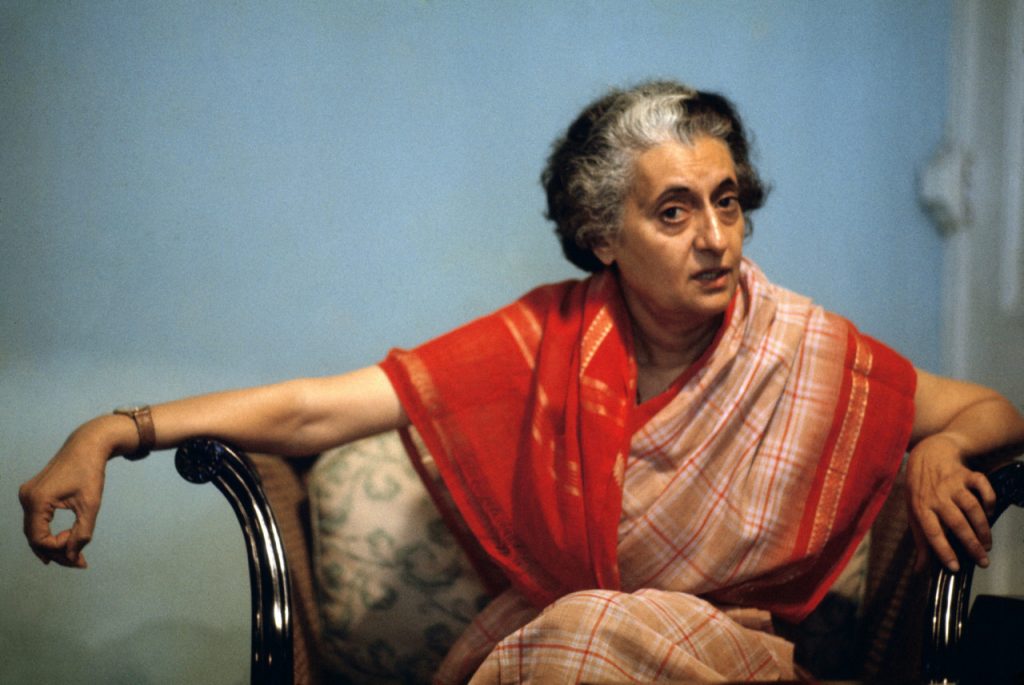
For twenty-one months, from 25 June 1975 to 21 March 1977, India was ruled under a state of Emergency. Elections were postponed, fundamental rights were suspended, newspapers were censored and tens of thousands of people were jailed without trial. It is the only period since independence when Indian democracy was set aside.
How it came about
- Discontent: Inflation after the 1973 oil shock, shortages and corruption had produced unrest. A students’ agitation in Gujarat brought down the state government in 1974, and in Bihar the veteran Gandhian Jayaprakash Narayan, known as JP, led a movement for “Total Revolution”.
- The court verdict: On 12 June 1975 Justice Jagmohanlal Sinha of the Allahabad High Court found Prime Minister Indira Gandhi guilty of electoral malpractice in her 1971 election from Rae Bareli, on a petition by her opponent Raj Narain. Her election was set aside and she was barred from office for six years.
- The appeal: On 24 June the Supreme Court allowed her to remain Prime Minister while her appeal was heard, but not to vote in Parliament.
- The rally: On 25 June, at the Ramlila Maidan in Delhi, JP called on her to resign and urged the police and army not to obey illegal orders.
The proclamation
That night President Fakhruddin Ali Ahmed, on the Prime Minister’s advice, proclaimed an Emergency under Article 352 of the Constitution on the ground of “internal disturbance”. The Cabinet was informed the next morning.
What happened
- Arrests: Before dawn, JP, Morarji Desai, Atal Bihari Vajpayee, L. K. Advani and hundreds of others were detained. More than one lakh people were held during the Emergency, many under the Maintenance of Internal Security Act.
- Censorship: Power to newspaper offices in Delhi was cut on the first night. Newspapers had to submit copy to censors; some, such as the Indian Express, printed blank editorials in protest.
- Bans: The RSS, the Jamaat-e-Islami and other organisations were banned.
- The Constitution: The 42nd Amendment of 1976 reduced the powers of the courts and extended the life of Parliament.
- The courts: In the habeas corpus case of 1976, the Supreme Court held by four to one that detainees could not approach the courts. Justice H. R. Khanna dissented, and was passed over for Chief Justice.
Sanjay Gandhi’s programmes
The Prime Minister’s younger son, Sanjay Gandhi, who held no office, wielded great power. A drive for family planning led to millions of sterilisations, many of them forced, and slum clearance in Delhi ended in police firing at Turkman Gate in April 1976.
The end
In January 1977 Indira Gandhi unexpectedly called elections and released the opposition leaders. The opposition united as the Janata Party. In March the Congress was defeated, and both Indira and Sanjay Gandhi lost their seats. The Emergency was withdrawn on 21 March, and Morarji Desai became the first non-Congress Prime Minister.
The safeguards
The 44th Amendment of 1978 made it harder to repeat. An Emergency can now be declared only for war, external aggression or “armed rebellion”, only on the written advice of the Cabinet, and the rights to life and liberty cannot be suspended. The Shah Commission documented the excesses.
Indira Gandhi returned to power in January 1980.