


The Election Commission of India directed 17 states and union territories on 15 October 2026 to carry out a Special Summary Revision of electoral rolls with 1 January 2027 as the qualifying date, according to ThePrint, India TV and Business Today. The 17 are Andaman and Nicobar Islands, Assam, Bihar, Chhattisgarh, Goa, Gujarat, Kerala, Lakshadweep, Madhya Pradesh, Manipur, Puducherry, Punjab, Rajasthan, Tamil Nadu, Uttar Pradesh, Uttarakhand and West Bengal, of which 14 are states and three are union territories. Polling stations will be rationalised by 2 November, draft rolls will be published on 12 November, claims and objections can be filed until 11 December and will be disposed of by 28 December, and final rolls will be published on 4 January 2027.
The argument that the revision is a sensible and inclusive step is based on its design. A summary revision is shorter and lighter than the Special Intensive Revision, in which every voter is checked, so it should cause less disruption. The window for claims is 29 days from the draft on 12 November to 11 December, which gives families time to check their entries, and the whole exercise runs 63 days from rationalisation to the final rolls. The qualifying date of 1 January 2027 means that anyone turning 18 on or before that day can be enrolled, which opens the rolls to young voters. The Commission cited Article 326 of the Constitution and Sections 16 and 19 of the Representation of the People Act, 1950, saying that every eligible person should be enrolled.
The argument for caution comes from the controversy around the other revision. The Special Intensive Revision has drawn protests, and in Delhi it removed about 47.7 lakh names from a draft roll of about 1.45 crore, with 33 lakh flagged for notices, so opposition parties are likely to examine any new exercise closely. The timetable does not cover every state: the 17 do not include Delhi, Karnataka, Maharashtra or Andhra Pradesh, which are outside this schedule. Several of the states on the list, including Punjab, Uttar Pradesh, Uttarakhand, Goa and Manipur, face elections in early 2027, so the revised rolls will be the basis for those contests. The reports did not give the number of voters covered or the opposition's response.
The revision matters because the roll is the foundation of every election. Booth-level officers and online portals are the normal routes for checking a name, and the 29-day window for claims is the main safeguard against wrongful omission. For parties, the draft roll on 12 November is the first point at which they can check numbers in their strongholds, and any large and unexplained drop will become a political issue. Young voters who turn 18 by 1 January 2027 are the group with most to gain, and families can use the weeks after 12 November to check every entry before the claims window closes.
The summary revision is a routine tool made contentious by the dispute over the intensive one. The 12 November draft will show which of the two readings holds.
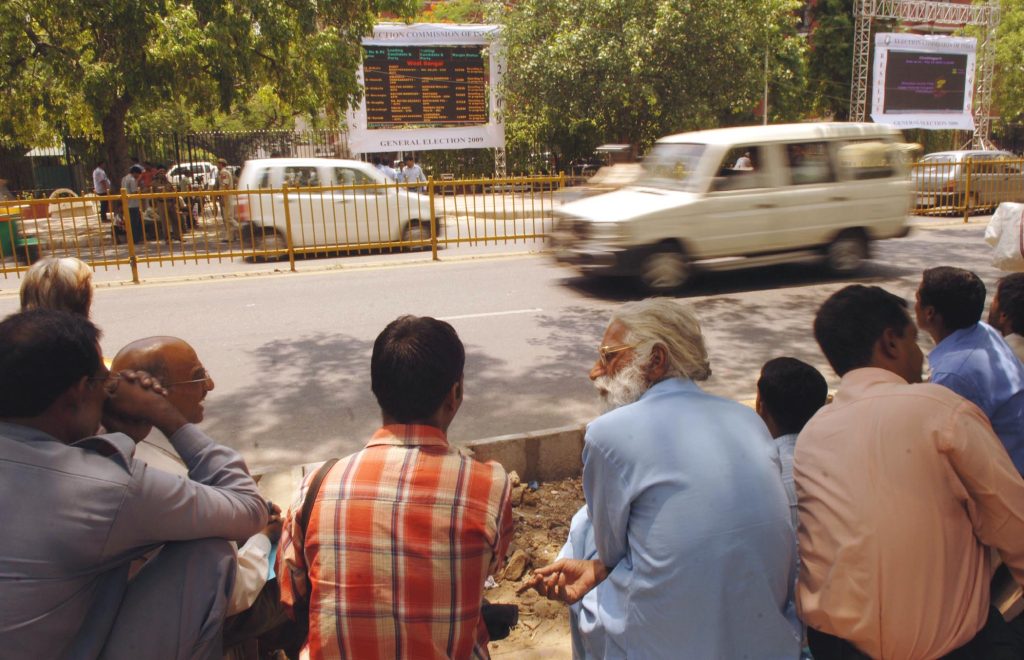
Featured image: A results display board outside the Election Commission office, Nirvachan Sadan, New Delhi, 2009 (file photo). Photo: Election Commission of India, GODL-India, via Wikimedia Commons.