


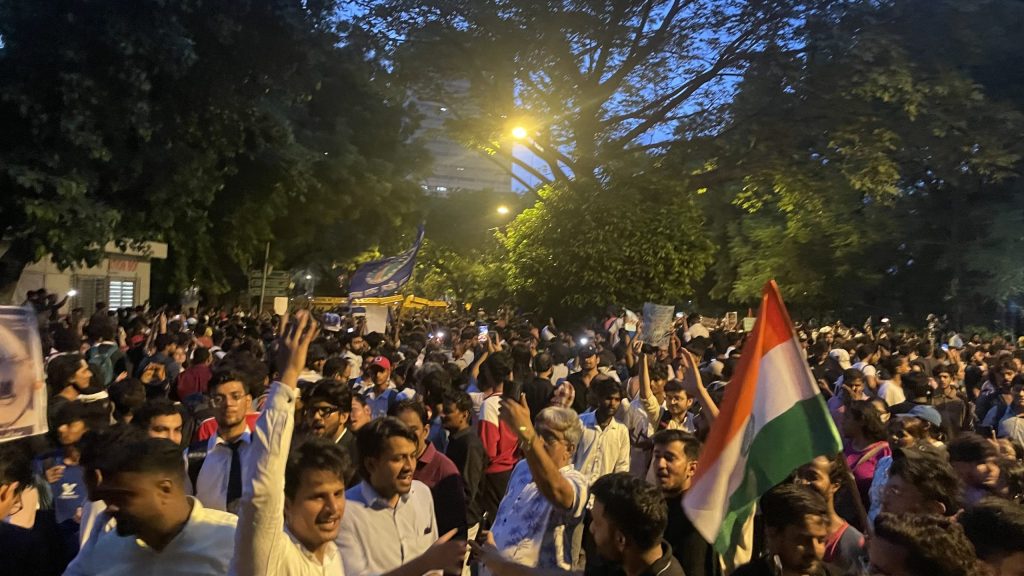
Delhi Police detained Neha Bora, president of the All India Students' Association, and Abhijeet Dipke, founder of the Cockroach Janta Party, before the "Lehra Do Tiranga" march at Connaught Place on Friday, 16 October 2026, according to ThePrint and Scroll. More than 300 people of all ages, including children as young as seven, gathered from about 5:30 p.m. despite prohibitory orders under Section 163 of the Bharatiya Nagarik Suraksha Sanhita, and the police said they detained around 150 people. Bora was released early on Saturday and served a notice to execute a Rs 10,000 personal bond, while Dipke was arrested under the breach-of-peace provisions. The protests demanding the resignation of the Chief Election Commissioner have been held since 2 October.
The argument that the march was a legitimate protest rests on who took part and how it was conducted. ThePrint reported that families attended, including a man from Dwarka who brought his wife and seven-year-old son and said it is important to teach children to ask questions and seek accountability. Marchers chanted Vande Mataram and carried the national flag, and the name of the march presents it as a patriotic act. Bora, who disputes the allegations, argues in a petition to the Delhi High Court that the notice has no material to show a likely breach of peace and violates her rights to speech, assembly and liberty. Two other leaders, Saurav Das and Ashutosh Ranka, were remanded to five days of judicial custody on 14 October, and their lawyer said they were jailed for raising a patriotic slogan.
The argument that the police acted within their powers is also on record. Prohibitory orders under Section 163 were in force, Central Park was closed on Friday and Saturday and the shops at Connaught Place stayed shut, so the march went ahead against a lawful order. Jantar Mantar is no longer a designated protest site, and the magistrate had imposed bonds of Rs 50,000 each, for a year, on Das and Ranka to maintain peace, which the police said they breached by urging people through social media to gather at an undesignated place. Bora was held under Section 65 of the Delhi Police Act and Dipke under sections 126 and 170 of the Sanhita, which are preventive provisions and not punishments.
The events matter for the right to protest in the capital because they combine a student leader, a movement that has organised demonstrations over the electoral rolls, and the use of prohibitory orders, bonds and detentions. The Delhi High Court reopened on 26 October after the Dussehra vacation, so Bora's petition can now be heard. The numbers, more than 300 marchers and about 150 detained, show both the reach of the movement and how closely it is being policed. Section 163 of the Sanhita is the provision that replaced Section 144 of the old Code of Criminal Procedure, the usual tool for banning gatherings.
A peaceful march met prohibitory orders and detentions, and both sides have a legal case. The High Court's response will show how far preventive powers can be used against protesters.
Featured image: A crowd of protesters with the national flag at Jantar Mantar, Delhi (file photo; not from the 16 October march). Photo: Alnitak-Alnilam-Mintaka, CC BY-SA 4.0, via Wikimedia Commons.