



Central government employees are still waiting for the next increase in their dearness allowance. On 6 October 2026, the Union Cabinet met and took three decisions, but none on the dearness allowance, according to Upstox. The rate that employees currently receive is 60 per cent of basic pay, and the report says that a 3 per cent increase is anticipated, which would take it to 63 per cent.
The expected effective date is 1 July 2026. Dearness allowance is revised twice a year, with the increase for the second half of the year applying from 1 July, and the announcement usually comes later, so employees receive arrears for the months in between. The Upstox article does not give the date of the last increase, so the interval since the previous revision is not stated here.
The forecast of 3 per cent comes from a formula. The report says that calculations based on the All India Consumer Price Index for Industrial Workers up to June 2026 indicate a 3 per cent hike, and it says the 7th Pay Commission formula is currently used. The formula averages the index over twelve months and compares it with a base, so the figure can be worked out before the government announces it, which is why employees and unions watch the data.
Employee unions have urged an early announcement. The report says they asked for it as festive relief, since Diwali is approaching and a decision before the festival would allow the higher payment to be made earlier. The Cabinet instead approved a bonus for railway employees on 14 October, which is a separate payment covering railway staff only and not a change in the dearness allowance.
The Cabinet decisions on 6 October were a Rs 10,000 crore SME Growth Fund, the creation of the Integrated Transport and Logistics Authority and a resolution congratulating the Prime Minister on 25 years of leadership, according to the report. The absence of a DA decision at that meeting was noted because unions had hoped for one, and IndiaX24 covers the other decisions in separate articles.
What would a 3 per cent increase mean? On a basic pay of Rs 50,000 a month, which is an illustration and not a figure from the report, the allowance would rise from Rs 30,000 to Rs 31,500, an increase of Rs 1,500 a month, on IndiaX24’s arithmetic. If the effective date is 1 July, the employee would also receive arrears for the months since then when the payment starts.
The figure of 60 per cent also matters for other payments. Some allowances and pension relief for retired employees are linked to the dearness allowance or dearness relief, but the sources reviewed do not describe those links or the number of employees and pensioners affected, so they are not quantified here.
The report does not mention the 8th Pay Commission, and the sources reviewed for this article do not describe its status, so it cannot be discussed here. The calculation uses the 7th Pay Commission formula, which remains in force until changed.
The decision on the dearness allowance is expected to be taken by the Cabinet in the coming weeks, and employees will know the new rate when it is announced.
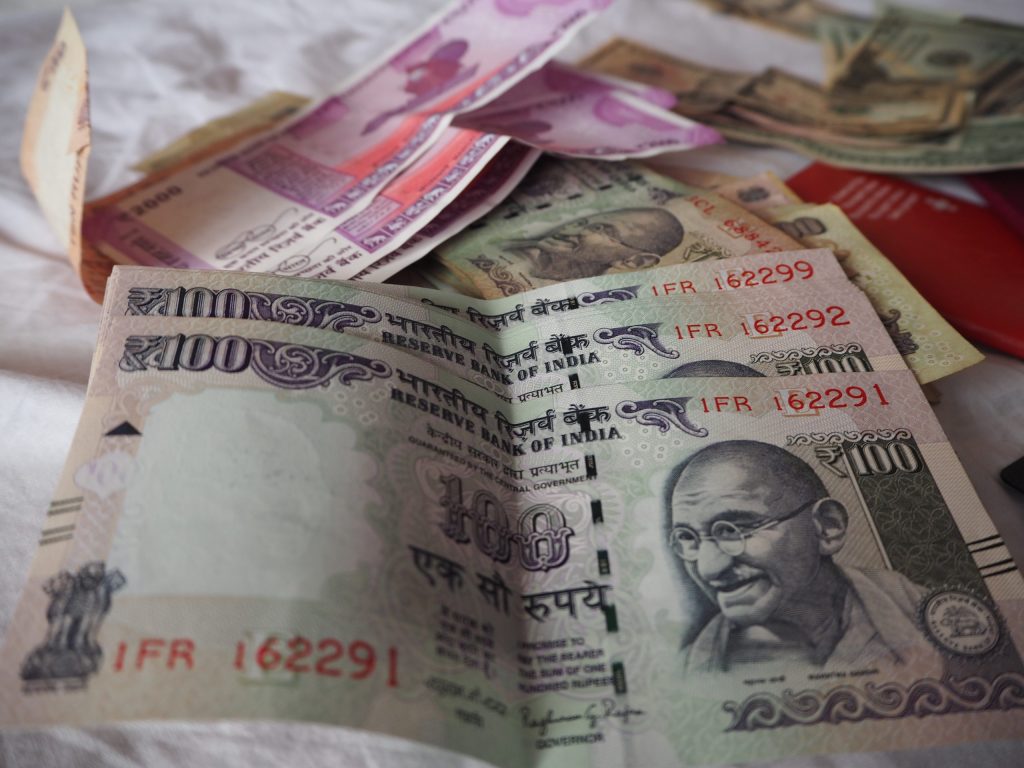
Featured image: Indian rupee banknotes (file photo; a stand-in image for pay and allowances). Photo by Monito – Money Transfer Comparison, licensed under CC BY 2.0, via Wikimedia Commons.