



India’s Census is being carried out in two phases, and the dates are now fixed in the official schedule. According to Wikipedia and a summary of the Home Ministry’s announcement, the first phase, the house-listing and housing census, runs between 1 April and 30 September 2026, with each state or union territory choosing a 30-day period for house-to-house work. The second phase, the population enumeration, is to be held from 9 to 28 February 2027 with a reference date of 1 March 2027.
Self-enumeration is optional. Residents can fill in the information online during a 15-day window immediately before the 30-day house-to-house period in their state or union territory, according to the search summaries, and the Wikipedia page says that the online portal is available in 16 languages. Those who do not use it will be visited by an enumerator in the usual way.
The schedule is different for areas that are snow-bound. For Ladakh and the snow-bound parts of Jammu and Kashmir, Himachal Pradesh and Uttarakhand, house-listing takes place from 1 to 30 September 2026 with a reference date of 1 October 2026, according to the Home Ministry summary, and the population enumeration for these areas is to be done in September 2026, a time when the weather permits it. Wikipedia describes this as August and September 2026. The two sources differ slightly on the start of that work.
The caste enumeration is part of the second phase. The Census will record caste for the first time since 1931, and the sources describe it as part of the population enumeration in February 2027. The Centre notified 40 questions for the Census on 14 August 2026, according to an ANI report headline, though the article could not be read in full, so the questions themselves are not listed here.
The exercise is digital. Wikipedia says that about 3.3 million enumerators will use personal smartphones, with paper options available, and that a mobile app and a portal replace paper records.
The results will come later. Provisional figures are expected in late 2027, and the final report in late 2028, according to Wikipedia. That timeline matters for the debate on delimitation, since the 106th Amendment links women’s reservation to a delimitation that follows the Census, and the 131st Amendment Bill, which tried to use the 2011 Census instead, was defeated in April.
The distinction between the two phases is easy to miss. The first phase counts buildings and households, asking about housing conditions and amenities, and does not count individuals, while the second counts every person and collects data on population, including caste. The sources reviewed describe this structure in general terms and do not list the questions.
For residents, the practical steps are to watch for the self-enumeration window announced in their state, to keep documents ready and to expect a visit from an enumerator. The exact dates in each state are set by the state government within the national window, and the sources reviewed do not list them state by state.
The schedule shows that the house-listing phase is meant to be complete by 30 September 2026, and that the headline count, with caste, will take place over about three weeks in February 2027.
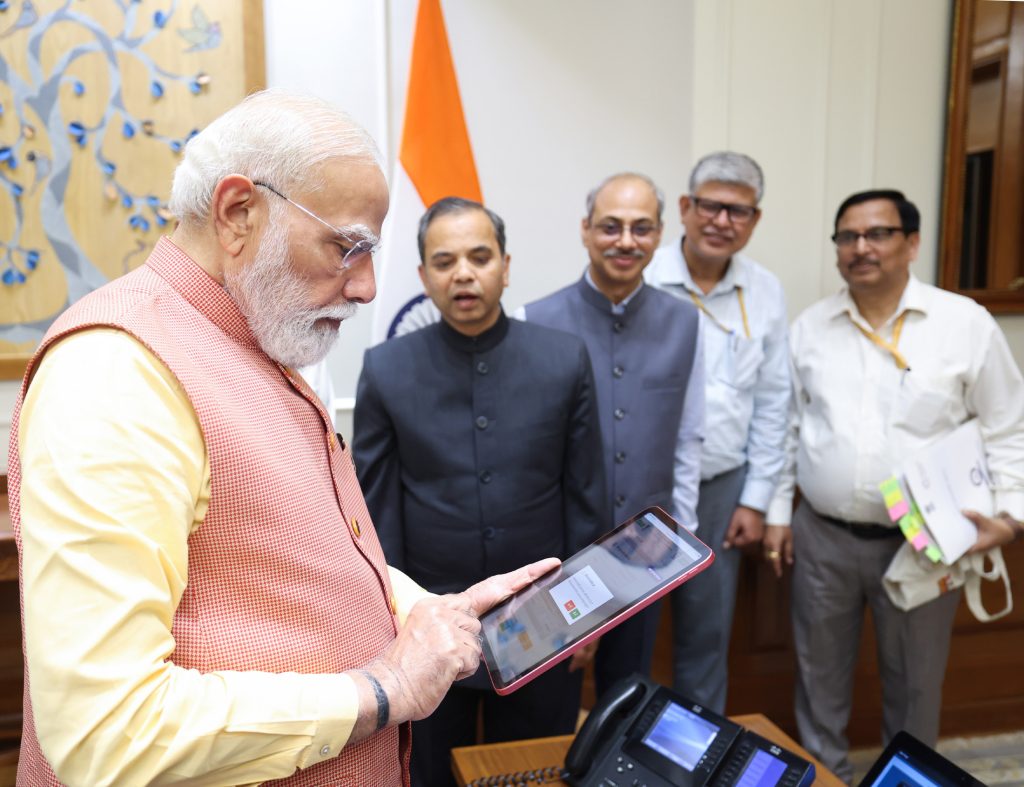
Featured image: Prime Minister Narendra Modi filling out the self-enumeration for Census 2027 (file photo). Photo by Prime Minister’s Office, licensed under Government Open Data License – India, via Wikimedia Commons.