



The Ministry of Home Affairs on October 16, 2026, amended the Census Rules, 1990, to allow state governments and Union territory administrations to appoint “any person” they consider suitable as a census enumerator, according to ThePrint. Until now the rules allowed teachers from government and private institutions and clerks from government departments and specified establishments such as public sector undertakings, banks, companies and trusts. Congress general secretary Jairam Ramesh alleged on X that the change creates a “Rozgar Guarantee Yojana for thousands of RSS/BJP workers,” and linked it to an RSS training camp on the census held in Belgaum from July 10 to 12 and to a call for inputs from a High-Level Committee on Demographic Changes on October 14. The notification does not mention the RSS, the BJP or any political criteria, and ThePrint reported no government response.
The case that the change is a practical response to a staffing problem rests on the size of the exercise and on court orders. The Centre has approved an outlay of Rs 11,718.24 crore for Census 2027, a large exercise that needs a very large number of enumerators. Courts have already interfered with the existing route: the Punjab and Haryana High Court stayed Haryana’s recruitment of private school teachers for the work, and the Allahabad High Court stayed orders in Gautam Budh Nagar, according to ThePrint. Private school teachers had also raised a legal challenge to the staffing plan in Haryana, so the pool of people the rules allowed was being questioned. Widening the category to “any person” the state considers suitable gives governments flexibility if teachers are not available.
The case that the change is open to misuse is made by the wording and by Congress. “Any person, as the state government or the Union territory administration may consider suitable” has no stated criteria, so it leaves the choice entirely to the authorities, and Jairam Ramesh argued that the timing, two days after the call for inputs by the High-Level Committee on Demographic Changes and after an RSS camp on the census, points to a political purpose. The notification itself contains nothing that supports or refutes that claim, and ThePrint reported that the government had not responded. A census collects information on every household, so the integrity and neutrality of those who collect it matter for the credibility of the figures, and critics may ask for safeguards such as training, verification and rules on conflicts of interest.
The matter is important for the whole country because the census is the basis for the allocation of resources and representation, and the figures from Census 2027 will be used for years. For states, the new rule means more freedom in finding enumerators, and for the government, an opportunity to answer the objections that have already been raised in court. For the opposition, the allegation is part of a wider argument about the independence of institutions, which has also featured in the protests over electoral rolls.
The rule widens the pool of enumerators to anyone considered suitable and has drawn a charge of partisanship that the government has not addressed. The safeguards it adds, or fails to add, will affect trust in the count.
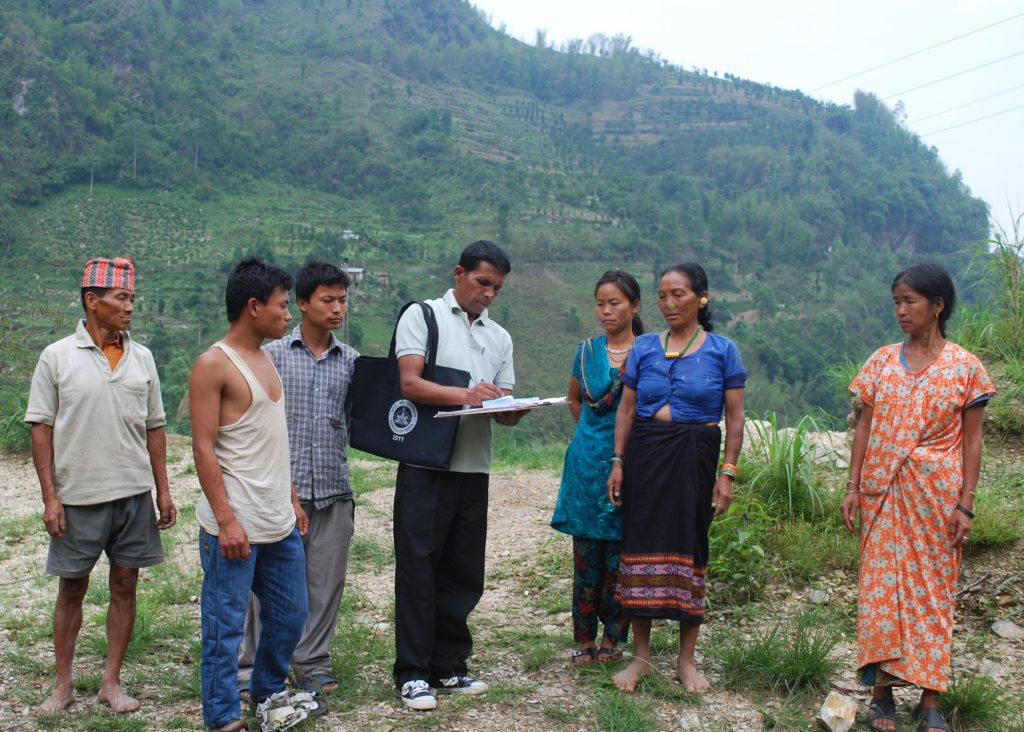
Image: Census work in progress at Parengaon, West Sikkim, during the 2011 Census (file photo). Photo by Ministry of Statistics and Programme Implementation, licensed under Government Open Data License – India, via Wikimedia Commons.