


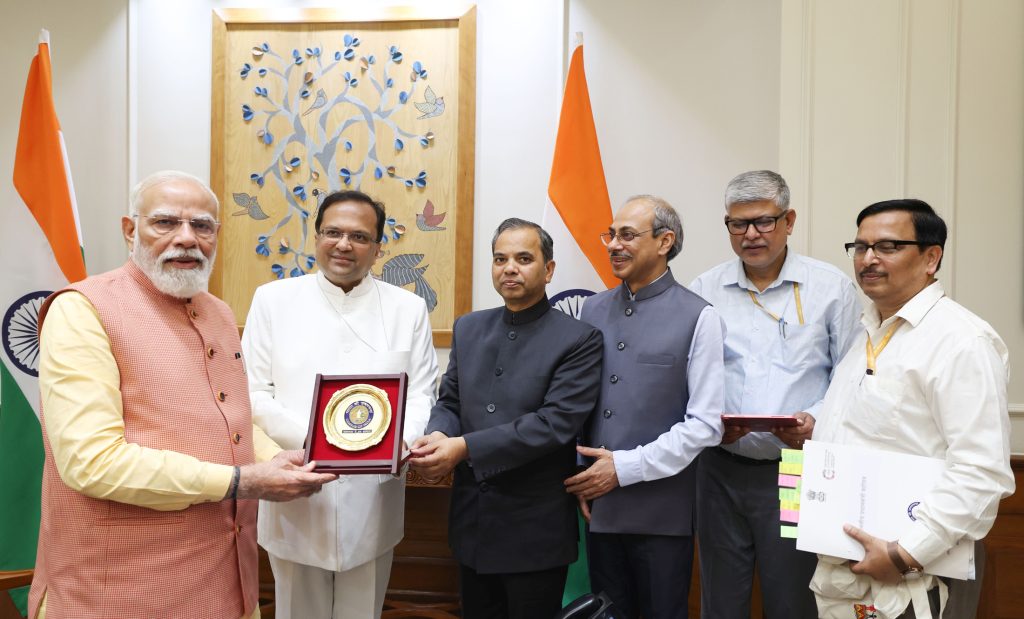
India is conducting its first digital census in two phases, and for the first time since 1931 it will include caste enumeration. The Cabinet Committee on Political Affairs decided on 30 April 2025 that caste would be counted. The first phase, houselisting, ran from 1 April to 30 September 2026, with each state and union territory given a 30-day window and an optional 15-day period of online self-enumeration before house visits. Prime Minister Narendra Modi took part in self-enumeration in New Delhi on 1 April 2026. The second phase, the population count that includes caste, is planned for early 2027.
The argument for counting caste is that policy has been made for decades without recent data. The last census to record caste was in 1931, which the government has said listed 4,147 castes, and welfare schemes and reservation policy have relied on estimates and old numbers since then. The government sanctioned Rs 11,718 crore for the two-phase census, reported by the Indian Express, and the exercise is digital, with a mobile app and a self-enumeration portal available in 16 languages. Supporters say that a count of each person's jati, and not only broad groups such as OBC, will let governments target benefits more fairly, identify the communities that are being left behind, and settle arguments with facts and not guesses.
The argument against the current design is that caste will be collected as open text for everyone except Scheduled Castes and Scheduled Tribes, and not chosen from a fixed list, which opposition parties and the assemblies of Tamil Nadu and Telangana have criticised. The 2011 Socio Economic and Caste Census produced more than 46 lakh different caste names, which were never classified, and in a September 2021 affidavit the Centre told the Supreme Court that the data was unreliable and unusable. The Anthropological Survey of India has listed 4,635 castes in its People of India project, so the gap between 4,635 and 46 lakh shows how spelling, surnames, clans and sub-castes can multiply. Some officials defended the earlier data, as the Registrar General told a parliamentary committee in 2016 that 98.87 percent of the individual caste and religion data was error free, so the quality of the old data is still disputed.
The question matters because caste figures could affect reservation, welfare targeting and political representation for years. A clean count could give the country its first reliable picture of caste in nearly a century, while a badly classified one could be disputed by every party and left unused, as the 2011 data was. For states, the result will affect their demands on quotas and funds, and for the Census office the challenge is to turn millions of free-text entries into usable categories without bias. Because the count is digital and each person's jati is recorded, the data will also be far more detailed than anything the country has collected on caste in decades.
Counting caste is a long-awaited step, and the digital tools make it more achievable than before. Its value will depend on how the entries are classified, and the government should publish its method early so that parties and citizens can trust the final numbers.
Featured image: Prime Minister Narendra Modi taking part in self-enumeration for Census 2027 in New Delhi on 1 April 2026. Photo: Prime Minister's Office, GODL-India, via Wikimedia Commons.