


The Supreme Court has allowed certified green firecrackers in Delhi-NCR on 7 and 8 November 2026, the two days around Diwali, while the complete ban on firecrackers returns from 9 November, according to the court's daily round-up for 2 November. The order follows months of hearings in which the judges said they would not accept either a total ban or round-the-clock bursting. At a hearing on 30 September, Justice M.M. Sundresh said the bench would not agree to a total ban, and the court asked the Central Pollution Control Board and expert bodies to assess barium-based crackers. The decision lands in a city where air quality is a daily worry.
The argument in favour of the order is that it tries to balance religious sentiment against health instead of imposing a ban that is hard to enforce. In October 2025 the same court allowed only NEERI-approved, QR-coded green crackers for limited hours, barred barium-based crackers and prohibited online sales, which gave regulators a clear rule to police. Supporters also point out that Delhi's Diwali air does not depend on crackers alone. According to figures compiled from Central Pollution Control Board data, the air quality index on Diwali was 312 in 2022, 218 in 2023 and 328 in 2024, a swing that shows how much weather and wind speed matter. A narrow two-day window with certified products, they say, is more realistic than a blanket ban that can push sales underground.
The argument against is that green crackers have not kept the air clean when they were allowed. After Diwali 2025, when limited green crackers were permitted, Delhi's average PM2.5 reached 488 micrograms per cubic metre in the 24 hours after the festival, more than three times the pre-festival level of 156.6, according to an analysis of Central Pollution Control Board data by Climate Trends. That was the worst reading in the 2021 to 2025 period. Critics also note that the government's own lawyer told the court in September that outdoor testing of barium-based crackers is yet to be conducted, so the real emissions of the approved products remain unmeasured. Reports on 2 November said Delhi's air had already slipped into the very poor category, which under the Graded Response Action Plan means an index between 301 and 400.
The stakes go beyond one festival. The Supreme Court itself has said it must weigh religious sentiment against the effect of pollution on children, the elderly and the sick, and Delhi-NCR is where that balance is tested most visibly every year. If the two-day window passes without a sharp spike, it could become the template for other cities that struggle with winter smog. If it fails, pressure will grow for a permanent ban, and for the testing data that the court has already asked for.
The order is a compromise, and its success will be measured on 9 November, not on the day it was announced. Residents will be watching the air quality index closely, and the court's insistence on certified crackers and expert testing suggests that the next order will depend on what the monitors record.
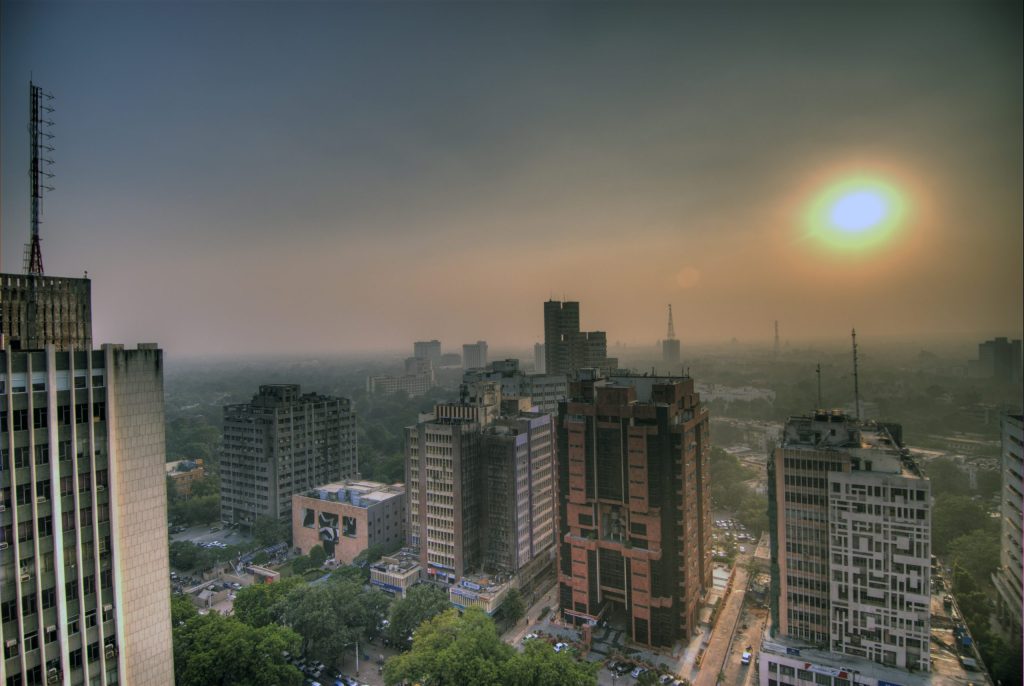
Featured image: Smog over Delhi (file photo). Photo: wili hybrid, CC BY 2.0, via Wikimedia Commons.