


A viral video showing an earthmover at work at Sheshnag lake in south Kashmir's Pahalgam has sparked outrage among political parties, religious leaders and local residents, and demands are growing to stop heavy machinery in the ecologically fragile region. The reaction came on Monday, 23 November 2026, after the video circulated on social media over the past 24 hours. The clip, which is undated, shows an earthmover filling a site at the edge of the lake. Critics say the activity threatens a pristine high-altitude glacial environment and the communities that depend on its water.
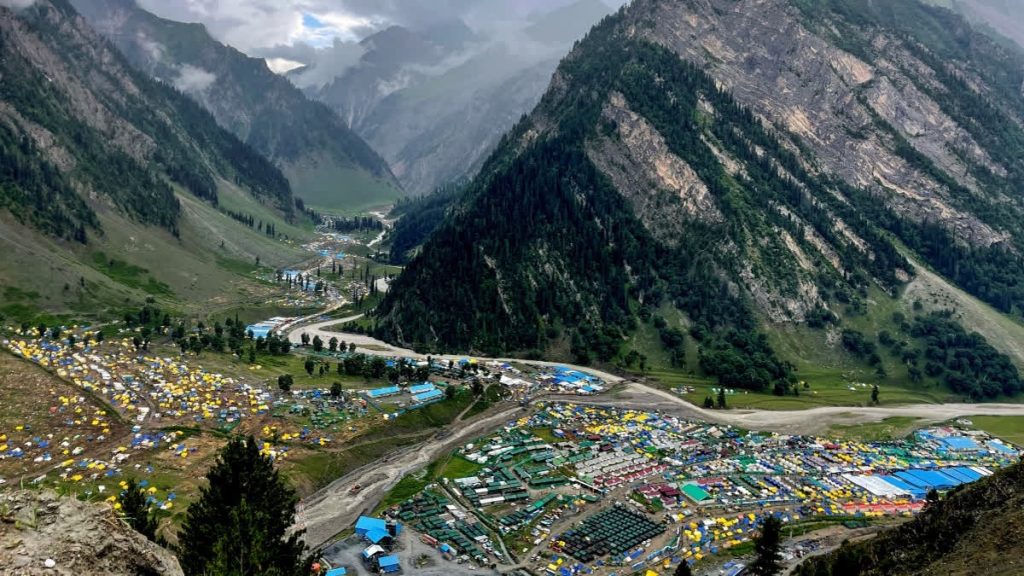
Sheshnag is a glacial lake located 11,780 feet above sea level in Pahalgam in the Anantnag district. It spans 1.1 kilometres in length and 0.7 kilometres in width and is a stopover for pilgrims heading to the annual Amarnath Yatra. A macadamised road for the pilgrims ends at Chandanwari, and in the past pilgrims trekked 12 to 13 kilometres on an unpaved mountain track to reach the lake. The Amarnath cave is 18 to 20 kilometres from the stopover. The lake lies on the route of the yatra, which ended on 28 August this year, so the machinery in the video was apparently working in the off-season, though The Hindu's report notes that the video is undated.
Opposition People's Democratic Party (PDP) spokesman Mohit Bhan said Sheshnag "was not just another lake in the mountains of Kashmir". He pointed to its religious significance, saying that in Hinduism it is the sacred landscape where Lord Shiva is believed to have left behind the serpents before proceeding towards the Amarnath Cave to narrate the Amar Katha to Goddess Parvati. "There is a profound contradiction in invoking Hindu faith while allowing the very landscape associated with that faith to be disturbed through unnecessary construction, road cutting and surface levelling," Mr. Bhan said. He added that what is projected as development must not come at the cost of a fragile alpine ecosystem, and asked: "If we cannot respect Sacred Sheshnag, what exactly are we preserving in the name of the Amarnath Yatra?"
Kashmir's chief cleric, Mirwaiz Umar Farooq, described the visuals and reports of heavy machinery near the lake as "very disturbing" and said they raised serious concern about the ecological impact of construction in this fragile Himalayan region. He noted that glaciers are already retreating and that recent devastating glacier-related floods in neighbouring Nepal were a reminder of the vulnerability of the Himalayas. "Kashmir has always warmly welcomed Amarnath Yatra pilgrims, and improving facilities for them has never been an issue. But not at the cost of our fragile ecosystem," he said, adding that those governing "owe answers to people for the serious environmental concerns created by such 'developmental projects'". The screengrab of the earthmover that has been widely shared came from a post on his account on X.
The concern about glacial lakes is not abstract. A user on social media, Suhail Ahmed Khan, said Sheshnag is one of the 14 officially identified high-risk glacial lakes in Jammu and Kashmir for glacial lake outburst floods, known as GLOFs. "Heavy machinery is being run on its shoreline with zero transparency on environmental clearance or risk assessment," he said. "This is not development. This is deliberate endangerment of a fragile alpine ecosystem and downstream communities." The Hindu's report cites this as a comment on the video and does not independently verify the claims about clearances, so the question of whether the work had permission remains open.
Environmentalist Raja Muzaffar Bhat, a prominent activist, called the earthmover at the high-altitude lake a "disaster" and asked: "How does such a heavy machine reach our glaciers of Kashmir?" Religious leader Muhammad Sameer Shafi Siddiqui described the video as "very disturbing and alarming". He pointed to the already diminishing glacial cover at Kolahoi and other places and said it was hard to understand how heavy machines were cutting into the fragile ecosystem near a pristine glacial lake. He also stressed the lake's importance for water supply, saying Sheshnag is the prime source of water for the Lidder River and that a large population downstream relies on it for drinking and irrigation.
The criticism links two issues: the sanctity of a pilgrimage landscape and the environmental risks of high-altitude construction. The Amarnath Yatra draws large numbers of pilgrims every summer, and authorities have long sought to improve facilities on the route, from roads and tents to medical and sanitation arrangements. Improved infrastructure can make the pilgrimage safer, but it can also bring pressure on a sensitive environment, especially when it involves machinery near glacial lakes. The debate in Kashmir is therefore about how to balance the needs of pilgrims, the beliefs of devotees and the long-term protection of water sources.
Glacial lakes in the Himalayas are a growing concern for scientists and disaster managers. When ice melts and lakes expand, or when slopes and moraine walls around them are disturbed, there is a risk of sudden outburst floods that can devastate communities downstream. The references by critics to the recent flash floods in Nepal reflect this concern, and the identification of Sheshnag as one of 14 high-risk lakes in the Union Territory underlines why any disturbance at its edge draws attention. Whether the earthmover work increased that risk is not something that can be determined from a video, which is why critics are demanding transparency and an assessment.
At this stage, there is no official explanation in the reports about who operated the earthmover, what it was doing or whether it had permission. The Hindu's article does not include a response from the authorities responsible for the yatra or from the Jammu and Kashmir administration. That absence is itself a source of anger among critics, who say that the public is owed clear answers about the purpose of the work, the clearances obtained and the safeguards used. Until an official statement is made, the claims and counterclaims remain unresolved.
The political reaction shows how a single video can become a flashpoint. Parties in the opposition, such as the PDP, have framed the matter as a contradiction between professed respect for religious sites and actual practice, while religious and civil society leaders have focused on the environment. The two arguments reinforce each other, and they may increase pressure on the administration to respond. The demand most often voiced is for an immediate halt to heavy machinery in the area and for an independent review.
What happens next will depend on whether the authorities respond publicly. An official clarification, an inquiry or a stop-work order could calm the situation, while silence is likely to keep the issue alive. For the people of the Lidder valley, who depend on the river that flows from Sheshnag, and for the pilgrims who travel to the lake each summer, the question is not only what happened on the lake's edge but whether the high Himalaya can be protected while still being made accessible. The answer will be an important test of how the region manages development, faith and environmental safety.