


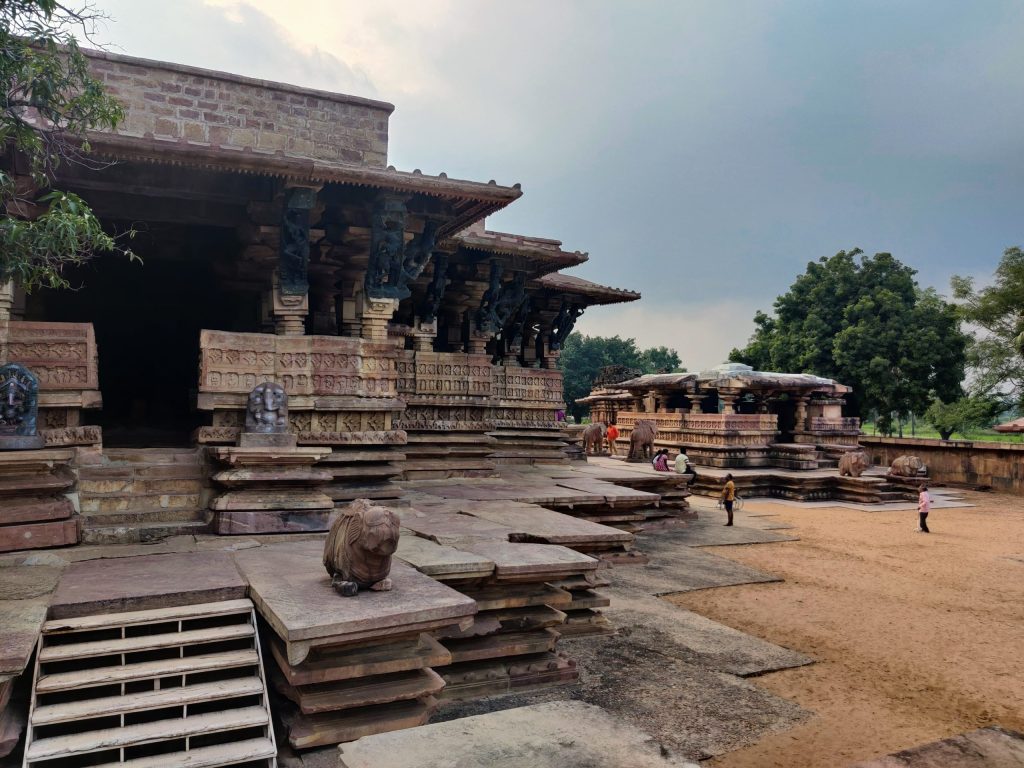

In a valley of rice fields and forest at Palampet in Telangana stands a temple known by the name of the man who carved it. The Kakatiya Rudreshwara Temple, popularly called the Ramappa Temple, was inscribed by UNESCO as a World Heritage Site in 2021.
At a glance
- Location: Palampet, Mulugu district, Telangana, about 200 kilometres from Hyderabad
- Inscribed: 2021
- Type: Cultural
- Built: begun 1213
- Built by: Recharla Rudra, general of the Kakatiya king Ganapati Deva
History
The Kakatiyas ruled most of the Telugu country from Warangal between the twelfth and fourteenth centuries. An inscription at the temple records that it was founded in 1213 by Recharla Rudra. Building is said to have taken about forty years. The temple is dedicated to Shiva as Ramalingeswara, but it is called after its chief sculptor, Ramappa, perhaps the only temple in India named for its craftsman.
How it was built
The builders used several unusual techniques.
- Sandbox foundation: the foundation pit was filled with a mixture of sand and other materials before the stonework was laid, a cushion that is thought to have helped the temple survive earthquakes
- Floating bricks: the tower is built of very light, porous bricks, said to float on water, to reduce the weight on the walls
- Stone: the walls and pillars are of reddish sandstone; the brackets and ornament of hard black dolerite, polished to a metallic shine
The sculpture
- Bracket figures: slender dancing women in black stone, set at an angle under the eaves, the temple’s most admired feature
- The ceiling and pillars: carved with scenes from the epics
- Dance poses: the carvings were used in the twentieth century to revive a lost Kakatiya dance form, Perini
- Nandi: a finely decorated bull facing the shrine
The setting
The temple stands near the Ramappa lake, a reservoir made by the Kakatiyas, who built thousands of tanks to irrigate the dry country. Temple, tank and town were planned together.
Why it is a World Heritage Site
UNESCO cites the temple as an outstanding example of Kakatiya art and engineering and of the dynasty’s way of combining a temple with a man-made lake.
Visiting
The nearest city is Warangal, about 65 kilometres away, where the Thousand Pillar Temple and the ruins of the Kakatiya fort can also be seen.
Image: The Ramappa Temple at Palampet, Telangana. Photo by Khushi Shah 280, licensed under CC BY-SA 4.0, via Wikimedia Commons.