



In 1025 a fleet sent by the Chola king Rajendra I crossed the Bay of Bengal and attacked the ports of the Srivijaya kingdom in Sumatra and the Malay peninsula. It was one of the very few overseas military expeditions ever launched by an Indian state, and it showed the reach of the Cholas at their height.
The Chola empire
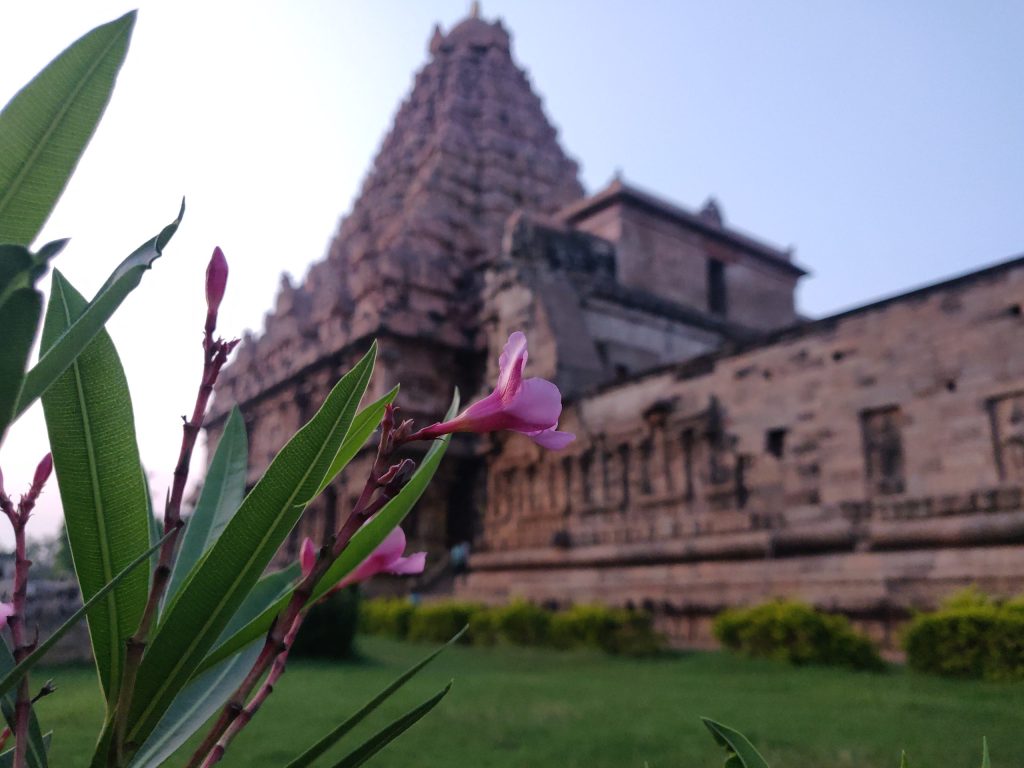
The Cholas, ruling from the Kaveri delta in what is now Tamil Nadu, became the dominant power of south India under Rajaraja I, who built the great temple at Thanjavur. His son Rajendra I, who reigned from 1014 to 1044, extended the empire further. He completed the conquest of Sri Lanka, took the Maldives, and around 1023 sent an army north through Odisha and Bengal to the Ganga. To mark that campaign he built a new capital, Gangaikonda Cholapuram, “the city of the Chola who took the Ganga”.
Srivijaya
Srivijaya, centred on Palembang in Sumatra, controlled the Strait of Malacca and the Sunda Strait, through which all sea trade between India and China had to pass. Its rulers grew rich by taxing that trade.
Relations with the Cholas had been friendly. A Srivijaya king had built a Buddhist monastery at the Chola port of Nagapattinam, and Rajaraja had granted a village for its upkeep.
Why the attack
No source states the reason. Historians suggest several:
- Trade: Srivijaya may have been obstructing or overtaxing ships of the Tamil merchant guilds trading with China, where the Cholas had sent embassies.
- Prestige: Rajendra, like other kings of his age, sought the fame of distant conquest.
- Regional politics: Rivals of Srivijaya, such as the Khmer king Suryavarman I, are thought to have sought Chola friendship.
The expedition
The details come from an inscription of Rajendra at the Thanjavur temple. It says the king sent many ships “in the midst of the rolling sea” and captured Sangrama Vijayottungavarman, the king of Kadaram, with his elephants and treasure, including a jewelled gateway.
The inscription lists the places taken, among them:
- Srivijaya: Palembang, the capital
- Kadaram: Kedah, on the Malay peninsula
- Pannai and Malaiyur: in Sumatra
- Tambralinga: on the isthmus of southern Thailand
- Ilamuridesam: in northern Sumatra
- Nakkavaram: the Nicobar Islands
The fleet seems to have struck the ports in quick succession, taking them by surprise. How the Cholas organised a navy on this scale, probably using merchant vessels to carry troops, is still debated.
The result
The Cholas did not stay. No territory was annexed and no governor left behind. Rajendra added to his titles Kadaram Kondan, the conqueror of Kadaram.
The effects were nonetheless real. Srivijaya’s hold on the straits was weakened and it never fully recovered its dominance. Tamil merchant guilds became more active in South-East Asia; an inscription of one such guild from 1088 has been found in Sumatra. A later Chola king sent another expedition to Kedah in the 1060s.
Why it matters
The expedition is a reminder that medieval India looked outward by sea as well as by land, and that the trade and culture linking south India with South-East Asia had a military side. In 2025 India marked a thousand years of Rajendra’s maritime expedition with celebrations at Gangaikonda Cholapuram.
Image: The Brihadisvara Temple at Gangaikonda Cholapuram, the capital built by Rajendra Chola I. Photo by Denish Raziv, licensed under CC BY-SA 4.0, via Wikimedia Commons.