


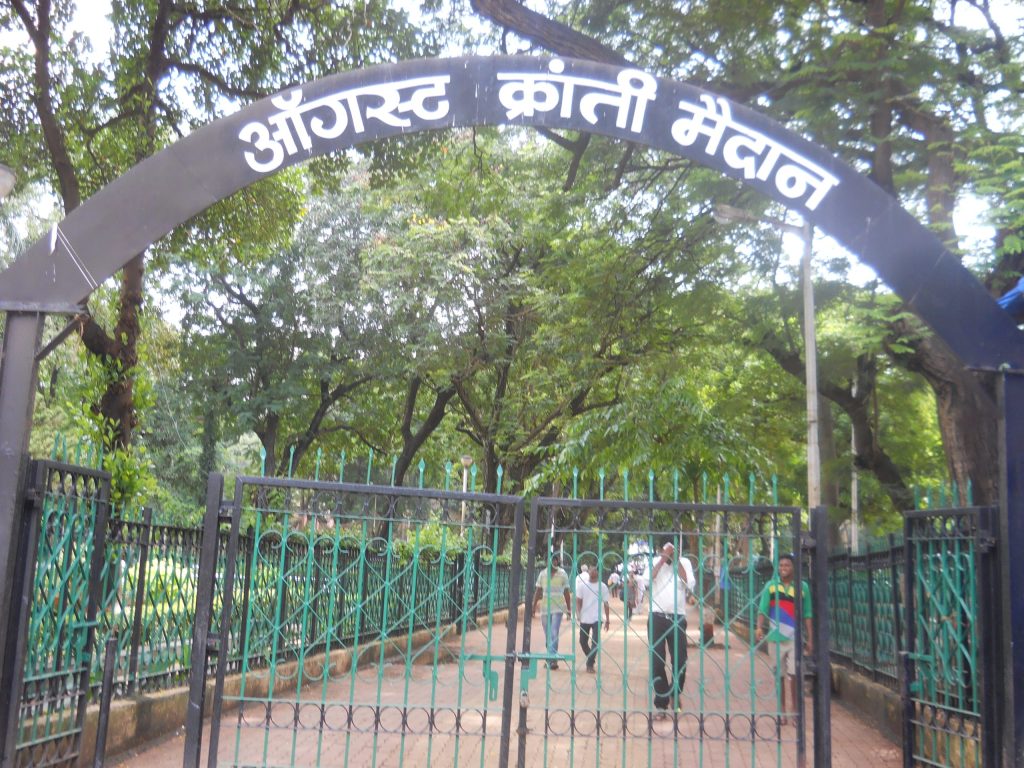

On 8 August 1942, at Gowalia Tank Maidan in Bombay, the All India Congress Committee passed a resolution demanding an immediate end to British rule. Mahatma Gandhi gave the people a mantra: “Do or Die.” The Quit India Movement, also called the August Kranti, was the last great mass struggle of the freedom movement.
The background
- The war: Britain had taken India into the Second World War in 1939 without consulting Indian leaders. Congress ministries in the provinces resigned in protest.
- Japan’s advance: By early 1942 Japan had taken Singapore and Burma and stood at India’s eastern border.
- The Cripps Mission: In March 1942 Sir Stafford Cripps offered dominion status after the war. The Congress rejected it; Gandhi is said to have called it a post-dated cheque.
What happened
- 8 August: The resolution was passed. Gandhi told the gathering: “We shall either free India or die in the attempt.”
- 9 August: Before dawn, Gandhi, Jawaharlal Nehru, Vallabhbhai Patel, Maulana Azad and the rest of the leadership were arrested. The Congress was banned.
- The same morning: Aruna Asaf Ali hoisted the flag at Gowalia Tank.
A movement without leaders
With the leaders in jail, the movement passed into the hands of students, workers and peasants.
- Protests and sabotage: Strikes spread through the cities. Railway lines, telegraph wires and police stations were attacked, especially in Bihar and eastern Uttar Pradesh.
- Underground: Jayaprakash Narayan, Ram Manohar Lohia and Aruna Asaf Ali directed resistance in hiding. Usha Mehta ran a secret Congress Radio from Bombay.
- Parallel governments: For a time, people set up their own administrations at Ballia in Uttar Pradesh, Tamluk in Bengal and Satara in Maharashtra.
The repression
The government answered with force: police and army firing, mass arrests, collective fines and public flogging. More than 1,00,000 people were arrested, and well over a thousand were killed. By the end of 1942 the open revolt had been crushed.
Gandhi was held at the Aga Khan Palace in Poona, where his secretary Mahadev Desai and his wife Kasturba died. He was released in May 1944.
Who stayed out
The Muslim League, the Hindu Mahasabha and the Communist Party did not support the movement. Subhas Chandra Bose, outside India, was raising the Indian National Army.
Why it matters
Quit India did not end British rule at once. But it showed that India could no longer be governed without the consent of its people, and after the war Britain opened negotiations for the transfer of power. Independence came five years later, on 15 August 1947. The ground in Mumbai is now called August Kranti Maidan, and 9 August is observed as August Kranti Day.
Image: August Kranti Maidan in Mumbai, formerly Gowalia Tank Maidan, where the Quit India resolution was launched. Photo by Karthikndr, licensed under CC BY-SA 3.0, via Wikimedia Commons.