


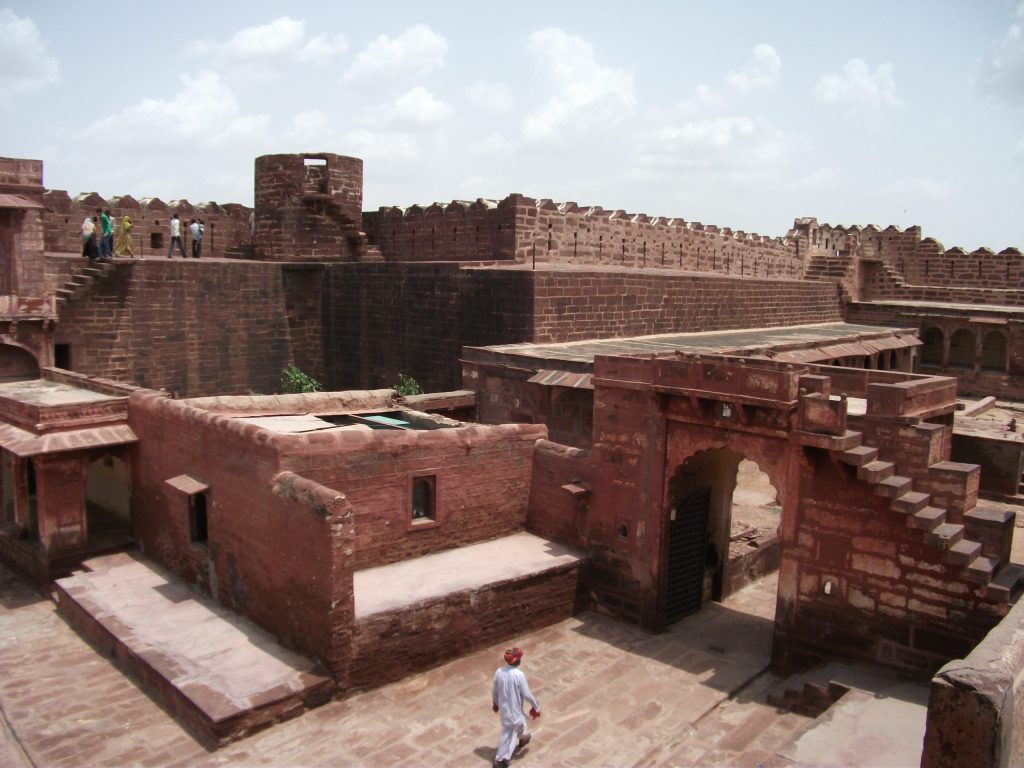

The desert near Pokhran in Rajasthan’s Jaisalmer district has twice shaken the world. India conducted its first nuclear test there in 1974 and five more in 1998, after which it declared itself a nuclear-weapon state.
The beginnings
India’s nuclear programme was founded by the physicist Homi Bhabha in the 1940s for peaceful purposes. Two events changed the thinking: the defeat by China in 1962 and China’s own nuclear test in 1964. India refused to sign the Nuclear Non-Proliferation Treaty of 1968, arguing that it allowed five countries to keep their weapons while denying them to everyone else.
Smiling Buddha, 1974
- Date: 18 May 1974, which was Buddha Purnima
- Prime Minister: Indira Gandhi
- Scientists: a team led by Raja Ramanna, with Homi Sethna heading the Atomic Energy Commission
- The device: a plutonium bomb, exploded underground
The government described it as a “peaceful nuclear explosion”. India became the first country outside the five permanent members of the UN Security Council to test. In response, Canada and the United States cut nuclear cooperation, and the supplier countries formed the Nuclear Suppliers Group to control exports.
The long pause
For twenty-four years India did not test again, though it kept the capability. Preparations in 1995 under P. V. Narasimha Rao were detected by American satellites and called off.
Operation Shakti, 1998
- 11 May 1998: three devices were exploded together, including one described as thermonuclear
- 13 May 1998: two smaller devices followed
- Prime Minister: Atal Bihari Vajpayee, in office for less than two months
- Scientists: Dr A. P. J. Abdul Kalam, then head of the DRDO, and R. Chidambaram of the Atomic Energy Commission
The work was done at night and under camouflage, with scientists in army uniform, so that satellites would notice nothing. The tests took the world by surprise.
The fallout
- Pakistan tested its own devices at Chagai on 28 and 30 May.
- Sanctions: The United States, Japan and others imposed economic sanctions on India.
- At home: The tests were widely popular. 11 May is now National Technology Day.
The doctrine
India announced a voluntary halt to further testing and adopted a policy of “no first use”: it would use nuclear weapons only in retaliation, and would keep a “credible minimum deterrent”.
Acceptance
The sanctions were eased within a few years. In 2008, under Manmohan Singh, India and the United States concluded a civil nuclear agreement, and the Nuclear Suppliers Group, created because of the 1974 test, granted India a waiver to trade in nuclear fuel and technology. India remains outside the Non-Proliferation Treaty.
Image: The fort at Pokhran in Rajasthan; the nuclear test range lies in the desert nearby. Photo by Archan dave, licensed under CC BY-SA 3.0, via Wikimedia Commons.