


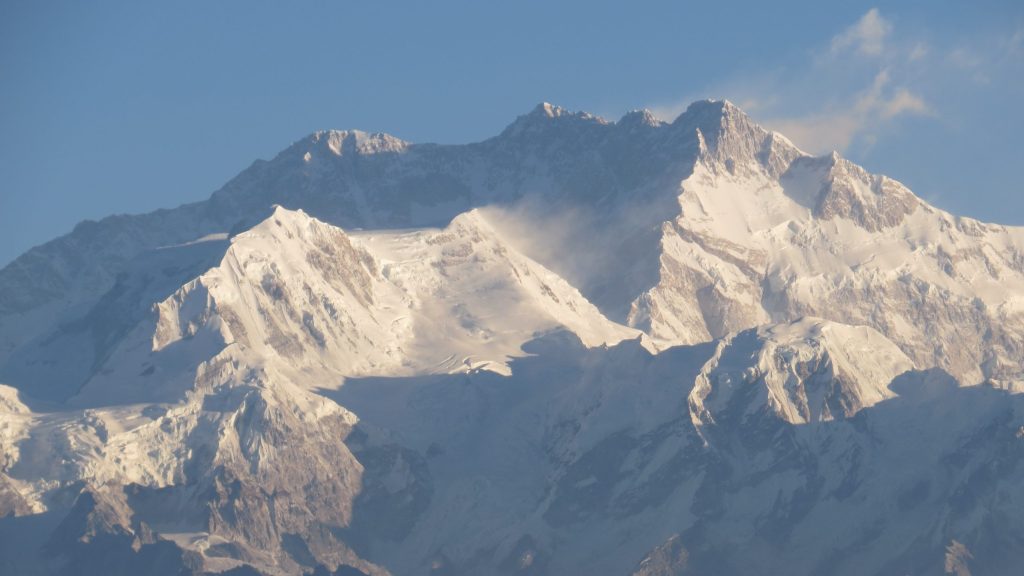

Khangchendzonga National Park, in the state of Sikkim, surrounds the third-highest mountain in the world. It was inscribed by UNESCO in 2016 as India’s first “mixed” World Heritage Site, recognised for both its natural and its cultural value. The mountain is not only a habitat; to the people of Sikkim it is a god.
At a glance
- Location: North and West Sikkim
- Inscribed: 2016
- Type: Mixed (natural and cultural)
- Area: about 1,784 square kilometres, roughly a quarter of Sikkim
- Highest point: Kangchenjunga, 8,586 metres
The mountain
Kangchenjunga stands on the border of Sikkim and Nepal. Its name is usually translated as “the five treasures of the great snows”, after its five summits. It was first climbed in 1955 by a British expedition whose members, keeping a promise to the ruler of Sikkim, stopped a few steps short of the top. Climbing from the Sikkim side has not been permitted since 2000, out of respect for local belief.
The landscape
Within a short distance the park rises from subtropical forest at about 1,200 metres to the summit, a range of more than seven kilometres in height, one of the widest in any protected area in the world.
- Glaciers: eighteen, including the Zemu, about 26 kilometres long
- Lakes: dozens of high-altitude lakes
- Forests: oak, magnolia, fir and many kinds of rhododendron
Wildlife
Snow leopard, red panda, the state animal of Sikkim, Himalayan tahr, blue sheep, musk deer and clouded leopard live in the park, along with more than 500 species of birds.
A sacred land
- For Sikkimese Buddhists: the region is a beyul, a hidden sacred land blessed in the eighth century by Guru Padmasambhava, and the mountain is the seat of the guardian deity of Sikkim
- For the Lepchas: the original inhabitants, it is Mayel Lyang, the paradise from which their first ancestors were made out of the snows of the mountain
- In practice: lakes, caves, rocks and peaks throughout the park are objects of worship, and the masked dance of Pang Lhabsol is performed each year in honour of the mountain
These beliefs have themselves protected the land, since hunting and disturbance in sacred places are forbidden by custom.
Why it is a World Heritage Site
The park was inscribed for the scale and beauty of its mountain scenery and the richness of its wildlife, and for the living sacred traditions of different communities that are bound up with it.
Visiting
The most popular trek runs from Yuksom, the first capital of Sikkim, to Dzongri and the Goecha La pass, about eight days there and back, with close views of the mountain. Permits are required, and foreign visitors must travel in groups with a registered operator. The best months are April and May, when the rhododendrons flower, and October and November. The mountain can also be seen from Gangtok, Pelling and, across the state border, Darjeeling, the terminus of one of the Mountain Railways of India.
Image: Kangchenjunga, the world’s third-highest mountain, seen from Sikkim. Photo by ShivaShankara, licensed under CC BY-SA 4.0, via Wikimedia Commons.