


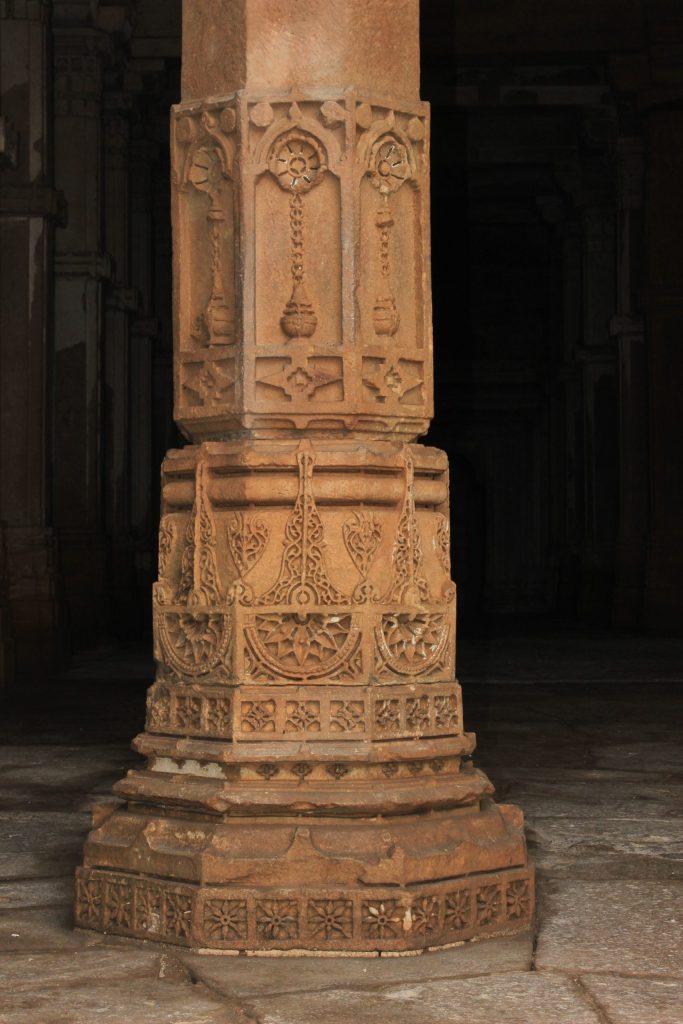

About 50 kilometres from Vadodara in Gujarat, a volcanic hill rises 800 metres from the plain. On and around it lie the remains of a Rajput fortress and of the city that the sultans of Gujarat built as their capital and then abandoned. UNESCO inscribed the Champaner-Pavagadh Archaeological Park as a World Heritage Site in 2004.
At a glance
- Location: Panchmahal district, Gujarat
- Inscribed: 2004
- Type: Cultural
- Period: eighth to sixteenth centuries, with prehistoric remains
- Main builder: Sultan Mahmud Begada
History
Pavagadh hill was a stronghold of the Chauhan Rajputs. In 1484, after a siege of twenty months, Sultan Mahmud Begada of Gujarat captured it. He rebuilt the town of Champaner at its foot as his capital, and over the next twenty-three years filled it with mosques, palaces, gates and waterworks.
In 1535 the Mughal emperor Humayun took the city. The capital returned to Ahmedabad, and Champaner was left to the forest.
What to see
- Jami Masjid: the finest building, completed about 1508, with two minarets 30 metres high, carved stone screens and a domed prayer hall. Its builders combined the arches and domes of Islamic architecture with the pillars, brackets and ornament of the Hindu and Jain temples of Gujarat.
- Other mosques: the Kevada, Nagina and Shehar ki Masjid, each with attached tombs
- Fortifications: lines of walls and gates climbing the hill
- Water systems: stepwells and tanks, including a helical stepwell
- Kalika Mata Temple: on the summit, an important place of pilgrimage that draws crowds throughout the year, reached by a ropeway or on foot
Why it is a World Heritage Site
Champaner is the only complete Islamic city of the period before the Mughals to survive in India without later rebuilding. Because it was deserted so soon, its plan remains as it was laid out. The park also includes much older remains, and the living tradition of pilgrimage to the hill.
Visiting
The site is usually visited as a day trip from Vadodara. The monuments are spread over a wide area, and a vehicle is useful.
Image: Carved stonework on a minaret of the Jami Masjid at Champaner, Gujarat. Photo by Snehrashmi, licensed under CC BY-SA 4.0, via Wikimedia Commons.