


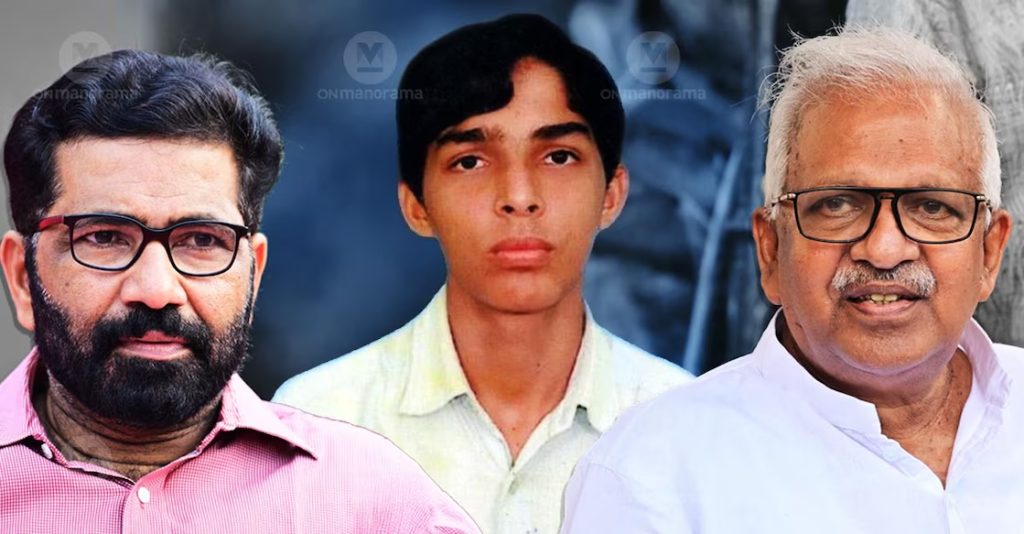
A Central Bureau of Investigation Special Court in Kochi on Thursday, 19 November 2026, acquitted Communist Party of India (Marxist) leaders P. Jayarajan and T.V. Rajesh in the case relating to the murder of Indian Union Muslim League worker Abdul Shukkoor. The verdict came more than 14 years after the killing in Kannur district, and it brought to a close a trial that had stayed in the political spotlight in Kerala because of the seniority of the two leaders who were arraigned. According to The Hindu's report, the court found 13 accused guilty in the murder, while acquitting Mr. Jayarajan and Mr. Rajesh along with a number of other accused.
The case was always about more than the murder of one young man. Shukkoor, 21, was a native of Ariyil near Taliparamba. He was hacked to death by a group of assailants at Keezhara, under the Kannapuram police station limits, on 20 February 2012. The prosecution's account is that the killing was a retaliation for an attack on Mr. Jayarajan and Mr. Rajesh during their visit to tension-hit Ariyil earlier that morning. At the time, Mr. Jayarajan was the Kannur district secretary of the CPI(M), and Mr. Rajesh was a Member of the Legislative Assembly and the State secretary of the Democratic Youth Federation of India.
According to the case as described in the report, Shukkoor and four other youths had taken refuge in a house at Keezhara after the incident that morning. A group of CPI(M) workers allegedly intimidated the house owners and forced the youths to leave. Police said their captors photographed them using mobile phones and verified their identities with party workers. After that verification, three of the youths were released, but Shukkoor and another man, Zakaria, were taken to a nearby field and stabbed. Shukkoor died of his injuries, while Zakaria, who was also stabbed, managed to escape.
Mr. Jayarajan and Mr. Rajesh were charged under Section 118 of the Indian Penal Code, which deals with concealing a design to commit an offence, after investigators found that they allegedly had prior knowledge of the conspiracy to kill Shukkoor. The prosecution alleged that the conspiracy was hatched in a room at the Taliparamba Co-operative Hospital, where the two leaders had been admitted on 20 February following an attack on Mr. Jayarajan's convoy by alleged IUML workers earlier the same day. They were listed as the 32nd and 33rd of the 33 accused in the case, and two of the accused have died since the case began.
The route by which the case reached the CBI is important. Shukkoor's mother, A.C. Aathikka, filed a writ petition in the Kerala High Court in 2016 seeking a fresh probe. The High Court allowed the petition and ordered a CBI investigation. It was the CBI's inquiry that brought Mr. Jayarajan and Mr. Rajesh into the case as accused. The Special Court had earlier refused to quash the trial proceedings against them, and it dismissed their pleas for discharge, so the trial went on to its conclusion.
The acquittal is a major relief for the CPI(M) and for the two leaders. Mr. Jayarajan is among the best-known figures of the party in the Kannur region, where political violence between the CPI(M), the Indian Union Muslim League and other parties has been a feature of public life for decades, and where several killings have produced long-running legal cases. Mr. Rajesh is a former MLA and a prominent party leader. With the verdict, both are cleared of the allegation that they had prior knowledge of the plan to kill Shukkoor, and the party is likely to present the outcome as vindication.
For the family of the victim and for the Muslim League, the judgment will be less welcome in part, although the conviction of 13 accused persons confirms that the court accepted that Shukkoor was murdered by a group of assailants. The mother had fought for years for a CBI inquiry, and the fact that the investigation produced convictions will be seen as a partial success for her efforts. Whether the family and the prosecution will appeal against the acquittals is not known at this stage, and the full reasoning of the court has yet to be reported. Appeals against acquittals in criminal cases in Kerala are possible before the High Court, and the question of whether to file one is likely to be considered once the judgment is studied.
The verdict is also being read in the light of the political calendar. The case involved leaders from two parties that sit on opposite sides of Kerala's politics, and every stage of the trial was followed closely. The Hindu's report notes that the case assumed political significance because of the arraignment of Mr. Jayarajan and Mr. Rajesh. A judgment finding them guilty would have been a heavy blow to the CPI(M) in its stronghold, while a conviction of lesser accused, but not of the two leaders, allows the party to argue that the court has accepted its position on the question of conspiracy.
On the same day, another political case in Kerala saw a significant development, although it is unrelated to the Shukkoor matter. The Kerala High Court dismissed a First Information Report that the Vigilance and Anti-Corruption Bureau had registered against K.M. Shaji, the State's Minister for Local Self-Governments and a leader of the Indian Union Muslim League, in a disproportionate assets case covering the period from 2011 to 2020. The FIR had been registered on a complaint by a CPI(M) leader, who alleged that Mr. Shaji used a ₹25 lakh bribe from an aided school management, in return for sanctioning additional plus-two courses, to build a house. A single judge of the High Court had quashed the case in 2023, noting that there was no allegation that Mr. Shaji had demanded a bribe, and the court had earlier ordered the release of ₹47 lakh that Vigilance seized from his residence in October 2023, subject to conditions.
The two rulings on the same day involve leaders from the CPI(M) and the IUML, and they underline how often criminal cases in Kerala become entangled with party politics. They also show the different stages at which courts can bring cases to an end: one through a full trial that lasted years and ended in a mixed verdict, the other through the quashing of an FIR before any trial. Each decision will be interpreted by supporters and critics according to political loyalties, but the underlying legal reasoning in both cases is a matter for the written judgments.
What happens next in the Shukkoor case will be decided in the coming days. The 13 convicted persons are likely to face sentencing, and lawyers for the convicts may announce appeals to the High Court. The prosecution will have to decide whether to challenge the acquittals. For the people of Ariyil and for the family of a 21-year-old who was killed at Keezhara on 20 February 2012, the verdict brings an end to a long wait, even if it does not satisfy everyone. For Kerala politics, the message of 19 November 2026 is that one of the state's most closely watched criminal trials has ended with the two senior CPI(M) leaders cleared, and with a cautionary reminder that the courts, not the parties, have the final say on guilt.