


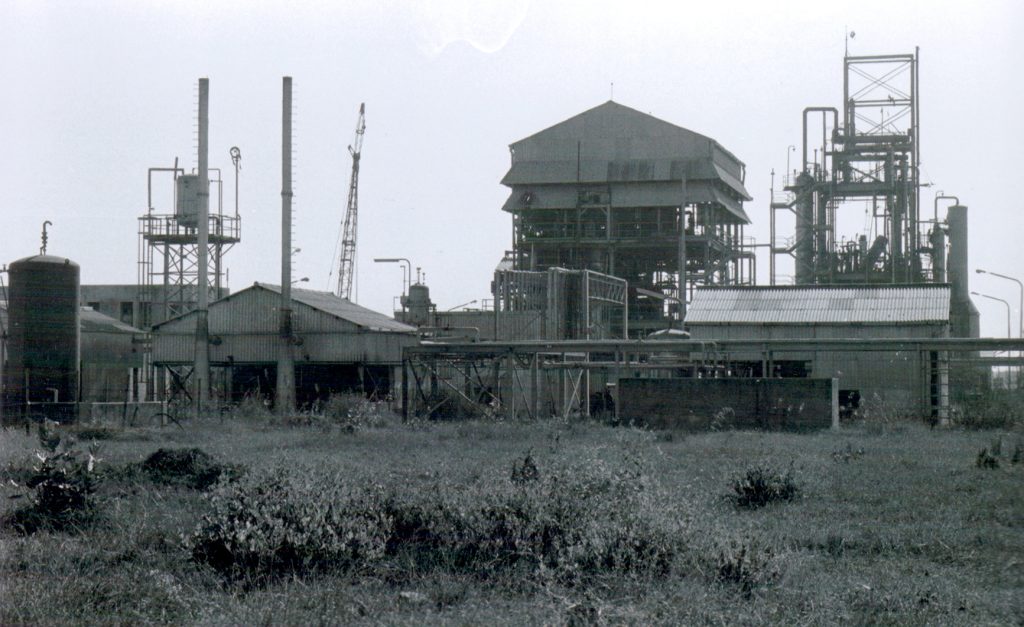

Shortly after midnight on 3 December 1984, a cloud of poisonous gas drifted from a pesticide factory over the sleeping city of Bhopal in Madhya Pradesh. Thousands died within days. The Bhopal gas tragedy is regarded as the worst industrial disaster in history.
The plant
The factory belonged to Union Carbide India Limited, in which the American company Union Carbide Corporation held a majority. It made the pesticide Sevin, using methyl isocyanate, or MIC, a highly toxic and unstable chemical stored in large underground tanks. Densely packed settlements of poor families had grown up against the factory wall.
The night
- Late on 2 December, water entered Tank 610, which held about 40 tonnes of MIC.
- A violent chemical reaction raised the temperature and pressure until the safety valve burst.
- Over about two hours, the gas escaped into the air. Being heavier than air, it hugged the ground and rolled into the neighbouring colonies.
People woke choking, their eyes and lungs burning. Many died in their beds; others died as they ran, since running made them breathe in more. Hospitals were overwhelmed, and doctors did not know what the gas was or how to treat it.
The toll
- Immediate deaths: The Madhya Pradesh government later put the figure at 3,787. Other estimates are around 8,000 in the first weeks.
- Later deaths: many thousands more from related illness in the years after.
- Affected: more than five lakh people were exposed. Survivors have suffered lung disease, damaged eyesight, cancers and other illnesses, and children were born with disabilities.
What went wrong
Investigations found that several safety systems were out of order or switched off that night: the refrigeration unit meant to keep the MIC cool, the scrubber that should have neutralised escaping gas, and the flare tower that should have burnt it. Staff and maintenance had been cut as the plant lost money. Earlier accidents and warnings, including a journalist’s articles in 1982, were ignored. Union Carbide maintained that the leak was caused by sabotage by an employee.
The legal battle
- Warren Anderson, the chairman of Union Carbide, was arrested when he came to Bhopal days later, released on bail the same day and flown out. He never returned to face trial and died in the United States in 2014.
- 1985: Parliament passed a law making the government the sole representative of the victims.
- February 1989: The Supreme Court approved a settlement under which Union Carbide paid 470 million US dollars. Most victims received small sums; survivors’ groups have always called it inadequate.
- June 2010: A Bhopal court convicted seven former Indian officials of the company of causing death by negligence and sentenced them to two years in prison. The verdict, after twenty-five years, caused public anger.
- Dow Chemical bought Union Carbide in 2001 and has denied any liability.
The site
Hundreds of tonnes of toxic waste lay in the abandoned factory for four decades, and groundwater in the area was contaminated. In January 2025 the waste was finally moved to a disposal facility at Pithampur and later incinerated.
What changed
The disaster led to the Environment (Protection) Act of 1986, stricter rules for hazardous industries and, later, the law on public liability insurance. 2 December is observed as National Pollution Control Day in memory of the victims.
Image: The Union Carbide pesticide factory in Bhopal in 1985, the year after the gas leak. Photo by Bhopal Medical Appeal, Martin Stott, licensed under CC BY-SA 2.0, via Wikimedia Commons.