


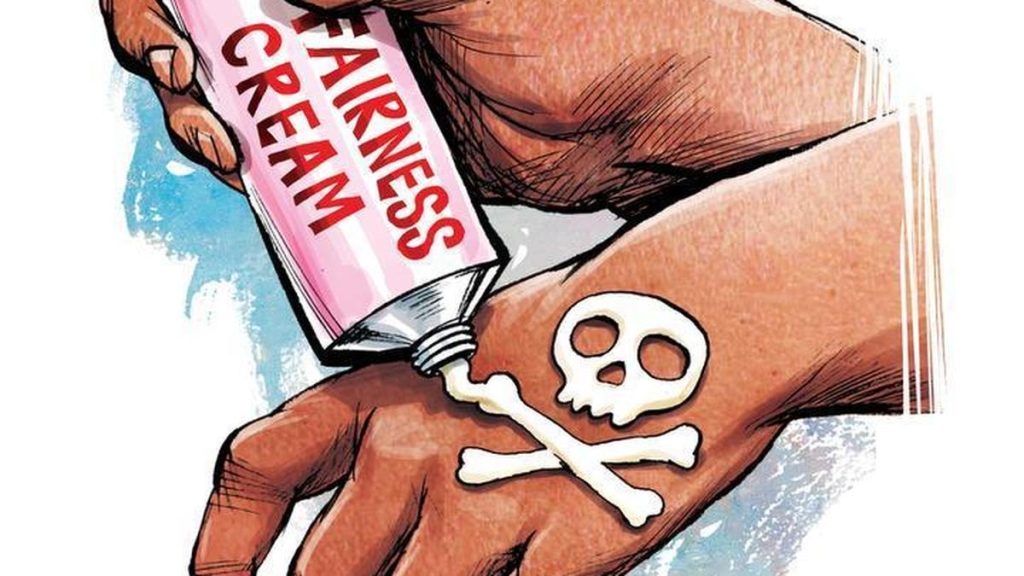
The pursuit of fair, blemish-free skin goes back centuries and across cultures, but in recent years it has been landing people in hospital. The Hindu explained this week what a recent case from Keralam reveals about the health risks of skin-lightening creams: a 17-year-old girl from Areekode in Malappuram district was hospitalised with severe symptoms after using a face cream for over a year, and doctors traced her illness to heavy mercury contamination in the product. The case has prompted a crackdown by the police and the drug regulatory authorities, and a warning from the state's Health Minister, and it has put a long-standing public health problem back in the spotlight.
According to The Hindu, the girl had been persuaded by several social influencers who raved about a cream that gave them fair, blemish-free skin. The product carried the brand name F-TUNES, claimed to contain turmeric and other "natural ingredients", and cited Dubai as its place of manufacture. She developed severe symptoms, including fainting spells, swelling in the legs and a fall in blood pressure, and was diagnosed with membranous nephropathy, a condition in which the immune system becomes dysregulated and triggers nephrotic syndrome, meaning a heavy loss of protein through the urine. Doctors traced her condition to the heavy mercury content in the cream. Laboratory analysis of a sample obtained from the patient found that the product contained 12,500 parts per million (ppm) of mercury, far above the legal limit of 1 ppm. After prolonged treatment, the girl is now recovering.
The official response has been swift. The Hindu reports that the police and drug regulatory authorities have begun a crackdown on dubious cosmetic products in the market, and that the Health Minister has threatened action against social influencers who promote such products online. The influencer angle is important: the girl was persuaded to use the cream by online endorsements, which means the harm was spread through the same social media channels that make beauty products feel trustworthy.
Why is mercury used at all? The Hindu's explainer describes the mechanism. Mercury is a highly toxic heavy metal that can inhibit tyrosinase, a key enzyme produced by skin cells to make melanin, the natural pigment that gives colour to skin and hair. By stopping the production of new melanin and thinning the skin, mercury gives a lightening effect. The higher the mercury content, the more dramatic the result, which users perceive as the product's effectiveness. That is the perverse incentive at the heart of the problem: the more poisonous a cream is, the better it appears to work, so consumers are drawn to the very products that carry the greatest risk.
This is not the first such episode in Keralam. In 2023, doctors at Aster MIMS in Kottakkal in Malappuram district reported an unusual influx of patients with membranous nephropathy linked to fairness creams, according to reports by South First and Asianet News at the time. The first case was a 14-year-old girl, whose relative later presented with the same symptoms; both tested positive for the NELL-1 type of the disease and had used the same fairness cream for two months. A 29-year-old man preparing for his wedding also reported using a fairness cream for two months. The nephrologists who investigated, Dr Sajeesh Sivadas and Dr Ranjit Narayanan, said test results of eight such patients showed mercury and lead levels over 100 times the permissible limits, with traces of other metals in some. The Malappuram District Drugs Controller intensified inspections and seized many fake packets, and found that the creams coming into the market lacked an exact manufacturing address or quality. The 2026 case is a separate patient, but it follows the same pattern as those 2023 reports.
What should consumers know? First, a label that says "natural", "herbal" or "turmeric" tells you nothing about mercury content, and the F-TUNES case shows that a cream claiming natural ingredients can contain a toxic metal at very high levels. Second, an unclear manufacturer, an overseas place of manufacture that cannot be verified or the lack of a proper address should be treated as warning signs, as the drugs controller's findings in 2023 suggest. Third, symptoms such as swelling in the legs, fatigue, fainting or foamy urine, which signals protein loss, should be taken seriously and checked by a doctor, particularly in someone who has been using a skin product for months. The Hindu's report describes fainting spells, leg swelling and a fall in blood pressure in the Areekode patient.
There are different views on where responsibility lies. Regulators point to illegal imports and counterfeit products, and have responded with inspections. Doctors stress that the heavy metal exposure damages the kidneys' filtering units, causing proteins to leak into the urine, a point made by Dr Sundar Sankaran of the Aster Institute of Renal Transplantation in the 2023 South First report. Consumer advocates focus on the influencers who promote such creams, and the Health Minister's warning shows that the government is prepared to treat paid or casual endorsement as part of the problem.
The deeper issue is demand. Skin-lightening products sell because of a social preference for fair skin that goes back a very long way, and as long as the preference exists, there will be a market for products that promise quick results. The Hindu begins its explainer by noting that the quest for fair skin goes back to ages and across cultures. A purely regulatory response, with raids and seizures, can remove dangerous creams from shelves, but it does not remove the desire that creates the market, and it does not stop online sellers from reappearing under new names.
What happens next? The crackdown announced by the police and drug regulators will show how many products are found to exceed the legal mercury limit of 1 ppm and whether action follows against manufacturers, distributors and promoters. The Health Minister's warning to influencers will be tested if any are named. For families, the practical advice is simple: avoid unregistered creams, be sceptical of miracle claims on social media, and treat unexplained swelling or fatigue in anyone who uses such products as a reason to see a doctor. The 17-year-old from Areekode is recovering, which is good news, but her case is a reminder that a cosmetic can be a poison, and that a year of daily use may be enough to cause serious kidney disease.